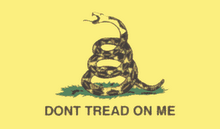
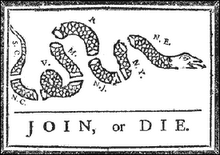
I saw the sign
And it opened up my eyes
I saw the sign
Life is demanding without understanding
--Ace of Base
Did God create persistent debt as a signal of excess and unsustainability? We borrow to live larger in the present than we otherwise could. Yes, some borrowing is done to invest in projects that improve productivity in the future. If that productivity improvement materializes, then the debt should be extinguished.
Debt that persists--or increases--tells us that the payoff is not materializing.
Perhaps this is God's way of telling us that we need to change. That we need to live more within our means.
He is warning that today's debt-funded excess, if left unchecked, portends tomorrow's squalor.
Wednesday, December 31, 2014

Tuesday, December 30, 2014
Bullish Gold
"Fort Knox? Ha, it's for tourists."
--Simon Gruber (Die Hard: With a Vengeance)
Bullish on gold and silver here. Professional and retail investors have been throwing in the towel. Closed end funds like GTU, CEF continue to trade at 8-10% discounts to NAV.

Meanwhile, technicals across the metals space tracing reverse head and shoulders patterns.
Suspect we'll look back on this period in amazement at what Mr Market was offering.
positions in GTU, CEF
--Simon Gruber (Die Hard: With a Vengeance)
Bullish on gold and silver here. Professional and retail investors have been throwing in the towel. Closed end funds like GTU, CEF continue to trade at 8-10% discounts to NAV.
Meanwhile, technicals across the metals space tracing reverse head and shoulders patterns.
Suspect we'll look back on this period in amazement at what Mr Market was offering.
positions in GTU, CEF
Monday, December 29, 2014
Racial Profiling
"I'm calling it the Thrilla In Vanilla. You know, couple of suburban white guys..."
--Cade Raymond (Joe Somebody)
Prof Williams discusses racial profiling--something that he has done before. Profiling can be generally defined as use of readily observable characteristics to predict difficult, hard-to-observe characteristics.
All people are prone to engage in profiling to some degree. This is because information is costly and people will seek to economize on their information costs. Profiling helps people get more information for less cost.
Capacity for particular intrinsic behaviors is often a difficult to observe characteristic. If, however, groups of people who possess certain readily observable physical characteristics are thought to engage in certain types of intrinsic behavior, then people who belong to that group are likely to be profiled.
Because it is one of those readily observable physical characteristics, skin color is commonly employed in profiling.
Racial profiling has valid uses in peaceful societies engaging in voluntary exchange. For example, market researchers might gather information on skin color to tailor products for potential market segments.
However, it is in situations perceived as hostile that racial profiling has garnered considerable attention. Under conditions of threat, people might profile based on skin color to prepare themselves against possible attack. For example, an individual walking down a street in a high crime neighborhood might profile individuals for skin color common to crimes in the area. Upon seeing people walking toward her that fit the profile, the individual might cross the street to reduce the threat. Racial profiling, then, can be part of prudent self-defense.
While it can be useful, racial profiling never justifies aggression. Identifying someone who 'fits the profile' does not justify launching physical force against that person in preemptive attack. It also does not constitute definitive 'probable cause' and subsequently permit illegal search and seizures prohibited by the Constitution--not even in the name of 'security.'
Racial profiling is part of a natural process that helps people get more information for less cost. It is how people use that information that is either good or bad.
--Cade Raymond (Joe Somebody)
Prof Williams discusses racial profiling--something that he has done before. Profiling can be generally defined as use of readily observable characteristics to predict difficult, hard-to-observe characteristics.
All people are prone to engage in profiling to some degree. This is because information is costly and people will seek to economize on their information costs. Profiling helps people get more information for less cost.
Capacity for particular intrinsic behaviors is often a difficult to observe characteristic. If, however, groups of people who possess certain readily observable physical characteristics are thought to engage in certain types of intrinsic behavior, then people who belong to that group are likely to be profiled.
Because it is one of those readily observable physical characteristics, skin color is commonly employed in profiling.
Racial profiling has valid uses in peaceful societies engaging in voluntary exchange. For example, market researchers might gather information on skin color to tailor products for potential market segments.
However, it is in situations perceived as hostile that racial profiling has garnered considerable attention. Under conditions of threat, people might profile based on skin color to prepare themselves against possible attack. For example, an individual walking down a street in a high crime neighborhood might profile individuals for skin color common to crimes in the area. Upon seeing people walking toward her that fit the profile, the individual might cross the street to reduce the threat. Racial profiling, then, can be part of prudent self-defense.
While it can be useful, racial profiling never justifies aggression. Identifying someone who 'fits the profile' does not justify launching physical force against that person in preemptive attack. It also does not constitute definitive 'probable cause' and subsequently permit illegal search and seizures prohibited by the Constitution--not even in the name of 'security.'
Racial profiling is part of a natural process that helps people get more information for less cost. It is how people use that information that is either good or bad.
Sunday, December 28, 2014
Financial Harakiri
"You watch your back, cowboy."
--Nick Conklin (Black Rain)
David Stockman discusses the ritual financial suicide taking place in Japan. Declining savings:

Increased spending versus income:

Debt going parabolic vs output--to the extent that the BOJ is essentially buying all new government issues:

As he observes, this is not just a Japanese phenomenon. We could substitute similar charts of the US with similar effect.
--Nick Conklin (Black Rain)
David Stockman discusses the ritual financial suicide taking place in Japan. Declining savings:
Increased spending versus income:
Debt going parabolic vs output--to the extent that the BOJ is essentially buying all new government issues:
As he observes, this is not just a Japanese phenomenon. We could substitute similar charts of the US with similar effect.
Saturday, December 27, 2014
Weighted Money
"Crazy! I mean like so many positive waves maybe we can't lose. You're on!"
--Oddball (Kelly's Heroes)
The US Dollar's reserve currency status is under increased scrutiny. Perhaps it should be replaced by a different paper money as the euro or the yuan. Maybe a basket of currencies. Or perhaps there should be a single paper currency for the entire world.
But there is one alternative that solves all problems related to cross rates, contracts, and government mischief: ditch paper currencies and their titles altogether, and trade metal by weight--ounces of gold, silver, platinum, etc.
No need to determine how many yen per dollar. No need to hedge for currency fluctuations. Imagine the transaction costs that would vaporize--which would free economic resources for much better things.
Plus, imagine less worry about governments printing money at their discretion or trying to manipulate its value.
Just trade metal by weight--the universal monetary denomination.
position in gold, silver
--Oddball (Kelly's Heroes)
The US Dollar's reserve currency status is under increased scrutiny. Perhaps it should be replaced by a different paper money as the euro or the yuan. Maybe a basket of currencies. Or perhaps there should be a single paper currency for the entire world.
But there is one alternative that solves all problems related to cross rates, contracts, and government mischief: ditch paper currencies and their titles altogether, and trade metal by weight--ounces of gold, silver, platinum, etc.
No need to determine how many yen per dollar. No need to hedge for currency fluctuations. Imagine the transaction costs that would vaporize--which would free economic resources for much better things.
Plus, imagine less worry about governments printing money at their discretion or trying to manipulate its value.
Just trade metal by weight--the universal monetary denomination.
position in gold, silver
Friday, December 26, 2014
Measurement and Management
Drawn into the stream
Of undefined illusion
Those diamond dreams
They can't disguise the truth
--Level 42
An old management saw goes, "what gets measured gets managed." What gets left off the end of that statement is "and often managed poorly." Human wiring problems along with preference for pleasure over pain are likely to drive usage of measures, particularly those meant to directly reflect performance effectiveness, that are incomplete, manipulated, ignored, or otherwise gamed to paint those with the most on the line in a better light.
Measures, whether they be for corporations, governments, or any institution, are likely to be biased rather than true.
The greater the stakes, the more likely measures will be manipulated. And the more biased the information will be.
Of undefined illusion
Those diamond dreams
They can't disguise the truth
--Level 42
An old management saw goes, "what gets measured gets managed." What gets left off the end of that statement is "and often managed poorly." Human wiring problems along with preference for pleasure over pain are likely to drive usage of measures, particularly those meant to directly reflect performance effectiveness, that are incomplete, manipulated, ignored, or otherwise gamed to paint those with the most on the line in a better light.
Measures, whether they be for corporations, governments, or any institution, are likely to be biased rather than true.
The greater the stakes, the more likely measures will be manipulated. And the more biased the information will be.
Thursday, December 25, 2014
Emmanuel
Veni veni, Emmanuel
captivum solve Israel,
qui gemit in exsilio,
privatus Dei Filio.

God is with us once more.
captivum solve Israel,
qui gemit in exsilio,
privatus Dei Filio.
God is with us once more.
Wednesday, December 24, 2014
Symptoms of Confirmation Bias
I certainly was in the right
--Pink Floyd
Confirmation bias, or selective reasoning, is accepting data that supports one's view of the world while rejecting data that oppose that worldview. Because individuals generally prefer pleasure over pain--including the pleasure of believing that they are 'correct'--confirmation bias is likely to inflict all people to some degree.
Confirmation bias can be seen as a product of fast thinking, where individuals refuse to subject cognitions through the rigor of slower, deliberate thought processes. It is the enemy of critical thinking.
Symptoms of confirmation bias include:
Rendering judgment on complex or distant situations quickly.
Consumption of institutional media sources.
Significant group affiliations.
Paying attention to likes/dislikes, friending, and pageview statistics on social media.
Reluctance to review data that appear in conflict with a hypothesis.
Failure to explain why opposing viewpoints or data are invalid or do not apply.
Arguments peppered with "I think" or "I feel" rather than "the data show."
Disounting reason in favor of sophistry or mysticism.
Basing one's argument on slant.
Discounting probling questions in favor of declarative statements.
Failure to define key terms in an argument.
Preferring to cite secondary analysis of others rather than personally engaging in primary analysis.
Thinking other people and their associations are biased but you and your associations are not.
Because human beings possess self awareness, we can endeavor to reduce the extent to which confirmation bias inflicts our decision processes.
--Pink Floyd
Confirmation bias, or selective reasoning, is accepting data that supports one's view of the world while rejecting data that oppose that worldview. Because individuals generally prefer pleasure over pain--including the pleasure of believing that they are 'correct'--confirmation bias is likely to inflict all people to some degree.
Confirmation bias can be seen as a product of fast thinking, where individuals refuse to subject cognitions through the rigor of slower, deliberate thought processes. It is the enemy of critical thinking.
Symptoms of confirmation bias include:
Rendering judgment on complex or distant situations quickly.
Consumption of institutional media sources.
Significant group affiliations.
Paying attention to likes/dislikes, friending, and pageview statistics on social media.
Reluctance to review data that appear in conflict with a hypothesis.
Failure to explain why opposing viewpoints or data are invalid or do not apply.
Arguments peppered with "I think" or "I feel" rather than "the data show."
Disounting reason in favor of sophistry or mysticism.
Basing one's argument on slant.
Discounting probling questions in favor of declarative statements.
Failure to define key terms in an argument.
Preferring to cite secondary analysis of others rather than personally engaging in primary analysis.
Thinking other people and their associations are biased but you and your associations are not.
Because human beings possess self awareness, we can endeavor to reduce the extent to which confirmation bias inflicts our decision processes.
Tuesday, December 23, 2014
Do No Harm
"They did not harm me."
--Leroy Green (The Last Dragon)
Saw this tweet from Rand Paul this am:
The question should be "Who will be hurt?"
--Leroy Green (The Last Dragon)
Saw this tweet from Rand Paul this am:
First, politics in general: As a Doctor, I was trained first to do no harm. Wouldn't it be nice if politicians started from that premise?
— Senator Rand Paul (@SenRandPaul) December 23, 2014
We've noted similar on these pages. Because government is legitimized force, any political action should not be preceded by asking "Who will be helped?"The question should be "Who will be hurt?"
Monday, December 22, 2014
Growing Out of Debt
There's a room where the lights won't find you
Holding hands while
The walls come tumbling down
When they do, I'll be right behind you
--Tears for Fears
An entrepreneur has a great idea for a business. She borrows money to build the business. The business is successful. At some point, she pays off her debt. She has 'grown her way out of debt.'
So why is it unwise that policymakers justify borrowing in order to grow a country's (e.g., US) way out of debt? Why isn't it like the entrepreneur's situation?
One obvious reason is that successful entrepreneurs are rare. The vast majority of new ventures fail. Successful entrepreneurs who move to debt free positions constitute a small minority. People who like to use the entreprenurial analogy for justifying US borrowing habits forget or ignore the 'survivor bias' present in their flawed logic.
Stated differently, entrepreneurs do not typically grow their way out of debt.
Instead of stopping right there, let's, for the sake of argument, assume that the US has the stuff that successful entrepreneurs are often made of. Of course, such 'stuff' is not easily recognizeable--at least ex ante--otherwise only successful entrepreneurs would ever be funded. Overconfidence in our ability to detect successful ventures aside, assume that we have found a situation where entrepreneurial credit risk might be attractive.
The problem here is that the US is not a nascent borrower. It has been been racking up debt for years. Entrepreneurs begin borrowing from unleveraged positions and from positions where returns on investment appear favorable to creditors. If those positions apears less favorable, then borrowing costs increase or credit gets cut off.

The data indicate that the US is no longer an attractive entrepreneurial credit risk. US credit growth has chronically outpaced economic growth. The gap between growth in debt and growth in output has been widening. In unhampered markets, this situation reflected in the above graph should have driven US borrowing costs higher years ago.
So why hasn't it? Because the credit markets are severely hampered. Central banks have been suppressing interest rates below market for years. Thru their 'quantitative easing' programs, CB's have even been buying sovereign own debt (also known as 'debt monetization').
This is the most important reason of all as to why the entrepreneurial 'growing out of debt' situation does not apply to countries such as the US. Entrepreneurs cannot manipulate prices like governments can. And government capacity for market manipulation has driven capital misallocation on scales impossible to fathom in free market situations.

One group who will come to fathom the magnitude of the 'grow your way out of debt' folly: our kids.
Holding hands while
The walls come tumbling down
When they do, I'll be right behind you
--Tears for Fears
An entrepreneur has a great idea for a business. She borrows money to build the business. The business is successful. At some point, she pays off her debt. She has 'grown her way out of debt.'
So why is it unwise that policymakers justify borrowing in order to grow a country's (e.g., US) way out of debt? Why isn't it like the entrepreneur's situation?
One obvious reason is that successful entrepreneurs are rare. The vast majority of new ventures fail. Successful entrepreneurs who move to debt free positions constitute a small minority. People who like to use the entreprenurial analogy for justifying US borrowing habits forget or ignore the 'survivor bias' present in their flawed logic.
Stated differently, entrepreneurs do not typically grow their way out of debt.
Instead of stopping right there, let's, for the sake of argument, assume that the US has the stuff that successful entrepreneurs are often made of. Of course, such 'stuff' is not easily recognizeable--at least ex ante--otherwise only successful entrepreneurs would ever be funded. Overconfidence in our ability to detect successful ventures aside, assume that we have found a situation where entrepreneurial credit risk might be attractive.
The problem here is that the US is not a nascent borrower. It has been been racking up debt for years. Entrepreneurs begin borrowing from unleveraged positions and from positions where returns on investment appear favorable to creditors. If those positions apears less favorable, then borrowing costs increase or credit gets cut off.
The data indicate that the US is no longer an attractive entrepreneurial credit risk. US credit growth has chronically outpaced economic growth. The gap between growth in debt and growth in output has been widening. In unhampered markets, this situation reflected in the above graph should have driven US borrowing costs higher years ago.
So why hasn't it? Because the credit markets are severely hampered. Central banks have been suppressing interest rates below market for years. Thru their 'quantitative easing' programs, CB's have even been buying sovereign own debt (also known as 'debt monetization').
This is the most important reason of all as to why the entrepreneurial 'growing out of debt' situation does not apply to countries such as the US. Entrepreneurs cannot manipulate prices like governments can. And government capacity for market manipulation has driven capital misallocation on scales impossible to fathom in free market situations.
One group who will come to fathom the magnitude of the 'grow your way out of debt' folly: our kids.
Subscribe to:
Posts (Atom)
![[Most Recent Quotes from www.kitco.com]](http://www.kitconet.com/charts/metals/gold/t24_au_en_usoz_2.gif)