Ninety nine dreams I have had
In every one a red balloon
It's all over and I'm standing pretty
In this dust that was a city
--Nena
Deutsche Bank (DB) continues to be the poster child for growing stress in the banking system. The stock is now marking lower than in 2009.
Zero Hedge reports that DB, with $50 trillion in gross notional derivative exposure, is now issuing public statement to sooth concerns about its payment capacity.
Of course, it won't take much movement in derivative prices to push this puppy into insolvency.
position in SPX
Monday, February 8, 2016
Fiddling About
Commodus: Have I missed it? Have I missed the battle?
Marcus Aurelius: You have missed the war.
--Gladiator
Heads of state often say foolish things and the president's annual State of the Union address is a veritable launching platform of foolery. Nested in the silliness of President Obama's most recent address were comments about the strength of the economy and criticism of those who fail to admit that the economy is booming.
It does not take an economics PhD to argue otherwise. As a wise sage once told me, "If you have eyes, see. If you have ears, listen."
Fiddling while Rome burns is what heads of state tend to do.
Sunday, February 7, 2016
Why Are Spreads Widening?
Once I rose above the noise and confusion
Just to get a glimpse beyond the illusion
--Kansas
Why are bank credit spreads blowing out? Unlike 2008, when the causes of widening spreads were a mile wide and easy to see (i.e., mortgage-related derivatives), this time around I'm having trouble pinpointing the cause.
One theory surrounds plummeting oil prices and the strain this places on junk-rated oil and gas operators (and their leveraged bank creditors). While certainly contributing to domestic bank woes, this theory does not satisfactorily explain the global nature of the credit spread wides.
Instead, I'm pondering a theory surrounding the growing implementation and impact of negative interest rates (NIRP), a central bank policy that once again caught limelight recently when the Bank of Japan suddenly went negative.
Essentially, NIRP imposes a tax on creditors and depositors. Depositors must pay banks for the privilege of placing their funds with the institution. All else equal, this will motivate depositors to deposit less or, worse yet, pull their deposits. No big deal perhaps when banks were simply money storage facilities. But today, banks are leveraged investment machines that pyramid deposits 10:1 or more. Can you say 'bank run?'
John Succo adds that NIRP also imposes costs on carry traders. In 'normal' times reducing interests from, say, 1% to zero, traders would borrow the low interest rate currency and sell it to finance investments in other countries. Selling the low interest rate currency causes it to weaken while pushing higher the currencies of countries receiving carry trade investments.
In a NIRP world, however, borrowers must pay a fee to hold proceeds on deposit, thereby reducing incentive to put on carry trades. Moreover, NIRP currencies are less likely to devalue when carry traders don't/can't sell them. Policymakers hoping that NIRP will cause currencies to devalue in beggar-thy-neighbor fashion are likely to have their hopes dashed.
As the world awakens to these NIRP realities, perhaps that is why bank credit spreads are blowing out.
Perhaps that is also why gold is on the move.
position in SPX, gold
Labels:
central banks,
derivatives,
EU,
Japan,
leverage,
risk,
yields
Saturday, February 6, 2016
Paper Ceiling
When the good times never stay
And the cheap thrills always seem to fade away
When will we fall?
When will we fall down?
--Toad the Wet Sprocket
Apt portrayal of the debt ceiling fantasy.
When the enablers go away, and they always do, then the paper ceiling of debt collapses.
And the cheap thrills always seem to fade away
When will we fall?
When will we fall down?
--Toad the Wet Sprocket
Apt portrayal of the debt ceiling fantasy.
When the enablers go away, and they always do, then the paper ceiling of debt collapses.
Friday, February 5, 2016
Bank Credit Spreads
"It's clear as a bell to those who pay attention. The mother of all evil is speculation--leveraged debt. The bottom line: it's borrowing to the hilt. And I hate to tell you this, but it's a bankrupt business model. It won't work. It's systemic, malignant, and it's global...like cancer."
--Gordon Gekko (Wall Street: Money Never Sleeps)
Hard to ignore trends in credit default swap (CDS) and other derivative prices indicating investor concern about global financial institutions.
Acute in names like Duetsche (DB).
Definitely getting some '08 vuja de.
position in SPX
--Gordon Gekko (Wall Street: Money Never Sleeps)
Hard to ignore trends in credit default swap (CDS) and other derivative prices indicating investor concern about global financial institutions.
Acute in names like Duetsche (DB).
Definitely getting some '08 vuja de.
position in SPX
Labels:
bonds,
central banks,
credit,
derivatives,
leverage,
risk,
technical analysis
Anti-Social vs Anti-Political
Sir Thomas More: If we lived in a state where virtue was profitable, common sense would make us saintly. But since we see that abhorrence, anger, pride, and stupidity commonly profit far beyond charity, modesty, justice, and thought, perhaps we must stand fast a little - even at the risk of being heroes.
Margaret More: But in reason! Haven't you done as much as God could reasonably want?
Sir Thomas More: Well, finally, it isn't a matter of reason. Finally, it's a matter of love.
--A Man for All Seasons
Lew Rockwell observes that politics is an anti-social endeavor. It relies on mechanisms of force rather than on mechanisms of voluntary cooperation among individuals.
Free markets, on the other hand, are anti-political. They are grounded in peaceful production and exchange rather than on aggression or its threat.
Unhampered markets are expressions of social power as opposed to state power.
Labels:
freedom,
government,
liberty,
markets,
productivity,
self defense,
socialism,
Tea Party,
war
Thursday, February 4, 2016
Mine Field
My brain's been battered
Splattered all over
Manhattan
--The Rolling Stones
The 'easy' trade at many desks has been shorting gold and the miners. The lower they've gone, the more readily traders have jumped on top of them to press them lower.
Given the macro environment that we're living in, that seems pretty dangerous. Like hunting for nickels in a mine field.
We're witnessing explosions now. Metal and miner prices are jumping as shorts blow up. Many miners are up 50%+ in a week. Most have cleared their technically significant 200 day moving average benchmarks.
Of course, we won't know if THE bottom has been put in until well after the fact. But this action reflects what often happens as shattered shorts become initial casualties of war.
position in PAAS
Wednesday, February 3, 2016
Leaving the Race
"It is a kingdom of conscience. Or nothing."
--Balian of Ibelin (Kingdom of Heaven)
Today Rand Paul announced that he is leaving the presidential race. He was by far the individual most consistent with first principles of liberty and non-aggression among major party candidates.
Similar to his father, Paul's message currently does not resonate with special interest blocs intent on controlling the strong arm of government to enforce their brands of political favor. As these pages have frequently noted, democracies tend to push out peace in favor of violence.
More conscience has left the election market.
Labels:
agency problem,
democracy,
freedom,
government,
liberty,
natural law,
self defense,
socialism,
war
Tuesday, February 2, 2016
Winning, Politics, and Conscience
"Power is not a toy we give to good children. It is a weapon. And the strong man takes it and uses it. If you don't go down there and beat Joe Cantwell to the floor with this very dirty stick, then you've got no business in the big league. Because if you don't fight, the job is not for you. And it never will be."
--President Art Hockstader (The Best Man)
During the Bengals meltdown a few weeks back, I found myself pulling for the team despite many actions by players and fans that were obviously 'below the belt.' I was willing to overlook them, however, because I wanted the team to win so badly.
It was the human inclination to win no matter what. To be associated with a winner. To look the other way. To subscribe to the theory that the ends justify the means.
No place in life exhibits this tendency more than politics. I've heard it said to the effect that a person who enters politics should expect dirty play because, well, that's how it works. "Whatever it takes..."
Politics, it seems, can't be bothered with conscience. Present fields of candidates merely reflect that mindset.
Labels:
Clinton,
competition,
football,
lifestyle,
media,
reason,
risk,
socionomics
Monday, February 1, 2016
Insured Behavior
"Moral hazard is when someone takes your money, and is not responsible with it."
--Gordon Gekko (Wall Street: Money Never Sleeps)
As 19th century English insurance firms observed, individuals tend to change their behavior once that behavior is insured. When people realize that their actions and their potential negative consequences are being subsidized, they will spend more of other people's money and take more risk.
This is known as moral hazard. Moral hazard runs rampant today as government programs in areas such as finance, education, and healthcare grow more intrusive.
Labels:
education,
government,
health care,
intervention,
moral hazard,
risk,
socialism
Subscribe to:
Posts (Atom)


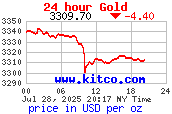
![[Most Recent Quotes from www.kitco.com]](http://www.kitconet.com/charts/metals/gold/t24_au_en_usoz_2.gif)