And the men who spurred us on
Sit in judgment of our own
They decide, and the shotgun sings the song
--The Who
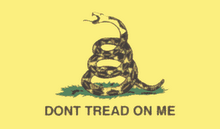
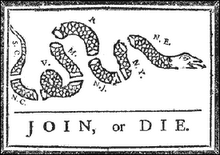
Remember SB 1867--that stealth Senate bill that removes due process from US soil in favor of the discretion of authorities? No way it could pass the House, they said. And if it did, the president would veto it, they said.
It passed the House late yesterday and President Obama has withdrawn his veto threat. Indefinite detention without due process is now in play in this country.
This outcome was hardly in doubt. The State continues to amass power in the name of 'security.' When done in this manner, and in measured increments, it appears that the people will get fooled again.
Totalitarianism by gradualism.
Thursday, December 15, 2011

Wednesday, December 14, 2011
Eject Button
"Ice, I got your MIG dead ahead."
--Pete 'Maverick' Mitchell (Top Gun)
Sold my small UUP call position this am into this morning's spike higher in the dollar.

Resistance is approaching dead ahead. Plus possible double top.
Just tradin' 'em...
no positions
--Pete 'Maverick' Mitchell (Top Gun)
Sold my small UUP call position this am into this morning's spike higher in the dollar.

Resistance is approaching dead ahead. Plus possible double top.
Just tradin' 'em...
no positions
Fractional Reserve Folly
There's a room where the lights won't find you
Holding hands while the wall come tumbling down
When they do
I'll be right behind you.
--Tears for Fears
Nice overview of the Corzine/MF Global dynamic. As the author points out, the borrowing and levering of client assets is at the heart of this problem. And it is nothing new. Banks do it every day.
The leverage in a fractional reserve system means that the system is fragile. Fragile to small downward moves in price. Fragile to declines in confidence.
He's right. MF Global seems a chirping canary.
position in SPX
Holding hands while the wall come tumbling down
When they do
I'll be right behind you.
--Tears for Fears
Nice overview of the Corzine/MF Global dynamic. As the author points out, the borrowing and levering of client assets is at the heart of this problem. And it is nothing new. Banks do it every day.
The leverage in a fractional reserve system means that the system is fragile. Fragile to small downward moves in price. Fragile to declines in confidence.
He's right. MF Global seems a chirping canary.
position in SPX
Buy Light Zone
There's a storm on the loose, sirens in my head
I'm wrapped up in silence, circuits all dead
I cannot decode
My life spins into frenzy
--Golden Earring
Buying some gold and silver this am into the continued smeltage. Support is coming up fast. Stochastics getting there as well. Stated differently, risk/reward is getting more attractive.

Nothing crazy, just some incremental adds. Truth be told, would welcome lower prices for more substantial buying.
position in GLD, SLV, CEF
I'm wrapped up in silence, circuits all dead
I cannot decode
My life spins into frenzy
--Golden Earring
Buying some gold and silver this am into the continued smeltage. Support is coming up fast. Stochastics getting there as well. Stated differently, risk/reward is getting more attractive.

Nothing crazy, just some incremental adds. Truth be told, would welcome lower prices for more substantial buying.
position in GLD, SLV, CEF
Tuesday, December 13, 2011
Believing vs Knowing
Dr Richard Kimble: They killed my wife.
Deputy Marshall Samuel Gerard: I know it, Richard. I know it.
--The Fugitive
Mises discusses the causes of blind adherence to socialism.
"People do not ask for socialism because they know that socialism will improve their conditions, and they do not reject capitalism because they know that it is a system prejudicial to their interests. They are socialists because they believe that socialism will improve their conditions, and they hate capitalism because they believe that it harms them. They are socialists because they are blinded by envy and ignorance."
Editorial/opinion pages seem to be aggregators of the envious and the ignorant. People head to these places to either gain comfort that others hold similar beliefs, or to battle those with differing opinions. At the end of the day, these people are rarely closer to the truth. They maintain their envy and ignorance.
Truth comes from shedding envy and ignorance. It is an intentional, persistent journey in pursuit of what is--wherever it leads.
When truth is grasped, a person no longer looks to others for validation of what he/she thinks or believes. Instead, that person knows.
Deputy Marshall Samuel Gerard: I know it, Richard. I know it.
--The Fugitive
Mises discusses the causes of blind adherence to socialism.
"People do not ask for socialism because they know that socialism will improve their conditions, and they do not reject capitalism because they know that it is a system prejudicial to their interests. They are socialists because they believe that socialism will improve their conditions, and they hate capitalism because they believe that it harms them. They are socialists because they are blinded by envy and ignorance."
Editorial/opinion pages seem to be aggregators of the envious and the ignorant. People head to these places to either gain comfort that others hold similar beliefs, or to battle those with differing opinions. At the end of the day, these people are rarely closer to the truth. They maintain their envy and ignorance.
Truth comes from shedding envy and ignorance. It is an intentional, persistent journey in pursuit of what is--wherever it leads.
When truth is grasped, a person no longer looks to others for validation of what he/she thinks or believes. Instead, that person knows.
Monday, December 12, 2011
Hussman's Hard Negative
I keep looking for something I can't get
Broken hearts lie all around me
And I don't see an easy way to get out of this
--Cutting Crew
Another weekly letter by John Hussman that contains several nuggets of insight. Right off the bat, he makes it clear that conditions have turned decisively negative, in his view.
The current situation is "characterized by an extremely unfavorable ensemble of conditions across valuations, sentiment, economic factors, and other conditions. Current conditions cluster with periods such as May 1962, October 1973, July 2001, and December 2007, all of which produced 10-20% market losses in extremely short order."
Dr J notes the increasing disparity between the leading indicators that his firm and ECRI tracks, which now signal an extremely high probability of US recession, and the prognostications of mainstream forecasters and pundits.
He notes some exchange between a Bloomber interviewer and ECRI's, Lakshman Achuthan:
Bloomber interviewer: [ECRI recently made] a recession call. What happened?
Achuthan: It's happening.
Suggests some serious cognitive dissonance out there regarding recession chances.
He also notes that the EU summit last week did (and can do) little to avert the central condition of credit crisis: solvency. Solvency is a shortfall between money owed and the resources needed to credibly repay it. Emphasis on 'credibly.' Printing money to pay back debts in devalued currency is not a credible strategy--at least in the eyes of creditors...
John suggests that perhaps one credible means for relieving stress in the EU is for countries to issue convertible sovereign bonds as they roll debt. The bonds would be convertible into the currency of the issuer at the option of the issuing government. Those countries with shaky fiscal houses would be required to pay a significant premium in order to compensate bond buyers for the commensurate risk.
Over time, John suggests, convertible debt might relieve the acute pressure that has built in the EU system. EU members would need to achieve sufficient financial credibility to remain in the EU system, lest they be subject to huge premiums on debt issued. The need for questionable bureaucratic enforcement mechanisms would be reduced. John suggests, "If the system can be saved, it will be saved" under such an arrangement.
One problem, of course, is that the significant discount that many EU countries currently enjoy by issuing debt under the implicit backing of the EU umbrella would vanish. Those countries would be forced to pay up and/or get their fiscal houses in order.
Market forces hate moral hazard...
position in SPX
Broken hearts lie all around me
And I don't see an easy way to get out of this
--Cutting Crew
Another weekly letter by John Hussman that contains several nuggets of insight. Right off the bat, he makes it clear that conditions have turned decisively negative, in his view.
The current situation is "characterized by an extremely unfavorable ensemble of conditions across valuations, sentiment, economic factors, and other conditions. Current conditions cluster with periods such as May 1962, October 1973, July 2001, and December 2007, all of which produced 10-20% market losses in extremely short order."
Dr J notes the increasing disparity between the leading indicators that his firm and ECRI tracks, which now signal an extremely high probability of US recession, and the prognostications of mainstream forecasters and pundits.
He notes some exchange between a Bloomber interviewer and ECRI's, Lakshman Achuthan:
Bloomber interviewer: [ECRI recently made] a recession call. What happened?
Achuthan: It's happening.
Suggests some serious cognitive dissonance out there regarding recession chances.
He also notes that the EU summit last week did (and can do) little to avert the central condition of credit crisis: solvency. Solvency is a shortfall between money owed and the resources needed to credibly repay it. Emphasis on 'credibly.' Printing money to pay back debts in devalued currency is not a credible strategy--at least in the eyes of creditors...
John suggests that perhaps one credible means for relieving stress in the EU is for countries to issue convertible sovereign bonds as they roll debt. The bonds would be convertible into the currency of the issuer at the option of the issuing government. Those countries with shaky fiscal houses would be required to pay a significant premium in order to compensate bond buyers for the commensurate risk.
Over time, John suggests, convertible debt might relieve the acute pressure that has built in the EU system. EU members would need to achieve sufficient financial credibility to remain in the EU system, lest they be subject to huge premiums on debt issued. The need for questionable bureaucratic enforcement mechanisms would be reduced. John suggests, "If the system can be saved, it will be saved" under such an arrangement.
One problem, of course, is that the significant discount that many EU countries currently enjoy by issuing debt under the implicit backing of the EU umbrella would vanish. Those countries would be forced to pay up and/or get their fiscal houses in order.
Market forces hate moral hazard...
position in SPX
Dark Gold
Dark side's calling now
Nothing is real
She'll never know just how I feel
From out of the shadows
She walks like a dream
Makes me feel crazy
Makes me feel so mean
--John Cafferty & the Beaver Brown Band
Never got off a comment last week on the head-and-shoulders (bearish) pattern setting up in gold. This morning gold is down nearly $50, which essentially validates the 'dandruff.'

Why the thrust downward in the yellow metal? Not sure, cookie, as there is no 'obvious' gold-related news on the tape. Over the weekend, however, there were some rumblings that last week's EU summit outcomes 'did not go far enough' in resolving the debt crisis. Swap spreads are generally widening today, with Greek spreads crossing the 10,000 bps mark--implying a 100% chance of default.
Am starting to sense that gold may be a leading indicator of another round of 'risk off' in the markets. Added to my short equity position this am, and may do more in the upcoming sessions depending on how things unfold.
position in GLD, SPX
Nothing is real
She'll never know just how I feel
From out of the shadows
She walks like a dream
Makes me feel crazy
Makes me feel so mean
--John Cafferty & the Beaver Brown Band
Never got off a comment last week on the head-and-shoulders (bearish) pattern setting up in gold. This morning gold is down nearly $50, which essentially validates the 'dandruff.'

Why the thrust downward in the yellow metal? Not sure, cookie, as there is no 'obvious' gold-related news on the tape. Over the weekend, however, there were some rumblings that last week's EU summit outcomes 'did not go far enough' in resolving the debt crisis. Swap spreads are generally widening today, with Greek spreads crossing the 10,000 bps mark--implying a 100% chance of default.
Am starting to sense that gold may be a leading indicator of another round of 'risk off' in the markets. Added to my short equity position this am, and may do more in the upcoming sessions depending on how things unfold.
position in GLD, SPX
Sunday, December 11, 2011
Beck and Call
We both know we're headed for disaster
Our minds say no
But our hearts are talking faster
--Donnie Iris
Interesting chat with Glenn Beck. I like GB because he's not afraid to speak his mind. His thought processes continue to strengthen.
Like many of us, he began studying our situation with novice-like capability. But he has stuck with it, seeking out new sources and more information in search of the truth.
This interview is the first time I've seen video of Beck since he left Fox. What I noticed right away is an air of calm about him. He replies to the judge's questions with little hint of any need for acceptance or validation. Like many of us, he appears to understand that his thought processes have grown during the journey. He knows that he is closer to truth to previously.
When approaching truth, there is no need to seek affirmation of others. Reason provides the validation.
Quest for truth leads to similar conclusions offered by GB here. That the socialist model of the last 100 years is coming apart. That, because Europe was ahead in implementing the socialist model, the EU is likely to disintegrate ahead of us. That Tea Partiers increasingly fear the system as unfixable. That there exists only one political party in the US, the Big Government Party.
For those who been'working the system,' does it remain worthwhile to try to proactively reverse our course? Or is time better spent preparing for what increasingly seems to be apocalytpic meltdown?
Our minds say no
But our hearts are talking faster
--Donnie Iris
Interesting chat with Glenn Beck. I like GB because he's not afraid to speak his mind. His thought processes continue to strengthen.
Like many of us, he began studying our situation with novice-like capability. But he has stuck with it, seeking out new sources and more information in search of the truth.
This interview is the first time I've seen video of Beck since he left Fox. What I noticed right away is an air of calm about him. He replies to the judge's questions with little hint of any need for acceptance or validation. Like many of us, he appears to understand that his thought processes have grown during the journey. He knows that he is closer to truth to previously.
When approaching truth, there is no need to seek affirmation of others. Reason provides the validation.
Quest for truth leads to similar conclusions offered by GB here. That the socialist model of the last 100 years is coming apart. That, because Europe was ahead in implementing the socialist model, the EU is likely to disintegrate ahead of us. That Tea Partiers increasingly fear the system as unfixable. That there exists only one political party in the US, the Big Government Party.
For those who been'working the system,' does it remain worthwhile to try to proactively reverse our course? Or is time better spent preparing for what increasingly seems to be apocalytpic meltdown?
Saturday, December 10, 2011
Media Bias Research and the Endogeniety Problem
Color me your color, baby
Color me your car
Color me your color, darling
I know who you are
--Blondie
The endogeniety problem is often present in studies seeking to establish relationships between media outlet exposure and erroneous views on issues.
The hypothesis goes like this. I suspect that outlet X misinforms its viewers. So if I survey viewers of various media outlets about their knowledge of a particular 'fact,' and viewers of X are more 'incorrect' on the fact than the viewers of other outlets, then I can conclude that X is misinforming its viewers in a politically slanted way.
Before we get to the endogeniety problem here, studies like this one have other obvious issues. Take, for example, the 'facts' that are employed in the study. One must come up with 'facts' that are not contestable, which is harder than you might think. Just because something is claimed as true by a group of people, e.g., George Bush lied about WMD in Iraq, does not make it a fact. Moreover, one would think that samples of media stories surrounding such facts require similar exposure across media outlets, lest the issue could plausibly relate to programming choices by outlet managers rather than distortion of facts actually presented.
Even if the researcher was able to compensate for the 'fact factors,' the endogeniety problem remains. People who view X may do so because they prefer the X's content and how it is delivered. Viwers may be attracted to X because they have particular beliefs and views of the world, and X's output may confirm those beliefs (this is the confirmation bias mechanism at work). These beliefs and views may cause large numbers of viewers of X to interpret information differently than those with other beliefs and views.
Because viewers self-select X, it will be difficult to discern whether subjects our hypothetical study significantly differ in their grasp of 'facts' because of the X treatment, or because of some other factor endogenous to the subjects that influences their intrepretive mechanisms.
If/when such studies are published, they should raise more questions than answers.
Color me your car
Color me your color, darling
I know who you are
--Blondie
The endogeniety problem is often present in studies seeking to establish relationships between media outlet exposure and erroneous views on issues.
The hypothesis goes like this. I suspect that outlet X misinforms its viewers. So if I survey viewers of various media outlets about their knowledge of a particular 'fact,' and viewers of X are more 'incorrect' on the fact than the viewers of other outlets, then I can conclude that X is misinforming its viewers in a politically slanted way.
Before we get to the endogeniety problem here, studies like this one have other obvious issues. Take, for example, the 'facts' that are employed in the study. One must come up with 'facts' that are not contestable, which is harder than you might think. Just because something is claimed as true by a group of people, e.g., George Bush lied about WMD in Iraq, does not make it a fact. Moreover, one would think that samples of media stories surrounding such facts require similar exposure across media outlets, lest the issue could plausibly relate to programming choices by outlet managers rather than distortion of facts actually presented.
Even if the researcher was able to compensate for the 'fact factors,' the endogeniety problem remains. People who view X may do so because they prefer the X's content and how it is delivered. Viwers may be attracted to X because they have particular beliefs and views of the world, and X's output may confirm those beliefs (this is the confirmation bias mechanism at work). These beliefs and views may cause large numbers of viewers of X to interpret information differently than those with other beliefs and views.
Because viewers self-select X, it will be difficult to discern whether subjects our hypothetical study significantly differ in their grasp of 'facts' because of the X treatment, or because of some other factor endogenous to the subjects that influences their intrepretive mechanisms.
If/when such studies are published, they should raise more questions than answers.
Friday, December 9, 2011
The Endogeniety Problem
Inside, outside, leave me alone
Inside, outside, nowhere is home
--The Who
Lots of empirical research is tainted with an endogeniety problem. Suppose that you are a medical researcher, and you suspect a relationship between consumption of soy and the onset of cancer.
So you commission a survey study, asking people whether they have ever had cancer and also asking if they consume products with soy in them. The test seems straightforward. If soy consumers have a higher occurence of cancer than non-soy consumers, then the results seemingly show a relationship between soy and cancer.
However, there are other factors that might influence the onset of cancer besides consumption of soy products. Age, genetics, exercise, other dietary factors, etc. If people who are prone to contract cancer by these other factors are also likely to consume soy, then your study is plagued by a selection effect. Soy consumers are not a cross section of the population and may be more susceptable to cancer.
Consequently, your survey will take on two effects. It will reflect the possibility of a positive relationship between soy consumption and cancer as hypothesized. But it will also reflect the possiblity of contracting cancer due to other peculiarities of the sample. Thus, your survey is likely to overstate the true relationship between soy and cancer.
Because the subjects were allowed to choose the treatment, the treatment choice is 'inside' or part of the study. This is the endogeniety problem.
One way to avoid the endogeniety problem in survey research is to divide subjects into control and trial groups. This may be done by flipping a coin. Another way is to divide subjects according to whether they were born on odd or even days of the month.
The priniciple is to not permit subjects to self-select into the treament and control groups. Instead, it is best to have nature choose for them. In survey research, the key to avoiding the endogeniety problem is to conduct a 'natural' experiment.
Inside, outside, nowhere is home
--The Who
Lots of empirical research is tainted with an endogeniety problem. Suppose that you are a medical researcher, and you suspect a relationship between consumption of soy and the onset of cancer.
So you commission a survey study, asking people whether they have ever had cancer and also asking if they consume products with soy in them. The test seems straightforward. If soy consumers have a higher occurence of cancer than non-soy consumers, then the results seemingly show a relationship between soy and cancer.
However, there are other factors that might influence the onset of cancer besides consumption of soy products. Age, genetics, exercise, other dietary factors, etc. If people who are prone to contract cancer by these other factors are also likely to consume soy, then your study is plagued by a selection effect. Soy consumers are not a cross section of the population and may be more susceptable to cancer.
Consequently, your survey will take on two effects. It will reflect the possibility of a positive relationship between soy consumption and cancer as hypothesized. But it will also reflect the possiblity of contracting cancer due to other peculiarities of the sample. Thus, your survey is likely to overstate the true relationship between soy and cancer.
Because the subjects were allowed to choose the treatment, the treatment choice is 'inside' or part of the study. This is the endogeniety problem.
One way to avoid the endogeniety problem in survey research is to divide subjects into control and trial groups. This may be done by flipping a coin. Another way is to divide subjects according to whether they were born on odd or even days of the month.
The priniciple is to not permit subjects to self-select into the treament and control groups. Instead, it is best to have nature choose for them. In survey research, the key to avoiding the endogeniety problem is to conduct a 'natural' experiment.
Subscribe to:
Posts (Atom)
![[Most Recent Quotes from www.kitco.com]](http://www.kitconet.com/charts/metals/gold/t24_au_en_usoz_2.gif)