"I'd rather be with someone for the wrong reasons than alone for the right ones."
--Amanda Jones (Some Kind of Wonderful)
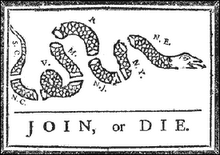
We all feel a need to belong, to be accepted. We satisfy this need in part by affiliating ourselves with various groups--religions, schools, nationality, organizations, gender, professional associations, skin color, sports teams, etc.
The downside of affiliation is that we are prone to disengage our capacity for reason and self-awareness when we are part of a group. The phenomenon goes by many tags--groupthink, herd behavior, crowd mentality, social control, etc.
When we surrender capacity for reason and self-awareness (perhaps the most important ways that we differ from the rest of the animal kingdom), we are less capable of sound judgment. We are less able to compare actual position to our internal compass and judge good from bad, truth from lies, right from wrong.
As members of groups, we might develop an institutional mentality that condones or rationalizes practices that we would never dream of sanctioning or performing on our own.
Jefferson understood the danger of affiliation. He wrote:
"I never submitted the whole system of my opinions to the creed of any party of men whatever, in religion, in philosophy, in politics, or in anything else where I was capable of thinking for myself. Such as addiction is the last degradation of a free and moral agent. If I could not go to heaven but with a party, then I would not go there at all." (Nock: 175)
The lesson is to choose your affiliations, and your involvement in them, carefully.
Reference
Nock, A.J. (1935). Our enemy, the state. Caldwell, Idaho: The Caxton Printers, LTD.
Wednesday, July 10, 2013

Tuesday, July 9, 2013
Savings and Economic Growth
Maybe someday
Saved by zero
I'll be more together
Stretched by fewer
--The Fixx
Nice primer on why it is saving, not consumption, that drives economic growth. The logic is grounded in basic axioms. The natural state of the world is one of scarcity. Alleviating scarcity requires production--i.e., the combination of labor with other factors of production.
If all production is consumed, then standard of living is maximized in the here and now. However, consuming all production leaves nothing for growth in the future. The only way production can increase in the future is to set aside some of today's production in the form of savings, and then apply those savings toward projects that offer promise for improving future productivity (defined as the amount of output obtained per scarce unit of input).
Think of it this way. Suppose you wish to cure cancer. Curing cancer requires research. Research requires researchers. People engaged in research must eat, cloth themselves, have a place to live, etc. Where do the resources come from to support those researchers working hard to cure cancer?
The answer is that they can only come from production that others have set aside. If all production is consumed, then nothing is left over to support cancer research.
The same holds true for any productivity improvement project. Production set aside becomes savings. Savings becomes capital. Capital drives productivity improvement.
The basic proposition is this: the higher the savings rates, the greater the future economic growth.
Policymakers currently believe that consumption drives economic growth. They are pulling out all stops to encourage borrowing (i.e., consuming more than one's income by borrowing from others) and spending (consumption).
Meanwhile, policies that suppress returns on savings below the natural rate of interest discourage people from setting income aside.
What we are engaging in is capital consumption. When capital is consumed to boost standard of living in the here and now, we kill the goose that lays golden eggs for future prosperity.
Saved by zero
I'll be more together
Stretched by fewer
--The Fixx
Nice primer on why it is saving, not consumption, that drives economic growth. The logic is grounded in basic axioms. The natural state of the world is one of scarcity. Alleviating scarcity requires production--i.e., the combination of labor with other factors of production.
If all production is consumed, then standard of living is maximized in the here and now. However, consuming all production leaves nothing for growth in the future. The only way production can increase in the future is to set aside some of today's production in the form of savings, and then apply those savings toward projects that offer promise for improving future productivity (defined as the amount of output obtained per scarce unit of input).
Think of it this way. Suppose you wish to cure cancer. Curing cancer requires research. Research requires researchers. People engaged in research must eat, cloth themselves, have a place to live, etc. Where do the resources come from to support those researchers working hard to cure cancer?
The answer is that they can only come from production that others have set aside. If all production is consumed, then nothing is left over to support cancer research.
The same holds true for any productivity improvement project. Production set aside becomes savings. Savings becomes capital. Capital drives productivity improvement.
The basic proposition is this: the higher the savings rates, the greater the future economic growth.
Policymakers currently believe that consumption drives economic growth. They are pulling out all stops to encourage borrowing (i.e., consuming more than one's income by borrowing from others) and spending (consumption).
Meanwhile, policies that suppress returns on savings below the natural rate of interest discourage people from setting income aside.
What we are engaging in is capital consumption. When capital is consumed to boost standard of living in the here and now, we kill the goose that lays golden eggs for future prosperity.
Monday, July 8, 2013
Off Course
So if you're lost and on your own
You can never surrender
And if your path won't lead you home
You can never surrender
--Corey Hart
Recent Gallup data suggest that most Americans think that the signers of the Declaration would be disappointed with the way things have turned out. Nearly 3/4 of respondents thought so, up from less than half a decade ago.

This is encouraging in some ways. It demonstrates that most Americans do have a sense of the principles upon which this country was founded and an awareness of the growing gap between 'actual' and 'intended.'
Their internal compasses are working.
Moreover, it raises hope that the more people are aware of the gap, the greater the action to close the gap.
You can never surrender
And if your path won't lead you home
You can never surrender
--Corey Hart
Recent Gallup data suggest that most Americans think that the signers of the Declaration would be disappointed with the way things have turned out. Nearly 3/4 of respondents thought so, up from less than half a decade ago.

This is encouraging in some ways. It demonstrates that most Americans do have a sense of the principles upon which this country was founded and an awareness of the growing gap between 'actual' and 'intended.'
Their internal compasses are working.
Moreover, it raises hope that the more people are aware of the gap, the greater the action to close the gap.
Sunday, July 7, 2013
Jesus and Socialism
"Their prophet says 'submit.' Jesus says 'decide.'"
--Sybilla (Kingdom of Heaven)
Occasionally I see bumper stickers or other media that read "Jesus was a socialist." People who claim this either do not understand the definition of socialism or have not studied the life of Christ.
Socialism is public ownership and control of production. Stated differently, it is public ownership of property. There are no individual rights. Because life and liberty are linked to property, socialist systems are systems are anti-freedom and pro-authoritarian. Central authorities decide what gets produced, who does the production, and who gets the production. Socialism opposes natural law and its axioms. It is a system of force and aggression.
If Jesus was a socialist, then he would have advocated central planning and forceful submission. Imagine, for example, Christ ordering the Apostles to draw their swords and confiscate loaves and fishes from the crowd for his discretionary redistribution.
Jesus lived a life of non-aggression and volunteerism. He told people that following in his footsteps would be difficult, but people would not be forced to do so. This difficult choice was up to each individual.
Cooperate with each other, he said. Do not force others to do your will.
His death and resurrection were ultimate demonstrations of freedom over force. As Paul wrote:
"For freedom, Christ set us free. Stand firm, therefore, and do not submit again to the yoke of slavery."--Galations 5:1
Anti-freedom systems such as socialism are anti-Christ.
--Sybilla (Kingdom of Heaven)
Occasionally I see bumper stickers or other media that read "Jesus was a socialist." People who claim this either do not understand the definition of socialism or have not studied the life of Christ.
Socialism is public ownership and control of production. Stated differently, it is public ownership of property. There are no individual rights. Because life and liberty are linked to property, socialist systems are systems are anti-freedom and pro-authoritarian. Central authorities decide what gets produced, who does the production, and who gets the production. Socialism opposes natural law and its axioms. It is a system of force and aggression.
If Jesus was a socialist, then he would have advocated central planning and forceful submission. Imagine, for example, Christ ordering the Apostles to draw their swords and confiscate loaves and fishes from the crowd for his discretionary redistribution.
Jesus lived a life of non-aggression and volunteerism. He told people that following in his footsteps would be difficult, but people would not be forced to do so. This difficult choice was up to each individual.
Cooperate with each other, he said. Do not force others to do your will.
His death and resurrection were ultimate demonstrations of freedom over force. As Paul wrote:
"For freedom, Christ set us free. Stand firm, therefore, and do not submit again to the yoke of slavery."--Galations 5:1
Anti-freedom systems such as socialism are anti-Christ.
Saturday, July 6, 2013
Making a Market for Freedom
"Oh...people will come, Ray. People will most definitely come."
--Terence Mann (Field of Dreams)
When the United States of America was founded, there were no other countries operating under the auspices of inalienable rights, equal treatment under the law, and self rule. Instead, the dominant design was one of rights conferred by rulers, discretionary treatment under the law, and submission.
The US was like the entrepreneur with the radical new idea. It made a market for a design that did not exist elsewhere: liberty. The idea was to create an environment where people could pursue their interests unencumbered by aggression from others.
It was not a perfect design out of the gates. But it was so radically different from other designs that people around the world took notice.
Almost immediately, there were buyers of the idea. Immigrants, flocked to the US to trade previous positions of restraint for the prospect of living in pursuit of their dreams.
It was that market, the market for freedom, that rapidly elevated the standard of living of the United States to a position that made it the envy of the world.
Unfortunately, for over a century, we have been poisoning the market for freedom. The poison is part socialism, part imperialism. Liberty is being replaced with aggression--often done in the name of 'security' or of 'the greater good.'
But the greater good does not benefit from restraining the individual. For most people, standard of living is now stagnant or falling. We find ourselves borrowing more and more in an attempt to stay even.
Liberty remains the radical, entrepreneurial idea. Revive this market, and watch people once again come together to create and trade in pursuit of their dreams.
--Terence Mann (Field of Dreams)
When the United States of America was founded, there were no other countries operating under the auspices of inalienable rights, equal treatment under the law, and self rule. Instead, the dominant design was one of rights conferred by rulers, discretionary treatment under the law, and submission.
The US was like the entrepreneur with the radical new idea. It made a market for a design that did not exist elsewhere: liberty. The idea was to create an environment where people could pursue their interests unencumbered by aggression from others.
It was not a perfect design out of the gates. But it was so radically different from other designs that people around the world took notice.
Almost immediately, there were buyers of the idea. Immigrants, flocked to the US to trade previous positions of restraint for the prospect of living in pursuit of their dreams.
It was that market, the market for freedom, that rapidly elevated the standard of living of the United States to a position that made it the envy of the world.
Unfortunately, for over a century, we have been poisoning the market for freedom. The poison is part socialism, part imperialism. Liberty is being replaced with aggression--often done in the name of 'security' or of 'the greater good.'
But the greater good does not benefit from restraining the individual. For most people, standard of living is now stagnant or falling. We find ourselves borrowing more and more in an attempt to stay even.
Liberty remains the radical, entrepreneurial idea. Revive this market, and watch people once again come together to create and trade in pursuit of their dreams.
Friday, July 5, 2013
Progressivism, Finality, and Truth
"You can't handle the truth!"
--Col Nathan Jessup (A Few Good Men)
On July 5th, 1926, President Calvin Coolidge delivered a speech in Philadelphia to mark the 150th anniversary of the signing of the Declaration of Independence. Coolidge demonstrates an understanding of the historical context of this country's founding that few modern presidents have matched. Among the documents that I would like to share and discuss with the young, this would certainly be one of them.
About three quarters of the way down, Coolidge addresses the common Progressive argument, one amplified during the Wilson administration, that, because the world has seen much advancement since 1776, the conclusions reached by those who founded the country, and the laws upon which those conclusions were based, are no longer relevant. Instead, the Progressive argument goes, those outdated ideas should be replaced by something more modern.
Coolidge argues that such reasoning does not apply to to the Declaration because, unlike technological advancements that render prior designs obsolete, the Declaration contains discoveries about natural law that are final and don't change with the wind. If man concludes that all people are created equal, then that is final. If they are endowed with inalienable rights, then that is final. If government derives just power from the consent of the governed, then that is final.
No advance or progress can be made beyond those propositions. Those wishing to deny the soundness of these propositions do not advance forward, but backward to a time when there was no recognition of equality, individual rights, or self rule. Those wishing to proceed backward are not more modern, but more ancient.
What Coolidge is saying is that the Declaration expresses several important findings in man's pursuit of truth. Truth that is durable is final.
Backing away from the propositions of the Declaration equates to backing away from durable truth.
--Col Nathan Jessup (A Few Good Men)
On July 5th, 1926, President Calvin Coolidge delivered a speech in Philadelphia to mark the 150th anniversary of the signing of the Declaration of Independence. Coolidge demonstrates an understanding of the historical context of this country's founding that few modern presidents have matched. Among the documents that I would like to share and discuss with the young, this would certainly be one of them.
About three quarters of the way down, Coolidge addresses the common Progressive argument, one amplified during the Wilson administration, that, because the world has seen much advancement since 1776, the conclusions reached by those who founded the country, and the laws upon which those conclusions were based, are no longer relevant. Instead, the Progressive argument goes, those outdated ideas should be replaced by something more modern.
Coolidge argues that such reasoning does not apply to to the Declaration because, unlike technological advancements that render prior designs obsolete, the Declaration contains discoveries about natural law that are final and don't change with the wind. If man concludes that all people are created equal, then that is final. If they are endowed with inalienable rights, then that is final. If government derives just power from the consent of the governed, then that is final.
No advance or progress can be made beyond those propositions. Those wishing to deny the soundness of these propositions do not advance forward, but backward to a time when there was no recognition of equality, individual rights, or self rule. Those wishing to proceed backward are not more modern, but more ancient.
What Coolidge is saying is that the Declaration expresses several important findings in man's pursuit of truth. Truth that is durable is final.
Backing away from the propositions of the Declaration equates to backing away from durable truth.
Thursday, July 4, 2013
Chasing Liberty
"So, here's to the men who did what was considered wrong, in order to do what they knew was right...what they KNEW was right."
--Benjamin Franklin Gates (National Treasure)
Two hundred and thirty seven years ago, a group of people put forth a declaration that was fully aligned with natural law yet considered fully radical at the time.
That all people were born equally free. That individuals had the right to pursue their interests unencumbered by aggression from others. That no worldly entity could legitimately revoke this right to liberty. That government power comes from those governed. That when government no longer acts to secure liberty, those governed are justified in throwing off that government in favor of a more capable one.
It seems that more people are waking up to the importance of this day. That's positive.
The negative is that we continue to cede freedom away. The history of the world can be seen as the struggle of force versus freedom. Thus far, force has claimed the upper hand.
Today we celebrate a day when freedom turned the tide. The question is whether this was merely a temporary turn.
--Benjamin Franklin Gates (National Treasure)
Two hundred and thirty seven years ago, a group of people put forth a declaration that was fully aligned with natural law yet considered fully radical at the time.
That all people were born equally free. That individuals had the right to pursue their interests unencumbered by aggression from others. That no worldly entity could legitimately revoke this right to liberty. That government power comes from those governed. That when government no longer acts to secure liberty, those governed are justified in throwing off that government in favor of a more capable one.
It seems that more people are waking up to the importance of this day. That's positive.
The negative is that we continue to cede freedom away. The history of the world can be seen as the struggle of force versus freedom. Thus far, force has claimed the upper hand.
Today we celebrate a day when freedom turned the tide. The question is whether this was merely a temporary turn.
Wednesday, July 3, 2013
Distrusting Government
Hey hung up Mr Normal
Don't try and gain my trust
'Cause you ain't gonna follow me in any of those ways
Although you think you must
--The Who
Recently, President Obama attempted to paint those who distrust government as misguided or extreme. Rand Paul countered, observing that America was founded in the spirit of distrust of government. Truth is on RP's side, as Walter Williams demonstrates. Not only is public distrust of government growing, but the original design, as well as comments from the framers, are all consistent with the understanding that government power must be carefully metered.
Williams observes that even the Supreme Court, who many have bowed to as having the ultimate authority in all things legal, is not to be trusted. He quotes Thomas Jefferson:
"To consider the judges as the ultimate arbiters of all constitutional questions is a very dangerous doctrine indeed, and would place us under the despotism of an oligarchy."
Jefferson and Madison penned the Kentucky and Virginia Resolutions in response to the Alien and Sedition Acts of the late 1790s. They stated that Americans are not bound to unlimited submission to laws enacted by the federal government that exceed its constitutional powers. In such instances, citizens can choose not to obey, or nullify, the law.
Nullification and its close cousin secession are ultimate expressions of distrust in government. Two hundred and thirty seven years ago, we chose not to obey.
Don't try and gain my trust
'Cause you ain't gonna follow me in any of those ways
Although you think you must
--The Who
Recently, President Obama attempted to paint those who distrust government as misguided or extreme. Rand Paul countered, observing that America was founded in the spirit of distrust of government. Truth is on RP's side, as Walter Williams demonstrates. Not only is public distrust of government growing, but the original design, as well as comments from the framers, are all consistent with the understanding that government power must be carefully metered.
Williams observes that even the Supreme Court, who many have bowed to as having the ultimate authority in all things legal, is not to be trusted. He quotes Thomas Jefferson:
"To consider the judges as the ultimate arbiters of all constitutional questions is a very dangerous doctrine indeed, and would place us under the despotism of an oligarchy."
Jefferson and Madison penned the Kentucky and Virginia Resolutions in response to the Alien and Sedition Acts of the late 1790s. They stated that Americans are not bound to unlimited submission to laws enacted by the federal government that exceed its constitutional powers. In such instances, citizens can choose not to obey, or nullify, the law.
Nullification and its close cousin secession are ultimate expressions of distrust in government. Two hundred and thirty seven years ago, we chose not to obey.
Tuesday, July 2, 2013
Government Fears an Informed Public
"Where once you had the freedom to object, to think and speak as you saw fit, you now have censors and systems of surveillance coercing your conformity and soliciting your submission."
--V (V for Vendetta)
Edward Snowden continues to demonstrate the stuff of heroes. He states that President Obama has reneged on his promise that there would be no diplomatic 'wheeling and dealing' over Snowden's case. Now, the Obama administration is pressuring foreign governments to deny Snowden's asylum petitions.
Snowden observes that the right to seek asylum is an inalienable one. Individuals have the right to defend themselves. This includes the right to seek the help of others for self-defense purposes.
The US government is moving to offend the rights that it was famously founded to defend.
Snowden observes, "These are the old, bad tools of political aggression. Their purpose is to frighten, not me, but those who would come after me."
Snowden astutely notes that in the end, the Obama administration does not fear whistleblowers like him. What it and all governments really fear is "an informed, angry public demanding the constitutional government it was promised."
Sage words for us to reflect on as we begin our Independence Day celebrations.
--V (V for Vendetta)
Edward Snowden continues to demonstrate the stuff of heroes. He states that President Obama has reneged on his promise that there would be no diplomatic 'wheeling and dealing' over Snowden's case. Now, the Obama administration is pressuring foreign governments to deny Snowden's asylum petitions.
Snowden observes that the right to seek asylum is an inalienable one. Individuals have the right to defend themselves. This includes the right to seek the help of others for self-defense purposes.
The US government is moving to offend the rights that it was famously founded to defend.
Snowden observes, "These are the old, bad tools of political aggression. Their purpose is to frighten, not me, but those who would come after me."
Snowden astutely notes that in the end, the Obama administration does not fear whistleblowers like him. What it and all governments really fear is "an informed, angry public demanding the constitutional government it was promised."
Sage words for us to reflect on as we begin our Independence Day celebrations.
Monday, July 1, 2013
Self-Interest and Selfishness
And the men who spurred us on
Sit in judgement of all wrong
They decide and
The shotgun sings the song
--The Who
An axiom of human behavior is that people act. They act in ways perceived as bettering their position vs their present condition. In other words, people act in their own self-interest.
Self-interested action may be oriented toward acquiring material wealth. Or it may be oriented toward acquiring psychic income. Indeed, a person may give up material wealth in order to gain psychic income, as in the case of someone who gives to charity in exchange for a good feeling about helping others.
A subset of psychic income is spiritual income. People might give to charity because they believe that this action will better position them for the Afterlife.
Is acting in one's own self-interest equivalent to acting selfishly?
If selfishness is defined as acting out of concern for one's own interests, then the answer is yes. The objective of human action is to improve one's material or psychic position.
However, if selfishness is defined as acting out of excessive concern for one's own interests relative to others, then the answer is ambiguous. Judgment must be rendered on what constitutes excessive concern for oneself versus others.
Who best renders such a judgment? It is common for people to look upon the behavior of others and label it selfish. The problem, of course, is that these judges are employing their personal standards of what constitutes 'excessive' self-interest in others. And because those judges are acting in their own self-interest, the judgment rendered is sure to be one that promises income, whether it be material or psychic, to the judges. For instance, calling someone else selfish may make some accusers feel superior to the accused.
Scripture warns about casting such stones at others...
There are only two qualified judges of what constitutes overly selfish behavior. Each individual has to make a personal judgment, grounded in conscience, on the righteousness of his/her actions.
The final arbiter, of course, is the Creator, who will render decisive judgment.
Sit in judgement of all wrong
They decide and
The shotgun sings the song
--The Who
An axiom of human behavior is that people act. They act in ways perceived as bettering their position vs their present condition. In other words, people act in their own self-interest.
Self-interested action may be oriented toward acquiring material wealth. Or it may be oriented toward acquiring psychic income. Indeed, a person may give up material wealth in order to gain psychic income, as in the case of someone who gives to charity in exchange for a good feeling about helping others.
A subset of psychic income is spiritual income. People might give to charity because they believe that this action will better position them for the Afterlife.
Is acting in one's own self-interest equivalent to acting selfishly?
If selfishness is defined as acting out of concern for one's own interests, then the answer is yes. The objective of human action is to improve one's material or psychic position.
However, if selfishness is defined as acting out of excessive concern for one's own interests relative to others, then the answer is ambiguous. Judgment must be rendered on what constitutes excessive concern for oneself versus others.
Who best renders such a judgment? It is common for people to look upon the behavior of others and label it selfish. The problem, of course, is that these judges are employing their personal standards of what constitutes 'excessive' self-interest in others. And because those judges are acting in their own self-interest, the judgment rendered is sure to be one that promises income, whether it be material or psychic, to the judges. For instance, calling someone else selfish may make some accusers feel superior to the accused.
Scripture warns about casting such stones at others...
There are only two qualified judges of what constitutes overly selfish behavior. Each individual has to make a personal judgment, grounded in conscience, on the righteousness of his/her actions.
The final arbiter, of course, is the Creator, who will render decisive judgment.
Subscribe to:
Posts (Atom)
![[Most Recent Quotes from www.kitco.com]](http://www.kitconet.com/charts/metals/gold/t24_au_en_usoz_2.gif)