With nothing to show, just sweat from my soul
My heart's on the line, and I'm dying to go
Look at us now, gonna make it somehow
Hold onto me baby, can't hold me down
--Night Ranger
A couple months back, we discussed a thoughtstream that was making the rounds on the Left: the claim that people's actions and success is dependent on government, and that people should therefore feel obligated to suport such government-sponsored 'benevolence.'
Strangely enough, President Obama is now weaving it into his campaign rhetoric.
If the president persists with this approach, it will be interesting to see how Americans digest this claim. Some are already pushing back. And the satire is cranking up (see above example).
Rhethoric like this may serve to awaken many who have been in Matrix-like slumber.
Tuesday, July 17, 2012
Monday, July 16, 2012
Yield Curve in 3D
I've been look so long at these pictures of you
That I almost believe that they're real
I've been living so long with my pictures of you
That I almost believe that the pictures are all that I feel
--The Cure
Am not a big fan of 3-D graphs. My experience is that information is lost when trying to express that third dimension in two dimensional space.
However, this 3D of the Treasury yield curve since 1990 (source here) does a good job of capturing level and trend in yield curve over time.
If the previous decade (1980-1990) was included, one could REALLY get a picture of how far we've come. (In 1980, 10 yr yields were north of 15%).
New perspective on policy blunders and the resulting financial repression. Will likely also look back on this with 'coiling a spring' type metaphors.
no positions
That I almost believe that they're real
I've been living so long with my pictures of you
That I almost believe that the pictures are all that I feel
--The Cure
Am not a big fan of 3-D graphs. My experience is that information is lost when trying to express that third dimension in two dimensional space.
However, this 3D of the Treasury yield curve since 1990 (source here) does a good job of capturing level and trend in yield curve over time.
If the previous decade (1980-1990) was included, one could REALLY get a picture of how far we've come. (In 1980, 10 yr yields were north of 15%).
New perspective on policy blunders and the resulting financial repression. Will likely also look back on this with 'coiling a spring' type metaphors.
no positions
Safety Dance
I say, we can go where we want to
A place where they'll never find
And we can act like we come from out of this world
Leave the real one far behind
--Men Without Hats
Standout action this am is in Treasuries (and other sovereign debt perceived as 'risk free').
Ten year yields are back down near all time lows this morning at ~1.45%.
Govies have been trading out of synch w stocks recently. SPX is near top of trading channel while bond yields near record lows. Doubt the divergence will last.
position in SPX
A place where they'll never find
And we can act like we come from out of this world
Leave the real one far behind
--Men Without Hats
Standout action this am is in Treasuries (and other sovereign debt perceived as 'risk free').
Ten year yields are back down near all time lows this morning at ~1.45%.
Govies have been trading out of synch w stocks recently. SPX is near top of trading channel while bond yields near record lows. Doubt the divergence will last.
position in SPX
Sunday, July 15, 2012
Don't Tread on Me
Charlotte Selton: You have done nothing for which you should be ashamed.
Benjamin Martin: I have done nothing. And for that I am ashamed.
--The Patriot
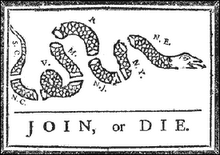
Alongside bald eagles, rattlesnakes became early symbols of American ideals. Their nasty nature when provoked made rattlesnakes popular metaphors among Colonials who increasingly identified with their own communities and with the idea of liberty instead of with the British empire.
As the American Revolution commenced, flags and other paraphenalia commonly featured images of coiled rattlesnakes and the motto 'Don't Tread on Me.'
Among the most famous of these was the Gadsden flag. Christopher Gadsden was a colonel in the Continental army who developed several copies of a yellow fielded rattlesnake standard for the army and for his home state of South Carolina. The Gadsden flag flew over Charleston in 1776.
The Gadsden flag was considered one of the first flags of the United States. It was replaced by the current Stars and Stripes standard in 1777.
Its association with American ideals of liberty and disagreement with government finds the Gadsden flag popular among people seeking a return toward those ideals. The flag can be seen at many Tea Party events, for example.
Naturally, it has handsomely decorated this blog since the first post.
Benjamin Martin: I have done nothing. And for that I am ashamed.
--The Patriot
Alongside bald eagles, rattlesnakes became early symbols of American ideals. Their nasty nature when provoked made rattlesnakes popular metaphors among Colonials who increasingly identified with their own communities and with the idea of liberty instead of with the British empire.
As the American Revolution commenced, flags and other paraphenalia commonly featured images of coiled rattlesnakes and the motto 'Don't Tread on Me.'
Among the most famous of these was the Gadsden flag. Christopher Gadsden was a colonel in the Continental army who developed several copies of a yellow fielded rattlesnake standard for the army and for his home state of South Carolina. The Gadsden flag flew over Charleston in 1776.
The Gadsden flag was considered one of the first flags of the United States. It was replaced by the current Stars and Stripes standard in 1777.
Its association with American ideals of liberty and disagreement with government finds the Gadsden flag popular among people seeking a return toward those ideals. The flag can be seen at many Tea Party events, for example.
Naturally, it has handsomely decorated this blog since the first post.
Saturday, July 14, 2012
Rationalizing Robbery
Take my money, my cigarettes
I haven't seen the worst of it yet
I wanna know, can't you tell me?
I love to stay
--Talking Heads
A society consists of 100 people. They produce and engage in trade. The productivity of 25 people is relatively low; these people earn $10,000 each. The productivity of seventy four is 5X that of the low producers; people in this group earn $50,000. One of the individuals is 100X more productive than the low producers and earns $1,000,000.
Naturally, all of the people would like higher incomes. One way to do this is to become more productive. Increased productivity requires a) more hours of work or b) combining economic resources that have not been consumed into tools that increase output per hour of labor.
The other way to do this is to acquire income produced by others. Acquiring resources in this manner requires either voluntary charity, where those with more share with those who have less, or force, where those with more are forced to surrender income to those with the power to do violence.
Because people generally prefer less effort over more effort and leisure over work, there is a likelihood that some will seek to forcefully take resources from others. As such, the people form a government authorized to use force in order to assist individuals in protecting their property from forceful invasion by others.
However, it crosses the minds of a number of low and mid-range producers that they might employ the strong arm of government to acquire income from some of the higher producers--particularly that single $1 million earner.
Perhaps if they argued that the high earners should surrender a 'fair share' of their property in the name of 'social justice,' then a majority of people will back a decree that agents of the government shall take a fraction of income from the high producers under conditions of force. This income will be redistributed to others at the discretion of government officials.
Worth a try, the group of lower producers thought. They get busy on their plan.
I haven't seen the worst of it yet
I wanna know, can't you tell me?
I love to stay
--Talking Heads
A society consists of 100 people. They produce and engage in trade. The productivity of 25 people is relatively low; these people earn $10,000 each. The productivity of seventy four is 5X that of the low producers; people in this group earn $50,000. One of the individuals is 100X more productive than the low producers and earns $1,000,000.
Naturally, all of the people would like higher incomes. One way to do this is to become more productive. Increased productivity requires a) more hours of work or b) combining economic resources that have not been consumed into tools that increase output per hour of labor.
The other way to do this is to acquire income produced by others. Acquiring resources in this manner requires either voluntary charity, where those with more share with those who have less, or force, where those with more are forced to surrender income to those with the power to do violence.
Because people generally prefer less effort over more effort and leisure over work, there is a likelihood that some will seek to forcefully take resources from others. As such, the people form a government authorized to use force in order to assist individuals in protecting their property from forceful invasion by others.
However, it crosses the minds of a number of low and mid-range producers that they might employ the strong arm of government to acquire income from some of the higher producers--particularly that single $1 million earner.
Perhaps if they argued that the high earners should surrender a 'fair share' of their property in the name of 'social justice,' then a majority of people will back a decree that agents of the government shall take a fraction of income from the high producers under conditions of force. This income will be redistributed to others at the discretion of government officials.
Worth a try, the group of lower producers thought. They get busy on their plan.
Labels:
democracy,
freedom,
government,
intervention,
productivity,
property,
socialism,
taxes
Friday, July 13, 2012
History of Libertarianism
Benjamin Martin: May I sit with you?
Charlotte Selton: It's a free country. Or at least it will be.
--The Patriot
Here is a great overview of the history of libertarianism. I plan re-read this and perhaps sketch an outline.
As stated at the outset, all political philosophies boil down to one of two genres. One is a philosophy of liberty, where people should be free to live their lives as they see fit, as long as they don't forcefully intrude on the pursuits of others to do the same.
The other is a philosophy of power, where some people should be able to force others to do their bidding.
One thing that stuck out to me when reading this is that the philosophy of liberty was being shaped long before the Lockean 1600, with ideas about natural law being proffered before Christ. Of course, the default state of the world was conquest and despotism. The dominant logic was that there were two classes of people: the rulers and the ruled.
Various people ranging from Sophocles to St Thomas Aquinas to John Milton to the Levellers helped people see otherwise. Individuals were born free, and endowed with inalienable rights to pursue their interests unencumbered by forceful invasion by others.
By the time Locke, Voltaire, Trenchant & Gordon, and others began organizing the theory of natural law, the world was receptive. And, as much of this thought was being developed in Europe, the ideas were exported to the American colonies where they were further refined by a people hungry for freedom.
The course of history was readying for a big change.
Charlotte Selton: It's a free country. Or at least it will be.
--The Patriot
Here is a great overview of the history of libertarianism. I plan re-read this and perhaps sketch an outline.
As stated at the outset, all political philosophies boil down to one of two genres. One is a philosophy of liberty, where people should be free to live their lives as they see fit, as long as they don't forcefully intrude on the pursuits of others to do the same.
The other is a philosophy of power, where some people should be able to force others to do their bidding.
One thing that stuck out to me when reading this is that the philosophy of liberty was being shaped long before the Lockean 1600, with ideas about natural law being proffered before Christ. Of course, the default state of the world was conquest and despotism. The dominant logic was that there were two classes of people: the rulers and the ruled.
Various people ranging from Sophocles to St Thomas Aquinas to John Milton to the Levellers helped people see otherwise. Individuals were born free, and endowed with inalienable rights to pursue their interests unencumbered by forceful invasion by others.
By the time Locke, Voltaire, Trenchant & Gordon, and others began organizing the theory of natural law, the world was receptive. And, as much of this thought was being developed in Europe, the ideas were exported to the American colonies where they were further refined by a people hungry for freedom.
The course of history was readying for a big change.
Thursday, July 12, 2012
Convenient Inconsistency
"But does it make any sense?"
--Dr Stephen Falken (WarGames)
When reading discourse surrounding Chief Justice Roberts' healthcare ruling, one frequently encounters words like 'twisted,' 'tormented,' and 'tortured' to describe his arguments for justifying the individual mandate as a tax. I've described it similarly.
Most bothersome to me about Roberts' opinion is its inconsistency. When arguing the individual mandate as unconstitutional under the Commerce and Necessary and Proper clauses (see Roberts 15-30), Roberts constantly refers to the framers' intent to limit federal government power. Because the individual mandate forces individuals into unwanted commercial activity, Roberts concludes that the mandate is unconstitutional.
Then Roberts commences his tax argument (see Roberts 31-44). Not only is the argument disjointed and logically 'jumpy,' but it is void of the original intent basis of the previous section. Instead of considering the framers' intent to limit federal government power via taxes, Roberts attempts arguments that imply that federal taxing power is essentially unlimited. What he construes to be unconstitutional via the Commerce clause argument is construed as constitutional via Congress's taxing power.
Thus, we have a ruling that implies that Congress can lawfully command any behavior that it pleases, whether or not the subject of that behavior is a power granted to the Congress by the Constitution, and it may punish noncompliance with that command, as long as the punishment is called a 'tax.'
How this is consistent with the framers' original intent of limiting government power escapes me. Roberts recognizes the limited government notion in one part of his argument but ignores it in another part.
The hallmark of strong arguments is consistency in underlying reason. Weak arguments, on the other hand, conveniently pick and choose.
Roberts chose convenience.
--Dr Stephen Falken (WarGames)
When reading discourse surrounding Chief Justice Roberts' healthcare ruling, one frequently encounters words like 'twisted,' 'tormented,' and 'tortured' to describe his arguments for justifying the individual mandate as a tax. I've described it similarly.
Most bothersome to me about Roberts' opinion is its inconsistency. When arguing the individual mandate as unconstitutional under the Commerce and Necessary and Proper clauses (see Roberts 15-30), Roberts constantly refers to the framers' intent to limit federal government power. Because the individual mandate forces individuals into unwanted commercial activity, Roberts concludes that the mandate is unconstitutional.
Then Roberts commences his tax argument (see Roberts 31-44). Not only is the argument disjointed and logically 'jumpy,' but it is void of the original intent basis of the previous section. Instead of considering the framers' intent to limit federal government power via taxes, Roberts attempts arguments that imply that federal taxing power is essentially unlimited. What he construes to be unconstitutional via the Commerce clause argument is construed as constitutional via Congress's taxing power.
Thus, we have a ruling that implies that Congress can lawfully command any behavior that it pleases, whether or not the subject of that behavior is a power granted to the Congress by the Constitution, and it may punish noncompliance with that command, as long as the punishment is called a 'tax.'
How this is consistent with the framers' original intent of limiting government power escapes me. Roberts recognizes the limited government notion in one part of his argument but ignores it in another part.
The hallmark of strong arguments is consistency in underlying reason. Weak arguments, on the other hand, conveniently pick and choose.
Roberts chose convenience.
Labels:
Constitution,
founders,
health care,
institution theory,
reason,
rhetoric,
taxes
Wednesday, July 11, 2012
Fixed Influence
Lost feelings return
So now maybe I'll learn
To stop this world of a lie
This time around
--The Fixx
Eye opening study by the NY Fed. Suggests that if you factor out market movements from the periods surrounding FOMC announcements since 1994, the SPX would be roughly half of today's level.
Oddly enough, I have been estimating 'fair value' of the SPX right around 600.
The dual money printing, moral hazard card at work.
position in SPX
So now maybe I'll learn
To stop this world of a lie
This time around
--The Fixx
Eye opening study by the NY Fed. Suggests that if you factor out market movements from the periods surrounding FOMC announcements since 1994, the SPX would be roughly half of today's level.
Oddly enough, I have been estimating 'fair value' of the SPX right around 600.
The dual money printing, moral hazard card at work.
position in SPX
Labels:
Fed,
inflation,
intervention,
moral hazard,
valuation
Net Domestic Product
I don't know when to start or when to stop
My luck's like a button
I can't stop pushing it
--General Public
Rothbard discusses the fallacy of viewing the 'public sector' as a legitimate economic producer. He observes, as have we, that aggregate measures of output that include government spending do not accurately reflect what citizens value. Citizens value what they voluntarily purchase.
Government spending is not grounded in voluntary consumer behavior because government spends what it takes by force.
Moreover, as Rothbard observes, government may then spend those resources on outcomes that have no value in the eyes of citizens whatsoever. Insert Garrett's brilliant pyramid analogy here.
A more accurate measure of voluntary consumer spending in the aggregate would be obtained by netting out government spendings from GDP. This 'net domestic product' (NDP) would better reflect what citizens truly value when guns aren't pointed at their heads.
An interesting exercise would be to back calculate NDP for past years and observe the true value of output voluntarily purchased by US citizens.
Because the higher the government spending, the lower the NDP, a couple of things would likely become apparent. One is that standard of living has not been rising nearly as much as reflected by GDP. The other is what could have been had that fraction of national income remained in the hands of the citizenry.
Tuesday, July 10, 2012
Judging Truth
So true
Funny how it seems
Always in time
But never in line for dreams
--Spandau Ballet
A truth can be viewed as something judged as correct. In my view, there stands only one final arbiter of truth, and that is our Creator. However, we have been endowed with powers of judgment so that we can progress in the Creator's image.
But our judgment is imperfect, meaning that we are likely to error in judging what is true. It is also likely that we will judge truth differently over time as a function of learning.
However imperfect our judgment, it seems that there are two dimensions upon which we can judge truth. One dimension is depth of truth. Depth of truth is the extent to which we judge something as true in the here and now.
We evaluate depth of truth thru various methods. We compare a potential truth to what we already know, i.e., to other truths. We employ logic to think through the correctness of a potential truth. We experiment and generate empirical evidence that confirms or disconfirms a potential truth's correctness.
All of these are processes of reason. Indeed, researchers employ these processes when seeking to add to our 'body of knowledge' - i.e., what we know to be true.
The second dimension is longitudinal truth. Longitudinal truth is the extent to which something deemed true in one period holds true over subsequent periods. It has been said that all truths are products of their times. That is necessarily true, as all discoveries are made inside particular periods of history.
But that does not mean that all truths are relative. While some items thought to be true may turn out to be temporary fad or fashion, other truths are durable and withstand 'the test of time.'
Durable truths are particularly valuable since they serve as social linking pins, providing common guideposts to people of various generations as they their interests.
Many people live their lives in pursuit of truth. That pursuit appears to encompass depth and longitudinal dimensions.
Funny how it seems
Always in time
But never in line for dreams
--Spandau Ballet
A truth can be viewed as something judged as correct. In my view, there stands only one final arbiter of truth, and that is our Creator. However, we have been endowed with powers of judgment so that we can progress in the Creator's image.
But our judgment is imperfect, meaning that we are likely to error in judging what is true. It is also likely that we will judge truth differently over time as a function of learning.
However imperfect our judgment, it seems that there are two dimensions upon which we can judge truth. One dimension is depth of truth. Depth of truth is the extent to which we judge something as true in the here and now.
We evaluate depth of truth thru various methods. We compare a potential truth to what we already know, i.e., to other truths. We employ logic to think through the correctness of a potential truth. We experiment and generate empirical evidence that confirms or disconfirms a potential truth's correctness.
All of these are processes of reason. Indeed, researchers employ these processes when seeking to add to our 'body of knowledge' - i.e., what we know to be true.
The second dimension is longitudinal truth. Longitudinal truth is the extent to which something deemed true in one period holds true over subsequent periods. It has been said that all truths are products of their times. That is necessarily true, as all discoveries are made inside particular periods of history.
But that does not mean that all truths are relative. While some items thought to be true may turn out to be temporary fad or fashion, other truths are durable and withstand 'the test of time.'
Durable truths are particularly valuable since they serve as social linking pins, providing common guideposts to people of various generations as they their interests.
Many people live their lives in pursuit of truth. That pursuit appears to encompass depth and longitudinal dimensions.
Subscribe to:
Posts (Atom)


![[Most Recent Quotes from www.kitco.com]](http://www.kitconet.com/charts/metals/gold/t24_au_en_usoz_2.gif)