I guess there is no one to blame
We're leaving ground
Will things ever be the same again?
It's the final countdown
--Europe
Never heard of the SOX to Bond ratio, nor do I know what comprises the 'bond' component. But the ratio of SOX (Philly Semiconductor Index) to a broad measure of bonds suggests some froth in the semis.
Last time the SOX:Bond was this high: the dot.com peak.
Wednesday, July 31, 2019
Tuesday, July 30, 2019
Price-to-Earnings Ratios
Balian of Ibelin: How much is Jerusalem worth?
Saladin: Nothing...Everything!
--Kingdom of Heaven
In a recent post we stressed the importance of valuation. Valuation is the process of estimating how much a security is worth, and comparing that estimate to the current market price.
If you are thinking about buying a particular stock, then valuation helps you answer this question: "If I buy this stock, am I getting a good deal?" As with any purchase, you'd rather not overpay. Valuation helps you get 'the most for your money.'
Many valuation methods exist. For stocks, the most popular one is expressed by what is called the price-to-earnings ratio. The price-to-earnings ratio, or 'P to E,' compares the current share price of a stock to its annual earnings (or net income) per share.
P/E = current stock price per share / annual net income per share
Let's demonstrate. Last week I noted that one of my favorite 'anchor' positions is Johnson & Johnson (JNJ). What is JNJ's current P to E? Price is the easy part. JNJ is quoted at about $132/share this morning.
To find JNJ's earnings, locate the company's income statement for the most recent fiscal year. For the year ending 12/31/18, JNJ reported net income (or earnings) of about $15.3 billion. Currently JNJ has about 2.66 billion shares outstanding. Therefore, earnings per share = $15.3 billion / 2.66 billion shares = $5.75/share.
JNJ's price-to-earnings ratio, then, is $132 / $5.75 = 22.9.
Usually, you won't need to grind out these calculations in your everyday investment research. P/Es are such popular metrics that most investor info sites include them as standard fare.
There is no hard-and-fast rule about what constitutes a 'good' price-to-earnings ratio. However, studies suggest that over long periods (i.e., many decades) of time, the average P/E of the S&P 500 is about 15. All else equal, when stock prices go up, then the P/E increases, implying that valuations are richer or more expensive. Conversely, when stock prices go down, then the P/E declines, implying that valuations are cheaper.
Currently, the PE ratio of the S&P 500 stands at about 22.4, suggesting that stocks as a whole are generally pricey compared to long term averages. On a relative basis, JNJ's P/E calculated above appears to be in-line with the rest of the market.
Although price-to-earnings ratios can be useful, they have several drawbacks--all of them related to the estimate of 'E' in the denominator. Net income figures have often been subjected to accounting tricks that render them inaccurate measures of true cash earnings power. Moreover, analysts often report P/Es on a 'forward' basis, meaning that they use earnings estimates for the coming year rather than actual earnings from the past. This practice complicates interpretation of the metric. Finally, using earnings estimates for a single year does not capture the dynamic cash generating potential of a company over a multitude of future years (which is what you really would like to know).
Despite the warts, price to earnings ratios are good places for investors to begin their valuation analysis.
position in JNJ
Saladin: Nothing...Everything!
--Kingdom of Heaven
In a recent post we stressed the importance of valuation. Valuation is the process of estimating how much a security is worth, and comparing that estimate to the current market price.
If you are thinking about buying a particular stock, then valuation helps you answer this question: "If I buy this stock, am I getting a good deal?" As with any purchase, you'd rather not overpay. Valuation helps you get 'the most for your money.'
Many valuation methods exist. For stocks, the most popular one is expressed by what is called the price-to-earnings ratio. The price-to-earnings ratio, or 'P to E,' compares the current share price of a stock to its annual earnings (or net income) per share.
P/E = current stock price per share / annual net income per share
Let's demonstrate. Last week I noted that one of my favorite 'anchor' positions is Johnson & Johnson (JNJ). What is JNJ's current P to E? Price is the easy part. JNJ is quoted at about $132/share this morning.
To find JNJ's earnings, locate the company's income statement for the most recent fiscal year. For the year ending 12/31/18, JNJ reported net income (or earnings) of about $15.3 billion. Currently JNJ has about 2.66 billion shares outstanding. Therefore, earnings per share = $15.3 billion / 2.66 billion shares = $5.75/share.
JNJ's price-to-earnings ratio, then, is $132 / $5.75 = 22.9.
Usually, you won't need to grind out these calculations in your everyday investment research. P/Es are such popular metrics that most investor info sites include them as standard fare.
There is no hard-and-fast rule about what constitutes a 'good' price-to-earnings ratio. However, studies suggest that over long periods (i.e., many decades) of time, the average P/E of the S&P 500 is about 15. All else equal, when stock prices go up, then the P/E increases, implying that valuations are richer or more expensive. Conversely, when stock prices go down, then the P/E declines, implying that valuations are cheaper.
Currently, the PE ratio of the S&P 500 stands at about 22.4, suggesting that stocks as a whole are generally pricey compared to long term averages. On a relative basis, JNJ's P/E calculated above appears to be in-line with the rest of the market.
Although price-to-earnings ratios can be useful, they have several drawbacks--all of them related to the estimate of 'E' in the denominator. Net income figures have often been subjected to accounting tricks that render them inaccurate measures of true cash earnings power. Moreover, analysts often report P/Es on a 'forward' basis, meaning that they use earnings estimates for the coming year rather than actual earnings from the past. This practice complicates interpretation of the metric. Finally, using earnings estimates for a single year does not capture the dynamic cash generating potential of a company over a multitude of future years (which is what you really would like to know).
Despite the warts, price to earnings ratios are good places for investors to begin their valuation analysis.
position in JNJ
Labels:
fund management,
health care,
manipulation,
measurement,
time horizon,
valuation
Monday, July 29, 2019
Hamilton's Play
"I've been played like a grand piano by the master, Gekko the Great."
--Bud Fox (Wall Street)
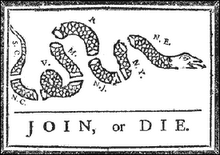
In late July of 1789, the state of New York held its constitutional convention. Ratification by New York was not necessary for the United States to come into being, as the Constitution had already been approved by ten states by the time New York representative met. Only nine 'yes' votes were required.
Instead, the state convention essentially became a referendum on whether New York would join the union.
There was opposition. Drawing from the Antifederalist argument, many worried that the central government would grow too big and powerful, thereby marginalizing state sovereignty.
Nonsense, said one of the greatest proponents of strong central government--New York's own Alexander Hamilton. The co-author of the Federalist Papers addressed the convention:
"Gentlemen indulge too many unreasonable apprehensions of danger to the State governments. They seem to suppose that the moment you put men into a national council, they become corrupt and tyrannical and lose all their affection for their fellow citizens. But can we imagine that the Senators will ever be so insensible of their own advantage as to sacrifice the genuine interest of their constituents?"
The Antifederalists certainly imagined it. And it is difficult to argue with the prescience of their vision.
It is also difficult not to surmise that Hamilton was being at least a tad disingenuous with his esteemed colleagues at the state convention. After all, the ink was barely dry after the state signing before he began arguing that the Constitution contained implied powers that granted the federal government greater authority over the states. Post Constitution, Hamilton became perhaps the most vocal proponent of strong central government.
Did the delegates at the New York ratification convention realize that they were being played?
--Bud Fox (Wall Street)
In late July of 1789, the state of New York held its constitutional convention. Ratification by New York was not necessary for the United States to come into being, as the Constitution had already been approved by ten states by the time New York representative met. Only nine 'yes' votes were required.
Instead, the state convention essentially became a referendum on whether New York would join the union.
There was opposition. Drawing from the Antifederalist argument, many worried that the central government would grow too big and powerful, thereby marginalizing state sovereignty.
Nonsense, said one of the greatest proponents of strong central government--New York's own Alexander Hamilton. The co-author of the Federalist Papers addressed the convention:
"Gentlemen indulge too many unreasonable apprehensions of danger to the State governments. They seem to suppose that the moment you put men into a national council, they become corrupt and tyrannical and lose all their affection for their fellow citizens. But can we imagine that the Senators will ever be so insensible of their own advantage as to sacrifice the genuine interest of their constituents?"
The Antifederalists certainly imagined it. And it is difficult to argue with the prescience of their vision.
It is also difficult not to surmise that Hamilton was being at least a tad disingenuous with his esteemed colleagues at the state convention. After all, the ink was barely dry after the state signing before he began arguing that the Constitution contained implied powers that granted the federal government greater authority over the states. Post Constitution, Hamilton became perhaps the most vocal proponent of strong central government.
Did the delegates at the New York ratification convention realize that they were being played?
Labels:
antifederalists,
Constitution,
intervention,
manipulation,
media,
republic
Sunday, July 28, 2019
New Moon
Fill my heart with song
Let me sing forever more
You are all I long for
All I worship and adore
--Frank Sinatra
Looking back to that first lunar landing and moon walk 50 years ago, it is easy to wonder just how we did it given the state of technology at the time.
Oh, yes. We can be certain that if that mission were being flown today, things would be very different...
Let me sing forever more
You are all I long for
All I worship and adore
--Frank Sinatra
Looking back to that first lunar landing and moon walk 50 years ago, it is easy to wonder just how we did it given the state of technology at the time.
Oh, yes. We can be certain that if that mission were being flown today, things would be very different...
Saturday, July 27, 2019
Since Yesterday
"Screw FDR, screw Hoover. They're all the same. I come home one day I'm standing in my living room, and between the mortgage and the market and the goddamn lawyer that was supposed to be working for me, it stopped being mine. It all stopped being mine. FDR hasn't given me my house back yet."
--Mike Wilson (Cinderella Man)
After the Fed's ill-conceived actions to achieve general price stability during the 1920s brought on the Great Depression, the correct response would have been to get out of the way and let prices fall to permit market excesses to clear.
Unfortunately that is not what occurred.
Many New Deal policies, initiated by the Hoover administration and then escalated by FDR, sought to maintain prices at artificially high levels. Wage rates, commodity prices, you name it. Programs came out of the woodwork to restrain market forces from taking prices where they needed to go: lower.
Paradoxically, many onlookers understood that these price stability policies were ill-conceived--even if these people were committed New Dealers. For example, Frederick Lewis Allen, a journalist who penned what in my view was an even-handed review of the 1920s, betrayed his neutrality with a sequel about the 1930s (Allen, 1939) that was clearly sympathetic toward the New Deal. Despite his bias, however, Allen did admit several times during the book that the interventionary policies did not seem to be working. Unusually high unemployment persisted. Private investment remained stubbornly low. Prosperity had not returned.
At one point, Allen explained the problem this way:
"Throughout the early years of the New Deal the levels of prices and wages and the structure of corporate and private debt were being artificially supported by government spending...If it had been possible for the law of supply and demand to work unhindered, prices and wages--and the volume of corporate and private debt--would theoretically have fallen to a 'natural' level and activity would have been resumed again. But it was not possible for the law of supply and demand to work unhindered. In a complex twentieth-century economy, deflation was too painful to be endured. Hoover had set up the RFC because banks couldn't take it; Roosevelt had set up the Federal relief systems because human beings couldn't take it." (223)
Near the end of his work, Allen pondered the economic malaise that endured into 1939:
"Must America at last be reconciled to the dictum that as its population growth slowed up it economic growth must slow up too? Must it accept either a continuance of this twilight prosperity, with the burden of carrying the unemployed becoming progressively greater, or else a grim deflation of prices and wages and debts till the labor surplus could be absorbed--a deflation which might be even less endurable than that of 1929-33? No one could relish either of those prospects." (334)
Allen and others knew what was needed. But they couldn't take the pain associated with letting markets clear.
That same pain avoidance policy--euphemistically labelled price stability--endures Since Yesterday.
Reference
Allen, F.L. (1939). Since yesterday. New York: Harper & Row.
--Mike Wilson (Cinderella Man)
After the Fed's ill-conceived actions to achieve general price stability during the 1920s brought on the Great Depression, the correct response would have been to get out of the way and let prices fall to permit market excesses to clear.
Unfortunately that is not what occurred.
1934-S 50c PCGS MS66+ CAC
Many New Deal policies, initiated by the Hoover administration and then escalated by FDR, sought to maintain prices at artificially high levels. Wage rates, commodity prices, you name it. Programs came out of the woodwork to restrain market forces from taking prices where they needed to go: lower.
Paradoxically, many onlookers understood that these price stability policies were ill-conceived--even if these people were committed New Dealers. For example, Frederick Lewis Allen, a journalist who penned what in my view was an even-handed review of the 1920s, betrayed his neutrality with a sequel about the 1930s (Allen, 1939) that was clearly sympathetic toward the New Deal. Despite his bias, however, Allen did admit several times during the book that the interventionary policies did not seem to be working. Unusually high unemployment persisted. Private investment remained stubbornly low. Prosperity had not returned.
1937-S 50c PCGS MS66+ CAC
At one point, Allen explained the problem this way:
"Throughout the early years of the New Deal the levels of prices and wages and the structure of corporate and private debt were being artificially supported by government spending...If it had been possible for the law of supply and demand to work unhindered, prices and wages--and the volume of corporate and private debt--would theoretically have fallen to a 'natural' level and activity would have been resumed again. But it was not possible for the law of supply and demand to work unhindered. In a complex twentieth-century economy, deflation was too painful to be endured. Hoover had set up the RFC because banks couldn't take it; Roosevelt had set up the Federal relief systems because human beings couldn't take it." (223)
1939-S 50c PCGS MS67+ CAC
Near the end of his work, Allen pondered the economic malaise that endured into 1939:
"Must America at last be reconciled to the dictum that as its population growth slowed up it economic growth must slow up too? Must it accept either a continuance of this twilight prosperity, with the burden of carrying the unemployed becoming progressively greater, or else a grim deflation of prices and wages and debts till the labor surplus could be absorbed--a deflation which might be even less endurable than that of 1929-33? No one could relish either of those prospects." (334)
Allen and others knew what was needed. But they couldn't take the pain associated with letting markets clear.
That same pain avoidance policy--euphemistically labelled price stability--endures Since Yesterday.
Reference
Allen, F.L. (1939). Since yesterday. New York: Harper & Row.
Labels:
deflation,
Depression,
Fed,
inflation,
intervention,
markets,
natural law
Friday, July 26, 2019
Who Likes High Prices?
Hundred dollar car note
Two hundred rent
I get a check on Friday
But it's already spent
--Huey Lewis and the News
Phillips et al. (1937) convincingly argue that the Federal Reserve was seeking to stabilize general prices at an artificially high level during the 1920s. But who was the central bank trying to placate with this policy? As of yet, the Fed had no formal 'price stability' objective.
The everyday consumer certainly does not clamor for higher prices. Always and everywhere, the average person welcomes lower, not higher, prices in order to extend purchasing power and standard of living. And that is what should occur in unhampered markets as improved productivity thru capital investment puts downward pressure on prices.
Who, then, benefits from prices being propped up? Several groups come to mind.
Inefficient and uncompetitive businesses. It is easier to manage operations when selling prices are high. Environments that exert downward pressure on prices require more capacity for innovation and efficiency. When prices are artificially kept high, less entrepreneurial energy is required.
Leveraged entities. Entities carrying lots of leverage dread lower prices. If you've borrowed money to buy or produce balance sheet assets, then declining price environments threaten your solvency. The value of assets declines while debt values remain constant. Equity gets thinner and, if prices decline enough, you're upside down and busted. Banks are classic examples here. In the 1920s, farmers constituted another large group with a powerful lobby.
Bond sellers. Governments and businesses that want to sell debt can sell to non-economic buyers when central banks are in the market buying via their 'open market operations.' Bond sellers can sell their paper at higher prices and at lower coupons than they otherwise could.
The Fed itself. Legitimacy increases for a central bank that it can manipulate market prices. Moreover, central planners that possess the control gene may not be able to restrain themselves from meddling in monetary affairs.
It is likely that various institutional forces were influencing Federal Reserve actions to prop up prices during the 1920s. Those pressures remain with us today.
Two hundred rent
I get a check on Friday
But it's already spent
--Huey Lewis and the News
Phillips et al. (1937) convincingly argue that the Federal Reserve was seeking to stabilize general prices at an artificially high level during the 1920s. But who was the central bank trying to placate with this policy? As of yet, the Fed had no formal 'price stability' objective.
The everyday consumer certainly does not clamor for higher prices. Always and everywhere, the average person welcomes lower, not higher, prices in order to extend purchasing power and standard of living. And that is what should occur in unhampered markets as improved productivity thru capital investment puts downward pressure on prices.
Who, then, benefits from prices being propped up? Several groups come to mind.
Inefficient and uncompetitive businesses. It is easier to manage operations when selling prices are high. Environments that exert downward pressure on prices require more capacity for innovation and efficiency. When prices are artificially kept high, less entrepreneurial energy is required.
Leveraged entities. Entities carrying lots of leverage dread lower prices. If you've borrowed money to buy or produce balance sheet assets, then declining price environments threaten your solvency. The value of assets declines while debt values remain constant. Equity gets thinner and, if prices decline enough, you're upside down and busted. Banks are classic examples here. In the 1920s, farmers constituted another large group with a powerful lobby.
Bond sellers. Governments and businesses that want to sell debt can sell to non-economic buyers when central banks are in the market buying via their 'open market operations.' Bond sellers can sell their paper at higher prices and at lower coupons than they otherwise could.
The Fed itself. Legitimacy increases for a central bank that it can manipulate market prices. Moreover, central planners that possess the control gene may not be able to restrain themselves from meddling in monetary affairs.
It is likely that various institutional forces were influencing Federal Reserve actions to prop up prices during the 1920s. Those pressures remain with us today.
Thursday, July 25, 2019
Boxing Match
"You stop this fight, I'll kill ya."
--Rocky Balboa (Rocky)
When stocks begin a secular liftoff they often follow a pattern attributable to 'box theory.' Sideways movement punctuated by breakouts to a new range (shaped like a box) on big volume.
Pan American Silver (PAAS) has shown early signs of this pattern. After bottoming at a 52 week low in late May, the stock jumped higher on big volume. It has since jumped two more boxes higher, also on big volume.
This is classic technical action associated with new attention being paid to a stock that is now under accumulation.
Am looking to add to my position should the stock retrace a bit in the current box.
position in PAAS
--Rocky Balboa (Rocky)
When stocks begin a secular liftoff they often follow a pattern attributable to 'box theory.' Sideways movement punctuated by breakouts to a new range (shaped like a box) on big volume.
Pan American Silver (PAAS) has shown early signs of this pattern. After bottoming at a 52 week low in late May, the stock jumped higher on big volume. It has since jumped two more boxes higher, also on big volume.
This is classic technical action associated with new attention being paid to a stock that is now under accumulation.
Am looking to add to my position should the stock retrace a bit in the current box.
position in PAAS
Wednesday, July 24, 2019
Real Thing
I'd like to buy the world a home
And furnish it with love
Grow apple trees, and honey bees
And snow white turtle doves
--The Hillside Singers
Classic example of the bi-polar nature of markets. Six months ago investors dumped Coca-Cola (KO) shares after its earnings report after concerns about the future of soft drink consumption.
Fast forward to this week's quarterly earnings report. Similar results garner a collective cheer, and the stock gaps to all time highs.
Which view is the Real Thing?
position in KO
And furnish it with love
Grow apple trees, and honey bees
And snow white turtle doves
--The Hillside Singers
Classic example of the bi-polar nature of markets. Six months ago investors dumped Coca-Cola (KO) shares after its earnings report after concerns about the future of soft drink consumption.
Fast forward to this week's quarterly earnings report. Similar results garner a collective cheer, and the stock gaps to all time highs.
Which view is the Real Thing?
position in KO
Tuesday, July 23, 2019
Taxable or Tax-Deferred?
Let me tell you how it will be
There's one for you
Nineteen for me
--The Beatles
Since the advent of individual retirement accounts (IRA) and 401(k) employer-sponsored retirement plans over 30 years ago, financial planners have been promoting these 'tax-deferred' investment accounts as the primary vehicles for accumulating retirement resources.
Tax-deferred accounts do have benefits. Each year, individuals can contribute funds, up to a limit, to an IRA or 401(k) 'before tax,' meaning that contributions are subtracted from your paycheck before income taxes are calculated. Moreover, gains from capital appreciation and dividends that accumulate in these accounts are tax-deferred, meaning that account holders do not pay taxes on these gains until withdrawals are made--presumably far down the road during retirement. An additional benefit of 401(k)s is that employers often match a percentage of employee contributions up to a particular limit, offering what essentially amounts to a salary bump for participating employees.
Tax-deferred accounts do carry disadvantages, however. Tax-deferred does not mean tax-free. When individuals do withdraw from IRAs and 401(k)s--and they are legally required to begin doing so by age 70 1/2 if they have not done so sooner. Those distributions are then subject to ordinary income tax. While it is often assumed that individuals will be in lower income tax brackets by the time they retire, the reality is that future tax rates are uncertain, and an argument can be made that future tax rates could be considerably higher depending on the political climate. For instance, higher tax rates might be deemed necessary down the road to fund our burgeoning and ever-increasing federal debt.
One way to reduce this risk is to open what is known as a Roth IRA. Contributions to Roth IRAs are done 'after-tax.' meaning that you pay income taxes upfront on your contributions. Because you've paid taxes on the front end, withdrawals subsequently made during retirement are not subject to further taxes. For many people already involved in saving for retirement using the above-mentioned tax-deferred vehicles, however, Roth IRAs tend to be viewed as more of a supplemental vehicle for wealth-building. Roth IRAs are also subject to future political risk that could reduce or even eliminate the tax benefit.
Perhaps the largest disadvantage associated with tax-deferred accounts is loss of financial flexibility. Once you contribute to an IRA or 401(k), you lose access to those funds for a long period of time. If you want to withdraw from a tax-deferred account before you are legally permitted to do so, then you must pay a substantial penalty. Early withdrawals from a 401(k), for instance, are commonly subject to a 10% penalty in addition to the income tax burden.
The commitment that accompanies tax-deferred investing creates a strange (and risky) situation. Conceivably, you could be socking away lots of excess income in IRAs and 401(k)s yet have insufficient savings available to fund life in the present. By tying up economic resources in tax-deferred vehicles, you can compromise capacity for living in the here-and-now. Your financial flexibility declines.
Can you see that one explanation for rising household debt loads over the past few decades is the diversion of too much income toward IRAs and 401(k)s--which has left these people with insufficient savings for funding everyday expenses? Borrowing has been necessary to make ends meet.
So how did people save for retirement prior to IRAs and 401(k)s? Some employers offered 'pension' plans that promised employees a pre-determined monthly retirement income based on years of service. Most of these 'defined-benefit' plans are being phased out in favor of the 401(k) 'defined-contribution' design. Of course, not everyone worked for employers with rich pension plans. How did they save?
They simply used taxable vehicles. For everyday savings they kept money in checking and savings accounts. Lots of money. High balances in these accounts allowed funding everyday expenses while still saving for the future. For people seeking more potential return on their capital, then they could open taxable brokerage accounts to enable purchase of stocks, bonds, and other risky assets.
Use of taxable saving and investment vehicles permitted previous generations to remain financially flexible. They could comfortably provide for the present while saving for the future in a direct, uncomplicated manner.
Today's focus on IRAs and 401(k)s has reduced awareness of the benefits from taxable saving and investing. In a future post, we'll discuss advantages of taxable brokerage accounts in more detail.
There's one for you
Nineteen for me
--The Beatles
Since the advent of individual retirement accounts (IRA) and 401(k) employer-sponsored retirement plans over 30 years ago, financial planners have been promoting these 'tax-deferred' investment accounts as the primary vehicles for accumulating retirement resources.
Tax-deferred accounts do have benefits. Each year, individuals can contribute funds, up to a limit, to an IRA or 401(k) 'before tax,' meaning that contributions are subtracted from your paycheck before income taxes are calculated. Moreover, gains from capital appreciation and dividends that accumulate in these accounts are tax-deferred, meaning that account holders do not pay taxes on these gains until withdrawals are made--presumably far down the road during retirement. An additional benefit of 401(k)s is that employers often match a percentage of employee contributions up to a particular limit, offering what essentially amounts to a salary bump for participating employees.
Tax-deferred accounts do carry disadvantages, however. Tax-deferred does not mean tax-free. When individuals do withdraw from IRAs and 401(k)s--and they are legally required to begin doing so by age 70 1/2 if they have not done so sooner. Those distributions are then subject to ordinary income tax. While it is often assumed that individuals will be in lower income tax brackets by the time they retire, the reality is that future tax rates are uncertain, and an argument can be made that future tax rates could be considerably higher depending on the political climate. For instance, higher tax rates might be deemed necessary down the road to fund our burgeoning and ever-increasing federal debt.
One way to reduce this risk is to open what is known as a Roth IRA. Contributions to Roth IRAs are done 'after-tax.' meaning that you pay income taxes upfront on your contributions. Because you've paid taxes on the front end, withdrawals subsequently made during retirement are not subject to further taxes. For many people already involved in saving for retirement using the above-mentioned tax-deferred vehicles, however, Roth IRAs tend to be viewed as more of a supplemental vehicle for wealth-building. Roth IRAs are also subject to future political risk that could reduce or even eliminate the tax benefit.
Perhaps the largest disadvantage associated with tax-deferred accounts is loss of financial flexibility. Once you contribute to an IRA or 401(k), you lose access to those funds for a long period of time. If you want to withdraw from a tax-deferred account before you are legally permitted to do so, then you must pay a substantial penalty. Early withdrawals from a 401(k), for instance, are commonly subject to a 10% penalty in addition to the income tax burden.
The commitment that accompanies tax-deferred investing creates a strange (and risky) situation. Conceivably, you could be socking away lots of excess income in IRAs and 401(k)s yet have insufficient savings available to fund life in the present. By tying up economic resources in tax-deferred vehicles, you can compromise capacity for living in the here-and-now. Your financial flexibility declines.
Can you see that one explanation for rising household debt loads over the past few decades is the diversion of too much income toward IRAs and 401(k)s--which has left these people with insufficient savings for funding everyday expenses? Borrowing has been necessary to make ends meet.
So how did people save for retirement prior to IRAs and 401(k)s? Some employers offered 'pension' plans that promised employees a pre-determined monthly retirement income based on years of service. Most of these 'defined-benefit' plans are being phased out in favor of the 401(k) 'defined-contribution' design. Of course, not everyone worked for employers with rich pension plans. How did they save?
They simply used taxable vehicles. For everyday savings they kept money in checking and savings accounts. Lots of money. High balances in these accounts allowed funding everyday expenses while still saving for the future. For people seeking more potential return on their capital, then they could open taxable brokerage accounts to enable purchase of stocks, bonds, and other risky assets.
Use of taxable saving and investment vehicles permitted previous generations to remain financially flexible. They could comfortably provide for the present while saving for the future in a direct, uncomplicated manner.
Today's focus on IRAs and 401(k)s has reduced awareness of the benefits from taxable saving and investing. In a future post, we'll discuss advantages of taxable brokerage accounts in more detail.
Labels:
capacity,
debt,
fund management,
money,
retirement,
risk,
saving,
taxes,
yields
Monday, July 22, 2019
Inflation and the Gold Standard
Revvin' up your engine
Listen to her howlin' roar
Metal under tension
Beggin' you to touch and go
--Kenny Loggins
While absorbing the Phillips et al. (1937) study, I was struck how much money can be created inside a banking system (governed by a central bank) despite the purported 'limitations' of the gold standard. During the 1920s, the USD was still backed by gold to the extent that people could still trade dollars for gold.
Yet central banking policies facilitated the inflation of total quantity of money (particularly credit money) by orders of magnitude while the Twenties 'roared.'
Yes, several factors were working on the monetary system at the time, including some outside the US, that served to confound (and perhaps obscure) the dollar:gold relationship.
But the point is that a gold standard, by itself, does not prevent inflation of the money supply into the danger zone.
position in gold
Listen to her howlin' roar
Metal under tension
Beggin' you to touch and go
--Kenny Loggins
While absorbing the Phillips et al. (1937) study, I was struck how much money can be created inside a banking system (governed by a central bank) despite the purported 'limitations' of the gold standard. During the 1920s, the USD was still backed by gold to the extent that people could still trade dollars for gold.
Yet central banking policies facilitated the inflation of total quantity of money (particularly credit money) by orders of magnitude while the Twenties 'roared.'
Yes, several factors were working on the monetary system at the time, including some outside the US, that served to confound (and perhaps obscure) the dollar:gold relationship.
But the point is that a gold standard, by itself, does not prevent inflation of the money supply into the danger zone.
position in gold
Subscribe to:
Posts (Atom)


![[Most Recent Quotes from www.kitco.com]](http://www.kitconet.com/charts/metals/gold/t24_au_en_usoz_2.gif)