"The army is a broad sword, not a scalpel. Trust me, senator. You do not want the army in an American city."
--Major General William Devereaux (The Siege)
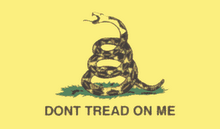
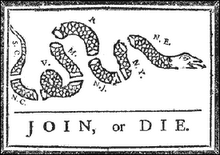
Jacob Hornberger shares some great quotes on the threat to liberty--at home--that standing armies present. Wanted to add them here for future reference.
James Madison: "A standing military force, with an overgrown Executive will not long be safe companions to liberty. The means of defence agst. foreign danger, have been always the instruments of tyranny at home. Among the Romans it was a standing maxim to excite a war, whenever a revolt was apprehended. Throughout all Europe, the armies kept up under the pretext of defending, have enslaved the people."
Patrick Henry: "A standing army we shall have, also, to execute the execrable commands of tyranny; and how are you to punish them? Will you order them to be punished? Who shall obey these orders? Will your mace-bearer be a match for a disciplined regiment?"
Henry St George Tucker in Blackstone's 1768 Commentaries on the Laws of England: "Wherever standing armies are kept up, and when the right of the people to keep and bear arms is, under any color or pretext whatsoever, prohibited, liberty, if not already annihilated, is on the brink of destruction."
Commonwealth of Virginia in 1788: "...that standing armies in time of peace are dangerous to liberty, and therefore ought to be avoided, as far as the circumstances and protection of the community will admit; and that the military shall be kept under strict subordination to and governed by the civil power."
Pennsylvania Convention: "...as standing armies in time of peace are dangerous to liberty, they ought not to be kept up; and that the military shall be kept under strict subordination to and be governed by the civil power."
Dwight D Eisenhower: "This conjunction of an immense military establishment and a large arms industry is new in the American experience...Yet we must not fail to grasp its grave implications...In the councils of government, we must guard against the acquisition of unwanted influence, whether sought or unsought, by the military-industrial complex. The potential for the disastrous rise of misplaced power exists and will persist. We must never let the weight of this combination endanger our liberties or democratic processes. We should take nothing for granted."
Tuesday, March 31, 2015

Monday, March 30, 2015
Ad Hominem
Doesn't have a point of view
Knows not where he's going to
--The Beatles
In debate or discussion, ad hominem means responding to arguments by attacking the person. Making it personal. Name calling. Bigot, racist, hater, mean-spirited, stupid, insensitive, etc.
When people respond to your arguments in ad hominem fashion, chances are you're making progress toward truth.
When you respond to arguments with ad hominems, you're getting nowhere.
Knows not where he's going to
--The Beatles
In debate or discussion, ad hominem means responding to arguments by attacking the person. Making it personal. Name calling. Bigot, racist, hater, mean-spirited, stupid, insensitive, etc.
When people respond to your arguments in ad hominem fashion, chances are you're making progress toward truth.
When you respond to arguments with ad hominems, you're getting nowhere.
Sunday, March 29, 2015
When The Store Is Closed
Oh, see the fire's sweeping
Our very street today
Burns like a red coal carpet
Mad bull lost its way
--Rolling Stones
Following up on yesterday's post, when cash is no longer a store of value, then by definition risk builds in the financial system. There is no risk-free paper asset. Calling T-bills risk free in this environment is a misnomer. Either there is default risk or inflation risk with all sovereign debt backed by printing presses.
When cash is not a store of value, then paper assets tilt toward excessive risk. There is no pressure relief valve that bleeds off risk and offers sanctuary.
Storing value requires investors to leave the paper financial system. That system collapses in favor of hard assets--gold and other shelters for production.
position in gold
Our very street today
Burns like a red coal carpet
Mad bull lost its way
--Rolling Stones
Following up on yesterday's post, when cash is no longer a store of value, then by definition risk builds in the financial system. There is no risk-free paper asset. Calling T-bills risk free in this environment is a misnomer. Either there is default risk or inflation risk with all sovereign debt backed by printing presses.
When cash is not a store of value, then paper assets tilt toward excessive risk. There is no pressure relief valve that bleeds off risk and offers sanctuary.
Storing value requires investors to leave the paper financial system. That system collapses in favor of hard assets--gold and other shelters for production.
position in gold
Saturday, March 28, 2015
Store of Value
If I fear I'm losing you
It's just no good
You teasing like you do
--Blondie
Rick Santelli notes a scary quote from Fed head Janet Yellen's recent remarks: "Cash is not a very convenient store of value."
Perhaps so in the eyes of today's central bankers, but not so in terms of healthy financial systems.
Cash (money) is a claim on production. Prior to the advent of money, people traded production directly (barter). Production stored its value completely.
Money was invented to improve the efficiency of trade. The ideal money tracks the value of the goods that it represents on at least a one-to-one basis. As productivity increases, money might even store more value.
Only in a fiat currency world does money lose value.
Quite possibly, the greatest trick central bankers ever pulled was convincing people that money loses value naturally and that falling prices are bad.
Nothing could be further from the truth.
It's just no good
You teasing like you do
--Blondie
Rick Santelli notes a scary quote from Fed head Janet Yellen's recent remarks: "Cash is not a very convenient store of value."
Perhaps so in the eyes of today's central bankers, but not so in terms of healthy financial systems.
Cash (money) is a claim on production. Prior to the advent of money, people traded production directly (barter). Production stored its value completely.
Money was invented to improve the efficiency of trade. The ideal money tracks the value of the goods that it represents on at least a one-to-one basis. As productivity increases, money might even store more value.
Only in a fiat currency world does money lose value.
Quite possibly, the greatest trick central bankers ever pulled was convincing people that money loses value naturally and that falling prices are bad.
Nothing could be further from the truth.
Friday, March 27, 2015
Minimum Wage Joblessness
Standing in line, marking time
Waiting for the welfare dime
'Cause they can't buy a job
--Bruce Hornsby & the Range
The minimum wage thread on these pages is well established. Because they force workers willing to work for less than the legal minimum to the sidelines, minimum wage laws amount to compulsory unemployment.
Although conceptual explanation is straightforward, the question of how much unemployment can be attributed to minimum wage laws in an empirical one. A recent Cato Institute study finds that as minimum wages rose by about 30% during the later part of last decade, these increases reduced the employment-to-population ratio by 0.7 percent. This amount to about 15% of the total decline in employment during the Great Recession period.
That people generally do not grasp the negative relationship between minimum wage laws and jobs demonstrates just how economically illiterate we are.
Waiting for the welfare dime
'Cause they can't buy a job
--Bruce Hornsby & the Range
The minimum wage thread on these pages is well established. Because they force workers willing to work for less than the legal minimum to the sidelines, minimum wage laws amount to compulsory unemployment.
Although conceptual explanation is straightforward, the question of how much unemployment can be attributed to minimum wage laws in an empirical one. A recent Cato Institute study finds that as minimum wages rose by about 30% during the later part of last decade, these increases reduced the employment-to-population ratio by 0.7 percent. This amount to about 15% of the total decline in employment during the Great Recession period.
That people generally do not grasp the negative relationship between minimum wage laws and jobs demonstrates just how economically illiterate we are.
Thursday, March 26, 2015
Hiding Unemployment
Col Nathan R. Jessup: You want answers?
Lt Daniel Kaffee: I want the truth.
Col Nathan R. Jessup: You can't handle the truth!
--A Few Good Men
Nice picture (source) of relative difference between "headline" U3 unemployment figure and the U6 estimate that includes various categories of unemployed or part time workers.

Basic rule of thumb is U6 = 2*U3.
Of course, it is plausible that even U6 under-reports true unemployment.
That larger issue aside, the present data arrangement, with all of its issues, still bids the straightforward question: Why don't more people question why U3 instead of U6?
Lt Daniel Kaffee: I want the truth.
Col Nathan R. Jessup: You can't handle the truth!
--A Few Good Men
Nice picture (source) of relative difference between "headline" U3 unemployment figure and the U6 estimate that includes various categories of unemployed or part time workers.
Basic rule of thumb is U6 = 2*U3.
Of course, it is plausible that even U6 under-reports true unemployment.
That larger issue aside, the present data arrangement, with all of its issues, still bids the straightforward question: Why don't more people question why U3 instead of U6?
Wednesday, March 25, 2015
Robot Socialism
With all the power you're releasing
It isn't safe to walk the city streets alone
Anticipation is running through me
Let's find the keys and turn the engine on
--Eddie Money
Since the Luddites, socialists have been drawn to the robot fallacy like moths to a flame. As demonstrated by Robert Reich here, belief that productivity-improving machines are driving permanent unemployment creates a platform for socialists to lobby for their favorite program: redistribution of wealth.
Among the many questions that Reich does not address is this one: If The Many are all unemployed and therefore incapable of purchasing goods and services from The Few who control the machines, then where is the wealth to be confiscated?
Stated differently, why would entrepreneurs purchase and install machines to produce goods for which there is no market? What investor would provide capital to fund such projects?
It isn't safe to walk the city streets alone
Anticipation is running through me
Let's find the keys and turn the engine on
--Eddie Money
Since the Luddites, socialists have been drawn to the robot fallacy like moths to a flame. As demonstrated by Robert Reich here, belief that productivity-improving machines are driving permanent unemployment creates a platform for socialists to lobby for their favorite program: redistribution of wealth.
Among the many questions that Reich does not address is this one: If The Many are all unemployed and therefore incapable of purchasing goods and services from The Few who control the machines, then where is the wealth to be confiscated?
Stated differently, why would entrepreneurs purchase and install machines to produce goods for which there is no market? What investor would provide capital to fund such projects?
Tuesday, March 24, 2015
Liberty vs Democracy
And the men who spurred us on
Sit in judgment of all wrong
They decide
And the shotgun sings the song
--The Who
Consistent with the thread developed on these pages, Prof Williams argues against democracy as an ideal, or even desirable, system for organizing human conduct. The ideal system, as Jefferson observed, is one that upholds man's natural rights to life, liberty, and pursuit of happiness.
Contrary to popular belief, "liberty and democracy are not synonymous and most often are opposites."
Quotes from Madison, Randolph, Adams, and Hamilton clearly demonstrate our founding ancestors' understanding of democracy's threat to freedom. In Federalist #10, for example, Madison observes, "Measures are too often decided, not according to the rules of justice and the rights of the minor party, but by the superior force of an interested and overbearing majority."
The proper role of government is to protect man's inalienable rights from invasion--not to infringe upon them. The founders clearly understood that "because the essence of government is force, and force is evil, government should be as small as possible."
Their resulting framework was not a democracy. The design was a federal republic. In fact, the word "democracy" does not appear in our founding documents. Limited powers were enumerated for central government along with a design to check power among the branches.
Changes to the design were not to be made by majority vote. Instead, supermajorities such as 2/3 congressional approval and 3/4 state ratification to pass constitutional amendments were required.
The intent of these measures was to support rule of law--durable law. Not discretionary rule of democracy that changes with the reigning dominant coalition.
Sit in judgment of all wrong
They decide
And the shotgun sings the song
--The Who
Consistent with the thread developed on these pages, Prof Williams argues against democracy as an ideal, or even desirable, system for organizing human conduct. The ideal system, as Jefferson observed, is one that upholds man's natural rights to life, liberty, and pursuit of happiness.
Contrary to popular belief, "liberty and democracy are not synonymous and most often are opposites."
Quotes from Madison, Randolph, Adams, and Hamilton clearly demonstrate our founding ancestors' understanding of democracy's threat to freedom. In Federalist #10, for example, Madison observes, "Measures are too often decided, not according to the rules of justice and the rights of the minor party, but by the superior force of an interested and overbearing majority."
The proper role of government is to protect man's inalienable rights from invasion--not to infringe upon them. The founders clearly understood that "because the essence of government is force, and force is evil, government should be as small as possible."
Their resulting framework was not a democracy. The design was a federal republic. In fact, the word "democracy" does not appear in our founding documents. Limited powers were enumerated for central government along with a design to check power among the branches.
Changes to the design were not to be made by majority vote. Instead, supermajorities such as 2/3 congressional approval and 3/4 state ratification to pass constitutional amendments were required.
The intent of these measures was to support rule of law--durable law. Not discretionary rule of democracy that changes with the reigning dominant coalition.
Monday, March 23, 2015
Financial Illiteracy and The State
Somebody once told me
The world is gonna roll me
I ain't the sharpest tool in the shed
She was looking kind of dumb
With her finger and her thumb
In the shape of an "L" on her forehead
--Smash Mouth
Studies continue to indicate low levels of financial literacy among US citizens. People do not understand basic concepts such as saving, debt, time value of money, asset allocation, inflation, etc.
Question: The State benefits from financial illiteracy among the populace. true or false?
Financially dumb people tend not to be free.
The world is gonna roll me
I ain't the sharpest tool in the shed
She was looking kind of dumb
With her finger and her thumb
In the shape of an "L" on her forehead
--Smash Mouth
Studies continue to indicate low levels of financial literacy among US citizens. People do not understand basic concepts such as saving, debt, time value of money, asset allocation, inflation, etc.
Question: The State benefits from financial illiteracy among the populace. true or false?
Financially dumb people tend not to be free.
Sunday, March 22, 2015
Old Hyde Park
"It's a giant of a human thing."
--Mary Rafferty (The Valley of Decision)
Using this trove of old local maps, the author of this missive discusses the basis for many street names in Hyde Park.
In 1869, what was destined to be Hyde Park was then portions of two townships: Columbia Township to the north and Spencer Township to the south. By stitching together pieces of the two township maps, the author provides an interesting view of land ownership beneath the future Hyde Park.

The dividing line between the Columbia (gray) and Spencer (orange/pink) portions was Observatory Avenue (then called City Road). Several familiar street runs are evident, including Madison, Paxton (north of Observatory only), Edwards, Linwood, and, to my surprise, Grace. Conspicuously absent in 1869: Erie (not built, I believe, until the formal Hyde Park development commenced in the 1890s) and Delta down to Mt Lookout Square.
The author highlights many land parcels with familiar names: Grandin, Stetinius, Edwards, Shaw, Morten, Cryer, Kilgour. Several other names stick out as well: Longworth, Erckenbrecher, Ferris, Nash.
My house sits on land from the Cryer parcel outlined by the yellow box above.
--Mary Rafferty (The Valley of Decision)
Using this trove of old local maps, the author of this missive discusses the basis for many street names in Hyde Park.
In 1869, what was destined to be Hyde Park was then portions of two townships: Columbia Township to the north and Spencer Township to the south. By stitching together pieces of the two township maps, the author provides an interesting view of land ownership beneath the future Hyde Park.
The dividing line between the Columbia (gray) and Spencer (orange/pink) portions was Observatory Avenue (then called City Road). Several familiar street runs are evident, including Madison, Paxton (north of Observatory only), Edwards, Linwood, and, to my surprise, Grace. Conspicuously absent in 1869: Erie (not built, I believe, until the formal Hyde Park development commenced in the 1890s) and Delta down to Mt Lookout Square.
The author highlights many land parcels with familiar names: Grandin, Stetinius, Edwards, Shaw, Morten, Cryer, Kilgour. Several other names stick out as well: Longworth, Erckenbrecher, Ferris, Nash.
My house sits on land from the Cryer parcel outlined by the yellow box above.
Subscribe to:
Posts (Atom)
![[Most Recent Quotes from www.kitco.com]](http://www.kitconet.com/charts/metals/gold/t24_au_en_usoz_2.gif)