"Quite impressive for a farmer with a pitchfork, wouldn't you say?"
--Colonel William Tavington (The Patriot)
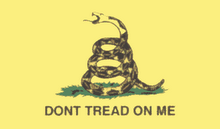
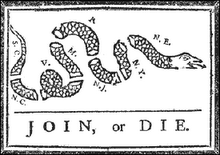
In the early 1770s, as momentum grew behind the idea of independence from England, so did Colonial satire against the Crown.
Satire and politics go hand in hand, of course. Here's an amusing example of the current batch that rails against our increasingly intrusive Federal government. Satire is one method of pushback.
In years prior to the American Revolution, various modes of pushback escalated in their intensity. But in its early phases, pushback is downplayed and ridiculed by incumbents.
I was reminded of such today, when I heard a commentator on NPR label the recent town hall protests against the administration's health care plan a 'circus.'
However, even administration partisans are noting the damage that this circus has done to the health care plan on the table.
Should this type of pushback continue to escalate, then chances for big change increase.
Monday, August 31, 2009

Practice Shots
"I've seen you guys can shoot but there's more to the game than shooting. There's fundamentals and defense."
--Coach Norman Dale (Hoosiers)
When history looks back on our present period, a number of individuals formerly seen as legitimate will be viewed as foolish. Navigating for a leading position on this list is Nobel laureate Paul Krugman. He continues to spew drivel such as this NYT op-ed that only central planners could love.
Of course, op-ed is a breeding ground for such one-sided, half baked nonsense.
Pieces like this are best used for honing critical thinking skills. Simply take each of Dr Krugman's claims and test it against reason.
Heat of the Moment
Do you remember when we used to dance
And incidence arose from circumstance
One thing lead to another we were young
And we would scream together songs unsung
--Asia
Per a contributor on the Buzz at Minyanville, here's a very cool heat map of the S&P 500.
position in SPX
And incidence arose from circumstance
One thing lead to another we were young
And we would scream together songs unsung
--Asia
Per a contributor on the Buzz at Minyanville, here's a very cool heat map of the S&P 500.
position in SPX
Think
Tell you straight - no intervention
To your face - no deception
--Eurythmics
As myriad points of view w.r.t. the health care debate make themselves known, it is tempting to seek a 'trusted authority' to shape your view for you.
Don't outsource your brain. Your most trusted authority should be your power of reason.
Think through the following questions which form the issues around which the health care debate, and nearly all government programs, are shaped.
1) What is likely to happen to supply if we put a ceiling on price of health care services (e.g., a maximum reimbursement for a medical procedure)?
2) What is likely to happen to demand if we make health care ultra low cost or free to a segment or group of the population?
3) What is likely to happen to time to access services under 1) and 2) above?
4) If government control increases in the health care system, will motivation to improve/innovate likely increase or decrease?
5) Are health care costs likely to increase or decrease under a health care system subject to increased government control?
6) With future liabilities of present government health care programs such as Medicare and Medicaid already estimated at $30 trillion or more, and national debt in the tens of trillions, how do we pay for such a system?
Your power of reason will likely point you in the following directions:
1) Whenever maximum prices are set, supply shortages develop. Less health care services will become available as lower prices discourage providers from operating. Need an excellent oncolologist or orthodontist? There will be less of them available as many bright ones will pursue other careers that promise greater reward.
2) A general rule of thumb: If the price of a valuable good or service is free, then demand for that good or service is unlimited. Segments of the population that get a price break will consume more health care than they would otherwise. This, of course, further restricts availability for others.
3) Less supply, more demand...Time to access the health care system will certainly increase.
4) In market systems, buyers--not sellers--drive innovation thru their search of value. Producers who become more efficient or who innovate for their customers are rewarded with business. When people pay less out of pocket because they are backstopped by the government, they are less driven to shop around and make value-driven decisions. Providers have less incentive to innovate. Add the price caps in 1) and you've further restricted innovation. Top it off with less entry into the industry, as entrepreneurs are turned off by the low prospects of reward by the rigid industry structure, and you have the static condition which has defined government programs through the ages.
5) Less supply, more demand, less efficiency, reduced innovation. Costs have only one way to go.
6) Some combination of what we do already when we fund deficit spending: tax, borrow, print. Because we have no savings, the cost of providing more health care resources today comes at the expense of future living standards. Our kids will pay.
position in USD
Saturday, August 29, 2009
Fools Rush In
Thank you driver for getting me here
You'll be an inspector, have no fear
I don't want to cause no fuss
But can I buy your magic bus?
--The Who
We permit the creation of a fractional banking system, which allows banks to lend out $10 or more for every dollar of capital they possess. we permit the creation of a central bank, which bails out the banks when they take too much risk with their fractional leverage.
We disconnect the central bank from the voting process, which effective creates an elite group of untouchables to oversee this flawed system into perpetuity.
Then, when, things come crashing down, we rail against the big banks for their 'greed' and we demand action by elected officials.
We are truly fools.
position in USD
Friday, August 28, 2009
Funding Problem
See the people walking down the street
Fall in line just watching all their feet
They don't know where they wanna go
But they're walking in time
--The Go Go's
Some commentators are waxing bullish about charts like these suggesting upturns in equity mutual fund inflows and high levels of cash in investment accounts. Perhaps they're correct but consider the other side of the trade.
Exhibit 1 indicates that the trend of money flows out equity mutual funds is perhaps reversing. However, mutual fund flows have been on a steady decline since 2004--well before the recent stock market meltdown. Perhaps substitute products, such as ETFs, have provided durable alternatives to buying a mutual fund. Moreover, observe the lopsided inflow pattern over the past 20 yrs. Is it likely that we'll revert to the mean of the past two decades? Or might secular change yield a decade or more of lower mutual fund inflows or even (gasp!) persistent outflows?
Exhibit 2 indicates high amounts of retail money market funds relative to stock market value. Hoofy argues that this is bullish, since investors will have to put this cash to work, thus goosing stock prices higher. Boo might counter that, currently, cash stashed in money market accounts is not 'free and clear'--it is borrowed money (home equity loans, credit card loans, etc). In a deflationary environment, collective risk appetite may not drive much of this cash into stocks. Instead it will be used to retire debt.
Truth or Consequences
Honesty is such a lonely word
Everyone is so untrue
Honesty is hardly ever heard
And mostly what I need from you
--Billy Joel
The Atlanta Fed head notes that the real US unemployment rate is higher than the reported number by more than 50%. The current 'official' value of about 9 1/2% omits discouraged and underemployed workers.
I've seen studies suggesting that if we measured unemployment like we did in the 1930s, then we'd have unemployment numbers at the 20% level that defined the Great Depression.
Of course, the article does not tackle what many inquiring minds would like to know: Why the heck don't we count all the unemployed in our unemployment stats?
Thursday, August 27, 2009
Sequential Depression
Step by step, one by one
Higher and higher
Step by step, rung by rung
Climbing Jacob's Ladder
--Huey Lewis & The News
Mr P helps clarify why we'll experience a signficant period of debt destruction (a.k.a. deflation) prior to 'big' inflation. Essentially, there's too much debt out there, and the Fed and other government bureaucrats can't pyramid enough new credit thru our monetary system (a.k.a. inflation) to compensate for the deflation.
He also helped answer a question that I had. Why can't the Fed just do an 'end around' the dysfunctional credit system and just drop money from helicopters right into spenders' hands? Mr P thinks that foreign debt holders such as China have told the Fed in no uncertain terms that they will dump US bond holdings if dollar devaluation gets out of control.
At some point, the Fed will almost certainly trash the dollar regardless, but that's 'out there' sometime in the future. That's why Mr P has currently returned to the US--he sees a nice trade during this deflationary phase. Then he'll be gone. Perhaps for good.
position in USD
Wednesday, August 26, 2009
Near Beer
"I'm going to need a beer to put these flames out. Yo!"
--Maverick (Top Gun)
Stat of the day. Per Kevin Depew on Minyanville's Buzz, domestic beer prices (YOY %change) have registered a TD 13 sequential sell signal.
--Maverick (Top Gun)
Stat of the day. Per Kevin Depew on Minyanville's Buzz, domestic beer prices (YOY %change) have registered a TD 13 sequential sell signal.
Road to Ruin
Standing like a stone on the old plantation
The rich old man would have never let him in
Good enough to hire not good enough to marry
When it all happens nobody wins
--Bruce Hornsby & The Range
In a missive concerning the current health care debate, an MD writes the following:
"Medical care is not a right. Medical care is a service provided by doctors and others to individuals who want to purchase it. A patient presents to the doctor with a request for care. The fact that the patient has a serious condition — even a life threatening one — does not entitle him, as his right, to the services of the doctor. To claim that he does means that doctors and others who provide these services have no rights, or that society can deliberately ignore these rights for the 'greater good.'"
She's correct. Any system that forces care on a provider and/or fixes the price of care is a system of coercion.
Health care is not a right. In the context of a free society, individuals cannot claim access to goods or services that, thru the fulfullment of those claims, violates the rights of others. Medical professionals become the slaves of those seeking 'rightful' services.
She also notes that today's health care system is far from a free market, given the dominant government interventions already in place.
As she suggests, heading down a path toward increased government control of this system promises a lower standard of living.
Subscribe to:
Posts (Atom)