There's a room where the light won't find you
Holding hands while
The walls come tumbling down
When they do, we'll be right behind you
--Tears for Fears
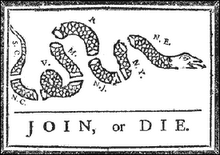
Columbia professor Joseph Stiglitz is among the more vocal US economists with a socialist bent (I rank him up there with Paul Krugman of Harvard and Brad DeLong of Cal Berkeley). Stiglitz has long been an admirer of the 'social democracy' approach of Europe and, like many US 'intellectuals,' seems to think that we should move toward a similar model.
It appears that the problems now facing the European Union are even giving Dr Stiglitz cause for pause.
In past missives we've suggested the headwinds facing the EU. Expecting durable monetary and fiscal unity among sovereign nations with diverse needs and interests seems horribly flawed from the outset on a natural law basis. Blend in the underlying producitivity lowering and debt generating socialistic economic models of the sovereigns and you have a recipe for down-the-road fracture.
A decade or so later, it appears that we may be down the road.
Friday, May 7, 2010

Thursday, May 6, 2010
Shipwreck
"The problem with manipulation is that people can turn on you."
--Horatio Caine (CSI Miami)
Today was a rare day, featuring an intraday 1000 pt move lower in the Dow. After leaking thru the morning and the early afternoon, US financial markets lost it. In the span of a few minutes the Dow went from -300 to -1000, bottoming near the early Feb lows of about 9800.

Those quick triggered folks who bought Spoos down there were soon rewarded, as markets soon rebounded back toward being down 'only' 3% or so.
Rumors are circulating that this was mostly anomoly. Theories include: a trader at Citi fat fingered a billion share trade rather than a million share trade; black boxes of high frequency traders went wild; those trading naked credit default swaps put things in motion. etc.
While I wouldn't rule out any of those, particularly as a potential contributor to exacerbating short term volatility, the bigger picture concerns the leveraged state of the world.
The nature of leverage is this. When things are perceived as fine, leverage tends to depress volatility because of all of the liquidity that narrows bid/ask spreads and keeps uptrends neatly in place. But when things are perceived as not fine, that liquidity leaves the system as folks seek to cover their leveraged bets, leaving 'bid wanted' types of situations.
I have little doubt that this accounted for much of the action. And as long as the world continues in its leveraged condition, behavior similar in nature if not magnitude should be expected.
Heck, it was the way of the world less than two years ago. And since then overall leverage is higher rather than lower thx to socialization of risk.

What happens in the near term is anyone's guess. It's admittedly hard for me not to feel bearish here; I'm having trouble shaking the down-up-DOWN patterns that characterized the 1987 and 1929 daily charts. At the same time, one can't dismissed the power of the press--the monetary printing press, that is--that major central banks have at their disposal. You can bet there will be some big conference calls tonite between the ECB/Greece bailout contingent and central banks around the world.
As it currently stands, I'd be inclined to view a lower opening tomorrow as bullish, and a higher open tomorrow as bearish--at least for a trade. In the intermediate/longer term, my sense is that the path of least resistance may now be lower.

btw, what was the port in the storm today? Gold. It was moving higher today against nearly everything. Perhaps more folks are connecting the dots--that the only way out of this debt problem is to print our way out. Which, of course, is not a real 'way out' at all.
position in SPX, gold
--Horatio Caine (CSI Miami)
Today was a rare day, featuring an intraday 1000 pt move lower in the Dow. After leaking thru the morning and the early afternoon, US financial markets lost it. In the span of a few minutes the Dow went from -300 to -1000, bottoming near the early Feb lows of about 9800.

Those quick triggered folks who bought Spoos down there were soon rewarded, as markets soon rebounded back toward being down 'only' 3% or so.
Rumors are circulating that this was mostly anomoly. Theories include: a trader at Citi fat fingered a billion share trade rather than a million share trade; black boxes of high frequency traders went wild; those trading naked credit default swaps put things in motion. etc.
While I wouldn't rule out any of those, particularly as a potential contributor to exacerbating short term volatility, the bigger picture concerns the leveraged state of the world.
The nature of leverage is this. When things are perceived as fine, leverage tends to depress volatility because of all of the liquidity that narrows bid/ask spreads and keeps uptrends neatly in place. But when things are perceived as not fine, that liquidity leaves the system as folks seek to cover their leveraged bets, leaving 'bid wanted' types of situations.
I have little doubt that this accounted for much of the action. And as long as the world continues in its leveraged condition, behavior similar in nature if not magnitude should be expected.
Heck, it was the way of the world less than two years ago. And since then overall leverage is higher rather than lower thx to socialization of risk.

What happens in the near term is anyone's guess. It's admittedly hard for me not to feel bearish here; I'm having trouble shaking the down-up-DOWN patterns that characterized the 1987 and 1929 daily charts. At the same time, one can't dismissed the power of the press--the monetary printing press, that is--that major central banks have at their disposal. You can bet there will be some big conference calls tonite between the ECB/Greece bailout contingent and central banks around the world.
As it currently stands, I'd be inclined to view a lower opening tomorrow as bullish, and a higher open tomorrow as bearish--at least for a trade. In the intermediate/longer term, my sense is that the path of least resistance may now be lower.

btw, what was the port in the storm today? Gold. It was moving higher today against nearly everything. Perhaps more folks are connecting the dots--that the only way out of this debt problem is to print our way out. Which, of course, is not a real 'way out' at all.
position in SPX, gold
For the Duration
It was a shakedown cruise
I guess I just was born to lose
They tell you life is going cheap
I got myself in pretty deep
--Jay Ferguson
Seems to me that many folks don't understand the difference between printing 'paper money' and printing 'credit money.' Major inflationary events burned into people's heads involve the printing of paper money. The spectre of kids playing house with worthless Weimar marks, or the recent paper blizzard in Zimbabwe, seems to dominate current mindset.
In today's 'advanced' monetary monetary systems, however, money is created primarily in the form of credit. Central banks such as the Federal Reserve reduce borrowing costs in hopes that banks will pyramid credit money thru the system.
This adds, I think, a few counterintuitive dynamics to the system. One relates to the perverse behavior of interest rates during early periods of deflationary conditions. It goes something like this. People become risk averse in droves after a secular borrowing binge. Risk aversion leads to paying down debt and debt defaults. As debt-related projects are retired, folks pour into cash and short term fixed income because they are risk averse and trying to preserve capital. The Fed intervenes and drives interest rates to zero to encourage risk taking. As long as risk aversion has folks moving into fixed income as a 'flight to safety', then the Fed does not have to worry about market forces winning the upper hand and forcing interest rates higher. In fact, people will be willing to buy all the 0% yield paper offered by the Fed in return for the guarantee that it will be 'safe.' Therefore it can be posited that:
Proposition 1a: In early stages of deflationary periods, interest rates will decline and remain at low levels despite high levels of central bank stimulus.
Proposition 1b: In early stages of deflationary periods, demand will be high for near 0% yield paper that is 'guaranteed.'
These low interest rates facilitate government borrowing on the cheap for social programs to stem the pain from the deflationary decline (unemployment insurance, other safety nets). However, the government will be tempted to borrow at shorter durations, because short rates are subject to the greatest degree of central bank influence (longer term rates are subject to drift higher as some bond investor sense longer term inflationary consequences of all the stimulus). As government borrowing increases, a mismatch grows between the funds borrowed (e.g., at 0.1% for three month T-bills), and the obligations that they are supposed to fund (say, 12 months of unemployment payments or infrastructure projects with 5-10 yrs timelines). This creates a mismatch in duration--long term projects are being funded with short term debt.
Proposition 2a: Lower interest rates during deflationary periods, particularly on the short end of the yield curve, will drive governments to increase their borrowing for social programs.
Proposition 2b: Higher levels of government borrowing during deflationary periods will increase duration mismatch.
These actions could precipitate profound down-the-road consequences. For instance, what happens if/when market forces drive interest rates (a.k.a. borrowing costs) higher (kinda like what's happening in Greece now)?
position in SPX
I guess I just was born to lose
They tell you life is going cheap
I got myself in pretty deep
--Jay Ferguson
Seems to me that many folks don't understand the difference between printing 'paper money' and printing 'credit money.' Major inflationary events burned into people's heads involve the printing of paper money. The spectre of kids playing house with worthless Weimar marks, or the recent paper blizzard in Zimbabwe, seems to dominate current mindset.
In today's 'advanced' monetary monetary systems, however, money is created primarily in the form of credit. Central banks such as the Federal Reserve reduce borrowing costs in hopes that banks will pyramid credit money thru the system.
This adds, I think, a few counterintuitive dynamics to the system. One relates to the perverse behavior of interest rates during early periods of deflationary conditions. It goes something like this. People become risk averse in droves after a secular borrowing binge. Risk aversion leads to paying down debt and debt defaults. As debt-related projects are retired, folks pour into cash and short term fixed income because they are risk averse and trying to preserve capital. The Fed intervenes and drives interest rates to zero to encourage risk taking. As long as risk aversion has folks moving into fixed income as a 'flight to safety', then the Fed does not have to worry about market forces winning the upper hand and forcing interest rates higher. In fact, people will be willing to buy all the 0% yield paper offered by the Fed in return for the guarantee that it will be 'safe.' Therefore it can be posited that:
Proposition 1a: In early stages of deflationary periods, interest rates will decline and remain at low levels despite high levels of central bank stimulus.
Proposition 1b: In early stages of deflationary periods, demand will be high for near 0% yield paper that is 'guaranteed.'
These low interest rates facilitate government borrowing on the cheap for social programs to stem the pain from the deflationary decline (unemployment insurance, other safety nets). However, the government will be tempted to borrow at shorter durations, because short rates are subject to the greatest degree of central bank influence (longer term rates are subject to drift higher as some bond investor sense longer term inflationary consequences of all the stimulus). As government borrowing increases, a mismatch grows between the funds borrowed (e.g., at 0.1% for three month T-bills), and the obligations that they are supposed to fund (say, 12 months of unemployment payments or infrastructure projects with 5-10 yrs timelines). This creates a mismatch in duration--long term projects are being funded with short term debt.
Proposition 2a: Lower interest rates during deflationary periods, particularly on the short end of the yield curve, will drive governments to increase their borrowing for social programs.
Proposition 2b: Higher levels of government borrowing during deflationary periods will increase duration mismatch.
These actions could precipitate profound down-the-road consequences. For instance, what happens if/when market forces drive interest rates (a.k.a. borrowing costs) higher (kinda like what's happening in Greece now)?
position in SPX
Wednesday, May 5, 2010
Greece Fire
"You go. We go."
--Lt Steven McCaffrey (Backdraft)
Can't help but wonder whether Greece is a microcosm of things to come. A country that spent lavishly on gov't programs w/ no productivity to support it. Had to borrow to keep it going. Now there's no way to pay debt back. And people riot at the notion that their entitlements will be cut.
Of course, big diff between Greece and US is that we own the monetary printing press.
What we're seeing is market forces/natural law coming to bear on a centrally planned, socialist system.
Set of factors surrounding Greece mirror the general world situation.
--Lt Steven McCaffrey (Backdraft)
Can't help but wonder whether Greece is a microcosm of things to come. A country that spent lavishly on gov't programs w/ no productivity to support it. Had to borrow to keep it going. Now there's no way to pay debt back. And people riot at the notion that their entitlements will be cut.
Of course, big diff between Greece and US is that we own the monetary printing press.
What we're seeing is market forces/natural law coming to bear on a centrally planned, socialist system.
Set of factors surrounding Greece mirror the general world situation.
Risk Shifting
Hands across the water
Heads across the sky
--Paul McCartney and Wings
Toddo considers the rising angst stemming from the Greece/EU situation.
One of the feathers in the bull's cap has been narrowing credit spreads, more specifically corporate credit spreads. But in a world where governments are socializing risk, isn't a reduction in the odds of business failure (which is what corporate credit spreads reflect) intuitive--at least in the near term?
The credit spreads that are rising are sovereign credit spreads. This should also be intuitive as governments assume more default risk.
Over the past couple of years, levels of debt and leverage haven't gone away. The risk has simply changed hands.
As the EU situation demonstrates, we're running out of hands.
Heads across the sky
--Paul McCartney and Wings
Toddo considers the rising angst stemming from the Greece/EU situation.
One of the feathers in the bull's cap has been narrowing credit spreads, more specifically corporate credit spreads. But in a world where governments are socializing risk, isn't a reduction in the odds of business failure (which is what corporate credit spreads reflect) intuitive--at least in the near term?
The credit spreads that are rising are sovereign credit spreads. This should also be intuitive as governments assume more default risk.
Over the past couple of years, levels of debt and leverage haven't gone away. The risk has simply changed hands.
As the EU situation demonstrates, we're running out of hands.
Tuesday, May 4, 2010
Shake & Bake
Somethin's happenin' here
What it is ain't exactly clear
--Buffalo Springfield
When inter-day volatility rises following an uptrend period, something's usually up. That's what we've seen the last few days.

Increasing volume too.
Should this downside move get traction and slice thru the 50 day moving avg (blue line), then the intuitive next stop is the Jan highs of 1150ish.
position in SPX
What it is ain't exactly clear
--Buffalo Springfield
When inter-day volatility rises following an uptrend period, something's usually up. That's what we've seen the last few days.

Increasing volume too.
Should this downside move get traction and slice thru the 50 day moving avg (blue line), then the intuitive next stop is the Jan highs of 1150ish.
position in SPX
Fiat Fraud
All that glitters is gold
Only shooting stars break the mold
--Smash Mouth
Market sage Dick Russell suggests that the primary thesis for gold is waning confidence in the 'greatest fraud ever perpetrated on the people of the world:' fiat money of all stripes. An argument (I think a good one) can be made against fiat money from a moral, ethical perspective, but these arguments ultimately rest on value judgements which are never decisive.
More decisive are economic arguments against fiat money because they are based on laws of nature and human behavior. The proof is in the pudding, of course, as we know that never in the history of the world has a fiat currency endured.
Consider Russell's example here. Cost of a one oz gold coin in 1970 = $35. Cost of a one oz gold coin in 2010 = nearly $1200. That's a 33x increase in forty yrs for those keeping score.
Some claim the gold market is bubbly. This graph compares gold to other mkts regarded as bubbles (missing here is the recent housing mkt).
The froth still seems a ways off.
position in gold
Only shooting stars break the mold
--Smash Mouth
Market sage Dick Russell suggests that the primary thesis for gold is waning confidence in the 'greatest fraud ever perpetrated on the people of the world:' fiat money of all stripes. An argument (I think a good one) can be made against fiat money from a moral, ethical perspective, but these arguments ultimately rest on value judgements which are never decisive.
More decisive are economic arguments against fiat money because they are based on laws of nature and human behavior. The proof is in the pudding, of course, as we know that never in the history of the world has a fiat currency endured.
Consider Russell's example here. Cost of a one oz gold coin in 1970 = $35. Cost of a one oz gold coin in 2010 = nearly $1200. That's a 33x increase in forty yrs for those keeping score.
Some claim the gold market is bubbly. This graph compares gold to other mkts regarded as bubbles (missing here is the recent housing mkt).
The froth still seems a ways off.
position in gold
Monday, May 3, 2010
Buying Time
Confusion that never stops
Closing walls and ticking clocks
--Coldplay
Opponents of free markets often claim that market participants are too short term oriented. Because they care about profits today, capitalists avoid, for example, investments in technologies that could benefit society down the road (e.g., alt energy). It is therefore necessary for government to intervene to provide longer term perspective.
This argument is ludicrous, of course. Capitalists, like all people, act in their own self interest (2.1 here). If it is perceived that long horizon investments have a suitable payoff, even if that payoff is years off, then chances are that such investments will be made.
The poster children for decision-making mypopia are politicians. Politicians, like all people, act in their own self-interest. In the case of politicians, however, the payback period for their actions is limited to their time in office. Moreover, the basis for their decisions is political calculation rather than economic calculation. The present election cycle constitutes their typical horizon.
An excellent example of the stunted political time horizon can be found in the past two yrs worth of stimulus programs. We've taken on a massive amount of incremental risk (more debt, inflation, etc) because politicians choose not to deal with problems today. This weekend's Greece bailout is merely the most recent example of pushing out the pain.
Buying time while creating ever greater risk is consummate short sightedness.
no positions
Closing walls and ticking clocks
--Coldplay
Opponents of free markets often claim that market participants are too short term oriented. Because they care about profits today, capitalists avoid, for example, investments in technologies that could benefit society down the road (e.g., alt energy). It is therefore necessary for government to intervene to provide longer term perspective.
This argument is ludicrous, of course. Capitalists, like all people, act in their own self interest (2.1 here). If it is perceived that long horizon investments have a suitable payoff, even if that payoff is years off, then chances are that such investments will be made.
The poster children for decision-making mypopia are politicians. Politicians, like all people, act in their own self-interest. In the case of politicians, however, the payback period for their actions is limited to their time in office. Moreover, the basis for their decisions is political calculation rather than economic calculation. The present election cycle constitutes their typical horizon.
An excellent example of the stunted political time horizon can be found in the past two yrs worth of stimulus programs. We've taken on a massive amount of incremental risk (more debt, inflation, etc) because politicians choose not to deal with problems today. This weekend's Greece bailout is merely the most recent example of pushing out the pain.
Buying time while creating ever greater risk is consummate short sightedness.
no positions
Carry Out
All the Japanese with their yen
The party boys call the Kremlin
The Chinese know (Oh-Ay-Oh)
They walk around like Egyptians
--Bangles
Marc Faber thinks chances of a dramatic slowdown in China, perhaps even a crash, are rising. We've been noodling such prospects for a while.
Faber joins hedgie Jim Chanos and prof Ken Rogoff among recent bears. Chanos in particular focuses on China's dependence of real estate, citing that as much as 60% of China GDP depends on construction.
Chinese stocks have been lagging other world markets recently. Whether this represents canary in the coal mine stuff remains to be seen.
no positions
The party boys call the Kremlin
The Chinese know (Oh-Ay-Oh)
They walk around like Egyptians
--Bangles
Marc Faber thinks chances of a dramatic slowdown in China, perhaps even a crash, are rising. We've been noodling such prospects for a while.
Faber joins hedgie Jim Chanos and prof Ken Rogoff among recent bears. Chanos in particular focuses on China's dependence of real estate, citing that as much as 60% of China GDP depends on construction.
Chinese stocks have been lagging other world markets recently. Whether this represents canary in the coal mine stuff remains to be seen.
no positions
Sunday, May 2, 2010
Goldman Walking
The heat is on
On the Street
Inside your head, on every beat
And the beat's alive
Deep inside
The pressure's high
Just to stay alive
'Cause the heat is on
--Glenn Fry
Wanted to share an excerpt from John Mauldin's letter this week re the Goldman Sachs (GS) roasting in DC. This letter also includes an important discussion of a recent Bank for International Settlements paper on public debt in select countries including the US, which we'll circle back to. A must read letter, imo.
I'm cutting and pasting here. Emphasis below is mine:
There Had to Be a Short
Somebody needs to brief Senators before they get on TV and ask irate questions which demonstrate they have no idea what they are talking about. Expressing shock that someone was short on the trade in question shows you don't understand the trade. Let me see if I can offer some clarity.
Normally, you think of a Collateralized Debt Obligation (CDO) as a pool of mortgages. This pool is broken into anywhere from 6 to 15 tranches. The highest-rated tranches get their money back first, and the rating agencies made them AAA. While the lowest level would be called the equity portion and be first in line to lose, in theory it paid a very high yield. It was usually not rated. But the level just above that is BBB (just barely investment-grade), and that was typically about 4% of the total deal, but paid a much higher yield than the "safe" AAA portion.
Now, here is where it gets interesting. Investment banks would take the BBB portions of these Residential Mortgage-Backed Securities, which were not as easy to sell, and combine them in a CDO, which the rating agencies then rated using models based on data provided by the investment banks themselves. Since this combining of BBB tranches supposedly created diversification that the rating firms' models indicated would drastically limit delinquencies and defaults, the AAA tranche of the CDO was jacked up to 75% of the total capital structure, with 12% rated AA. Only 4% was typically considered BBB. So pools of mortgages that probably should have been rated below BBB were miraculously turned into a CDO with 87% of its capital structure rated AAA and AA and only 4% rated BBB, with a chunk as equity. (I wrote about this in January of 2007, based on material from Gary Shilling and others, plus my own research, although I think I wrote about it in an earlier letter as well.)
Who would buy this stuff? Mostly institutions that were reaching for yield in what was, in 2007, a very low-yield world. Yield hogs. And institutions that trusted the rating agencies.
But the CDO in the Goldman case was not this type of CDO. It was hard to find enough BBB pieces to put together a CDO of the type described above, and the demand was high. Remember, everyone knew that housing could only go up. So, what's an investment bank to do? They create a synthetic CDO. Follow this closely. The various investment banks - it was way more than just Goldman; rumors are it was up to 16 of them - would construct an artificial CDO fund based on the performance of BBB tranches in other deals.
Let me see if I can simplify this. It is as if I had a very negative view about a particular industry for which there was no future or index or liquid security. We could go to an investment bank and ask them to create a "hypothetical" index that would mirror the performance of this industry. I would be willing to short that index. But unless the bank wanted to be long that index, they would have to find a buyer who would take the long position. Presumably the buyer would have a different view than me.
Now, by definition there has to be a short for the long, and vice versa. This is a synthetic index. It exists only as a spreadsheet and performs in conjunction with the components it's modeled upon.
Numerous hedge funds did not think the rating agencies knew what they were talking about when it came to the mortgage ratings. They also believed we were in a housing bubble. So they went to a number of investment banks and asked them to construct synthetic (derivative) CDOs that they could short. And there were buyers on the other side who wanted the yield, who trusted the agencies, and who believed that housing could only go up.
As to the Goldman deal, the buyers had to know there was someone short on the other side. By definition there was a short. Besides, they had a guarantee from ACA on the AAA portion (which of course went bad, as I wrote about later that year) - there was a guaranteed AAA yield a few points higher than with normal AAA debt. What could be better? Except of course that it was too good to be true. Learn a lesson, gentle reader. Don't reach for yield.
The hedge funds that shorted the synthetic CDOs took real risk. They had to pay the interest on the underlying tranches to the investors who were long. And if the housing market continued to rise, and the bubble did not burst, they could easily lose a lot, if not all, of their money. No one knows when a bubble will burst. The markets can be irrational longer than you can remain solvent.
Let's be very clear. This was purely gambling. No money was invested in mortgages or any productive enterprise. This was one group betting against another, and a LOT of these deals were done all over New York and London.
The SEC alleges that there was material lack of disclosure. I must admit that I would want to know that the person who was taking the short position had a hand in the creation of the pool of BBB paper I was buying. And if Fabrice Tourre told someone that Paulson was $200 million long when they were actually net short, that could be problematic. Now, if he just said that Paulson bought the equity portion of the synthetic CDO (there has to be one), that will be a different matter.
The prosecutor for the SEC is by all accounts a very solid and serious person who would not move this case forward if he did not think they would win. This is not one the SEC will want to lose. On the other hand, I hope that Goldman takes this to the Second Circuit Court of Appeals (the final decision maker in a long and arduous process), as there are some very interesting aspects to this case that I would like to see resolved, as an individual in the industry. On someone else's legal bill.
I wonder why Goldman's witnesses seemed ill-prepared. Did their lawyers tell them to keep it simple and not get into a spirited defense? My instinct says that a lot more will come out about this case. If it was just this one deal, then Goldman should pay the fine and walk away. Done all the time. I suspect there is more here. Or maybe it was just that they didn't want to explain why they were doing a synthetic CDO. We'll see when someone writes the book.
How Should Our Institutions Invest?
However, the larger and far more critical question is, why were institutions buying synthetic CDOs in the first place? This is an investment that had no productive capital at work and no remotely socially redeeming value. It did not go to fund mortgages or buy capital equipment or build malls or office buildings. It seems to me there is a certain social responsibility when you have institutional capital and manage pensions. It's one thing to buy a gambling stock; it's quite another to be the gambler, especially if it is not your capital at risk, and by being a yield hog you increase your bonuses. The hedge funds were risking their capital. The institutions were risking other people's money. And let's be clear, the counterparties in the Goldman deal, at least, were very knowledgeable players. They knew exactly what they were buying.
John's final paragraph asks a fine question: who are the real bad guys here? Hedgies risking their own capital betting on the housing bubble popping, or institutions (e.g., pension funds) risking other people's money reaching for yield with a bet for the housing bubble?
The sad thing to me is that, surely out of fear of reprisal, the GS folks have to refrain from lambasting the politicians for their idiocy--altho it would be a public service to do so.
Back about the time these synthetic CDOs were being created, about the only thing more certain than the housing bubble popping was bureaucrats slithering thru the rubble post-pop with the obligatory "We're SHOCKED and OUTRAGED!" tirades.
Justice would be more rightly served if it were the American people grilling the Hill.
no positions
On the Street
Inside your head, on every beat
And the beat's alive
Deep inside
The pressure's high
Just to stay alive
'Cause the heat is on
--Glenn Fry
Wanted to share an excerpt from John Mauldin's letter this week re the Goldman Sachs (GS) roasting in DC. This letter also includes an important discussion of a recent Bank for International Settlements paper on public debt in select countries including the US, which we'll circle back to. A must read letter, imo.
I'm cutting and pasting here. Emphasis below is mine:
There Had to Be a Short
Somebody needs to brief Senators before they get on TV and ask irate questions which demonstrate they have no idea what they are talking about. Expressing shock that someone was short on the trade in question shows you don't understand the trade. Let me see if I can offer some clarity.
Normally, you think of a Collateralized Debt Obligation (CDO) as a pool of mortgages. This pool is broken into anywhere from 6 to 15 tranches. The highest-rated tranches get their money back first, and the rating agencies made them AAA. While the lowest level would be called the equity portion and be first in line to lose, in theory it paid a very high yield. It was usually not rated. But the level just above that is BBB (just barely investment-grade), and that was typically about 4% of the total deal, but paid a much higher yield than the "safe" AAA portion.
Now, here is where it gets interesting. Investment banks would take the BBB portions of these Residential Mortgage-Backed Securities, which were not as easy to sell, and combine them in a CDO, which the rating agencies then rated using models based on data provided by the investment banks themselves. Since this combining of BBB tranches supposedly created diversification that the rating firms' models indicated would drastically limit delinquencies and defaults, the AAA tranche of the CDO was jacked up to 75% of the total capital structure, with 12% rated AA. Only 4% was typically considered BBB. So pools of mortgages that probably should have been rated below BBB were miraculously turned into a CDO with 87% of its capital structure rated AAA and AA and only 4% rated BBB, with a chunk as equity. (I wrote about this in January of 2007, based on material from Gary Shilling and others, plus my own research, although I think I wrote about it in an earlier letter as well.)
Who would buy this stuff? Mostly institutions that were reaching for yield in what was, in 2007, a very low-yield world. Yield hogs. And institutions that trusted the rating agencies.
But the CDO in the Goldman case was not this type of CDO. It was hard to find enough BBB pieces to put together a CDO of the type described above, and the demand was high. Remember, everyone knew that housing could only go up. So, what's an investment bank to do? They create a synthetic CDO. Follow this closely. The various investment banks - it was way more than just Goldman; rumors are it was up to 16 of them - would construct an artificial CDO fund based on the performance of BBB tranches in other deals.
Let me see if I can simplify this. It is as if I had a very negative view about a particular industry for which there was no future or index or liquid security. We could go to an investment bank and ask them to create a "hypothetical" index that would mirror the performance of this industry. I would be willing to short that index. But unless the bank wanted to be long that index, they would have to find a buyer who would take the long position. Presumably the buyer would have a different view than me.
Now, by definition there has to be a short for the long, and vice versa. This is a synthetic index. It exists only as a spreadsheet and performs in conjunction with the components it's modeled upon.
Numerous hedge funds did not think the rating agencies knew what they were talking about when it came to the mortgage ratings. They also believed we were in a housing bubble. So they went to a number of investment banks and asked them to construct synthetic (derivative) CDOs that they could short. And there were buyers on the other side who wanted the yield, who trusted the agencies, and who believed that housing could only go up.
As to the Goldman deal, the buyers had to know there was someone short on the other side. By definition there was a short. Besides, they had a guarantee from ACA on the AAA portion (which of course went bad, as I wrote about later that year) - there was a guaranteed AAA yield a few points higher than with normal AAA debt. What could be better? Except of course that it was too good to be true. Learn a lesson, gentle reader. Don't reach for yield.
The hedge funds that shorted the synthetic CDOs took real risk. They had to pay the interest on the underlying tranches to the investors who were long. And if the housing market continued to rise, and the bubble did not burst, they could easily lose a lot, if not all, of their money. No one knows when a bubble will burst. The markets can be irrational longer than you can remain solvent.
Let's be very clear. This was purely gambling. No money was invested in mortgages or any productive enterprise. This was one group betting against another, and a LOT of these deals were done all over New York and London.
The SEC alleges that there was material lack of disclosure. I must admit that I would want to know that the person who was taking the short position had a hand in the creation of the pool of BBB paper I was buying. And if Fabrice Tourre told someone that Paulson was $200 million long when they were actually net short, that could be problematic. Now, if he just said that Paulson bought the equity portion of the synthetic CDO (there has to be one), that will be a different matter.
The prosecutor for the SEC is by all accounts a very solid and serious person who would not move this case forward if he did not think they would win. This is not one the SEC will want to lose. On the other hand, I hope that Goldman takes this to the Second Circuit Court of Appeals (the final decision maker in a long and arduous process), as there are some very interesting aspects to this case that I would like to see resolved, as an individual in the industry. On someone else's legal bill.
I wonder why Goldman's witnesses seemed ill-prepared. Did their lawyers tell them to keep it simple and not get into a spirited defense? My instinct says that a lot more will come out about this case. If it was just this one deal, then Goldman should pay the fine and walk away. Done all the time. I suspect there is more here. Or maybe it was just that they didn't want to explain why they were doing a synthetic CDO. We'll see when someone writes the book.
How Should Our Institutions Invest?
However, the larger and far more critical question is, why were institutions buying synthetic CDOs in the first place? This is an investment that had no productive capital at work and no remotely socially redeeming value. It did not go to fund mortgages or buy capital equipment or build malls or office buildings. It seems to me there is a certain social responsibility when you have institutional capital and manage pensions. It's one thing to buy a gambling stock; it's quite another to be the gambler, especially if it is not your capital at risk, and by being a yield hog you increase your bonuses. The hedge funds were risking their capital. The institutions were risking other people's money. And let's be clear, the counterparties in the Goldman deal, at least, were very knowledgeable players. They knew exactly what they were buying.
John's final paragraph asks a fine question: who are the real bad guys here? Hedgies risking their own capital betting on the housing bubble popping, or institutions (e.g., pension funds) risking other people's money reaching for yield with a bet for the housing bubble?
The sad thing to me is that, surely out of fear of reprisal, the GS folks have to refrain from lambasting the politicians for their idiocy--altho it would be a public service to do so.
Back about the time these synthetic CDOs were being created, about the only thing more certain than the housing bubble popping was bureaucrats slithering thru the rubble post-pop with the obligatory "We're SHOCKED and OUTRAGED!" tirades.
Justice would be more rightly served if it were the American people grilling the Hill.
no positions
Subscribe to:
Posts (Atom)
![[Most Recent Quotes from www.kitco.com]](http://www.kitconet.com/charts/metals/gold/t24_au_en_usoz_2.gif)