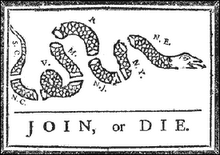
I must've dreamed a thousand dreams
Been haunted by a million screams
But I can hear the marching feet
They're moving into the street
--Genesis
Mises observes that boom/bust cycles are not endogenous to capitalistic systems. Instead, business cycles are a consequence of government interference primarily geared toward lowering the rate of interest below free market levels.
When consumers are permitted to choose freely, it is the subsequent democratic process of the market that then produces the business cycle. When credit expansion comes to an end, consumers' choices reveal misallocations of capital driven by cheap credit, and those projects that should never have seen the light of day are wiped off the books during the bust phase.
One argument for centrally planned systems is that there is less boom/bust. But as Mises notes, if buyers are not permitted to vote with their wallets, then the capital misallocations made by the planners are less apparent in terms of changing business conditions. Instead, people live in a constant state of squalor. A permanent bust, if you will.
Monday, May 31, 2010

Sunday, May 30, 2010
Spill List
List from 2007 showing top 12 oil spills. A few things seem noteworthy. Most of the top spills are tanker spills--the Exxon (XOM) Valdez tanker spill from '89 isn't even close to getting on the list. The only rig-related spill in the top 12 is the #2 Pemex incident in 1979-80 that spilled 140 million gallons.
It is currently estimated that the BP Deepwater rig in the Gulf has spilled between 500,000-1 million gal/day. At the high end of estimates and assuming 30 days of spill thus far, the BP spill should enter the top 10 soon.
Note also that most recent prior top spill occured in 1994 in Russian.
position in oil
It is currently estimated that the BP Deepwater rig in the Gulf has spilled between 500,000-1 million gal/day. At the high end of estimates and assuming 30 days of spill thus far, the BP spill should enter the top 10 soon.
Note also that most recent prior top spill occured in 1994 in Russian.
position in oil
Saturday, May 29, 2010
Crude Attititude
I don't know when to start or when to stop
My luck's like a button
I can't stop pushing it
--General Public
There is little doubt in my mind that we will regulate ourselves into $100+ crude. Supply is coming off the table in a commodity that's already dwindling in supply.
Standing between here and there, however, is the spectre of another economic slowdown, perhaps one that'll make the last one look pretty tame.

Should that occur, there's chance crude will retest its 2008 lows.
Because I think the probability of a double dip is pretty good, I'm reluctant to slap allota energy risk on right here. Perhaps I'm being too cute, but my sense is that there will be opportunity to buy oil at lower levels in the next 6 months.
Should that occur, it may be time to back up the truck, er, tanker.
position in oil
My luck's like a button
I can't stop pushing it
--General Public
There is little doubt in my mind that we will regulate ourselves into $100+ crude. Supply is coming off the table in a commodity that's already dwindling in supply.
Standing between here and there, however, is the spectre of another economic slowdown, perhaps one that'll make the last one look pretty tame.

Should that occur, there's chance crude will retest its 2008 lows.
Because I think the probability of a double dip is pretty good, I'm reluctant to slap allota energy risk on right here. Perhaps I'm being too cute, but my sense is that there will be opportunity to buy oil at lower levels in the next 6 months.
Should that occur, it may be time to back up the truck, er, tanker.
position in oil
Friday, May 28, 2010
Oil Change
You're begging me to go, you're making me stay
Why do you hurt me so bad?
--Pat Benatar
Sold half of energy position into crude's mini spike higher this am. Planning to parse out additional commodity exposure into further liftage. Also looking for good setup to add to short equity position.
position in oil, commodities, SPX
Why do you hurt me so bad?
--Pat Benatar
Sold half of energy position into crude's mini spike higher this am. Planning to parse out additional commodity exposure into further liftage. Also looking for good setup to add to short equity position.
position in oil, commodities, SPX
Thursday, May 27, 2010
Fiat Folley
In violent times
You shouldn't have to sell your soul
In black and white
They really really ought to know
--Tears for Fears
Snippets from Russell:
"No man and no organization can create wealth with the click of a computer...Wealth is created by the sweat of man and the brains of man."
Government and its agencies are incapable of creating wealth. They can only redistribute it and, in many cases, discourage production (which as Russell notes above, is what creates wealth).
You shouldn't have to sell your soul
In black and white
They really really ought to know
--Tears for Fears
Snippets from Russell:
"No man and no organization can create wealth with the click of a computer...Wealth is created by the sweat of man and the brains of man."
Government and its agencies are incapable of creating wealth. They can only redistribute it and, in many cases, discourage production (which as Russell notes above, is what creates wealth).
Wednesday, May 26, 2010
Regulatory Spillover
Substitution, mass confusion, clouds inside your head
--The Cars
Hirshleifer (2008) proposed a psychological attraction theory of regulation--that regulation is the result of psychological biases on the part of political participants (voters, politicians, media commentators). Let's see if we can't put a couple aspects of Hirshleifer's framework to work in light of calls to limit/regulate the energy sector in the wake of the British Petroleum (BP) oil spill.
Salience and vividness effects. Politics can be viewed as a struggle for attention. Constraints on information processing influence political debate. Political competitors seek mechanisms that will make their positions plausible, understandable, and memorable.
Research suggests factors that make stimuli easy to retrieve. Attention is drawn to salient stimuli, or those that stick out compared to others in the environment. Attention is also drawn to vivid stimuli, such as stories about personal experiences and emotionally arousing information (Nisbett & Ross, 1980). Moreover, people possess a 'negativity bias,' or a distaste for losses when measured from an arbitrary reference point (Kahneman & Tversky, 1979).
Disasters, of course, play right into the hands of political participants with an agenda. To my knowledge, we've never had a deep water oil spill like this before (which is likely the chief reason why no one has been able to stop it). Stories of tar balls on the beach and dead wildlife tug at emotions.
As such, voters are eager for politicians to 'do something' to at least create an illusion of initiative to correct the problem.
In-group bias and scapegoating. People tend to prefer members of their own group to outsiders, a phenomenon known as in-group bias. Moreover, people engage in self-serving attribution bias, the belief that in interactions with others we are right and they are wrong. Group serving interpretations of attribution bias can result in antagonism with other groups (Beck, 1999).
The animosity that various politically minded environmental groups hold for industries such Big Oil pretty apparent. Accidents provide a prime stage for the 'we're right; they're wrong' production.
BP becomes a scapegoat for those seeking sweeping reform. Scapegoating is blaming the visible, disliked, and relatively vulnerable--in this case to support regulation to avert future misconduct, regardless of whether there was any villanous behavior or not.
Overconfidence. It has been argued that the most robust finding in all of psychology is that people are overconfident. Overconfidence is belief that one's personal abilities are better than they really are (Hirshleifer, 2008: 864). People consistently express confidence that regulatory regimes can avert disaster. Yet disasters in heavily regulated processes persist. The Space Shuttle program, a government run initiative, has seen two catastrophic failures since its inception. Financial markets have experienced various meltdowns over the past couple of highly regulated decades.
Like all individuals, regulators think they are better than they really are. Can the oil industry be regulated by bureaucrats in a manner that reduces chances of an extreme event? Theory suggests that people think so ex anted but historical data suggest otherwise ex post.
Availability cascades. Extreme events such as disasters gain widespread public attention in intense bursts. Tversky and Kahneman's (1973) 'availability heuristic' suggests that people judge the importance of a phenomenon by their ability to recall examples of it. The more people talk about an event or problem, the more important it seems, creating a self-reinforcing cycle that can be labeled an 'availability cascade' (Kuran & Sunstein, 1999).
As such, news media amplify the availability of threats selectively. In an availability cascade, as public opinion swings toward one position, evidence becomes increasingly one sided in favor of that position. Evidence suggests that people fail to account for the one sidedness of evidence, even when that one sidedness is explicit (Brenner, Koehler, & Tversky, 1996). Consequently, during an availability cascade based upon a perceived threat, political pressure for government to do something to mitigate the threat becomes irresistible.
All of this helps explain not just the regulatory regime sprouting from the current oil spill, but the larger phenomenon of why a people consistently cede power to political entities in the form of regulation--even when the cost of regulation is high and prone to failure.
position in oil
References
Beck, A.T. 1999. Prisoners of hate: The cognitive bias of anger, hostility, and violence. New York: HarperCollins.
Brenner, L., Koehler, D., & Tversky, A. 1996. On the evaluation of one-sided evidence. Journal of Behavioral Decision Making, 9: 59-70.
Hirshleifer, D. 2008. Psychological bias as a driver of financial regulation. European Financial Management, 14: 856-874.
Kahneman, D. & Tversky, A. 1979. Prospect theory: An analysis of decisions under risk. Econometrica, 47: 263-291.
Kuran, T. & Sunstein, C. 1999. Availability cascades and risk regulation. Stanford Law Review, 51: 683-768.
Nisbett, R. & Ross, L. 1980. Human inference: Strategies and shortcomings of social judgment. Englewood Cliffs, NJ: Prentice-Hall.
Tversky, A. & Kahneman, D. 1973. Availability: A heuristic for judging frequency and probability. Cognitive Psychology, 5: 207-232.
--The Cars
Hirshleifer (2008) proposed a psychological attraction theory of regulation--that regulation is the result of psychological biases on the part of political participants (voters, politicians, media commentators). Let's see if we can't put a couple aspects of Hirshleifer's framework to work in light of calls to limit/regulate the energy sector in the wake of the British Petroleum (BP) oil spill.
Salience and vividness effects. Politics can be viewed as a struggle for attention. Constraints on information processing influence political debate. Political competitors seek mechanisms that will make their positions plausible, understandable, and memorable.
Research suggests factors that make stimuli easy to retrieve. Attention is drawn to salient stimuli, or those that stick out compared to others in the environment. Attention is also drawn to vivid stimuli, such as stories about personal experiences and emotionally arousing information (Nisbett & Ross, 1980). Moreover, people possess a 'negativity bias,' or a distaste for losses when measured from an arbitrary reference point (Kahneman & Tversky, 1979).
Disasters, of course, play right into the hands of political participants with an agenda. To my knowledge, we've never had a deep water oil spill like this before (which is likely the chief reason why no one has been able to stop it). Stories of tar balls on the beach and dead wildlife tug at emotions.
As such, voters are eager for politicians to 'do something' to at least create an illusion of initiative to correct the problem.
In-group bias and scapegoating. People tend to prefer members of their own group to outsiders, a phenomenon known as in-group bias. Moreover, people engage in self-serving attribution bias, the belief that in interactions with others we are right and they are wrong. Group serving interpretations of attribution bias can result in antagonism with other groups (Beck, 1999).
The animosity that various politically minded environmental groups hold for industries such Big Oil pretty apparent. Accidents provide a prime stage for the 'we're right; they're wrong' production.
BP becomes a scapegoat for those seeking sweeping reform. Scapegoating is blaming the visible, disliked, and relatively vulnerable--in this case to support regulation to avert future misconduct, regardless of whether there was any villanous behavior or not.
Overconfidence. It has been argued that the most robust finding in all of psychology is that people are overconfident. Overconfidence is belief that one's personal abilities are better than they really are (Hirshleifer, 2008: 864). People consistently express confidence that regulatory regimes can avert disaster. Yet disasters in heavily regulated processes persist. The Space Shuttle program, a government run initiative, has seen two catastrophic failures since its inception. Financial markets have experienced various meltdowns over the past couple of highly regulated decades.
Like all individuals, regulators think they are better than they really are. Can the oil industry be regulated by bureaucrats in a manner that reduces chances of an extreme event? Theory suggests that people think so ex anted but historical data suggest otherwise ex post.
Availability cascades. Extreme events such as disasters gain widespread public attention in intense bursts. Tversky and Kahneman's (1973) 'availability heuristic' suggests that people judge the importance of a phenomenon by their ability to recall examples of it. The more people talk about an event or problem, the more important it seems, creating a self-reinforcing cycle that can be labeled an 'availability cascade' (Kuran & Sunstein, 1999).
As such, news media amplify the availability of threats selectively. In an availability cascade, as public opinion swings toward one position, evidence becomes increasingly one sided in favor of that position. Evidence suggests that people fail to account for the one sidedness of evidence, even when that one sidedness is explicit (Brenner, Koehler, & Tversky, 1996). Consequently, during an availability cascade based upon a perceived threat, political pressure for government to do something to mitigate the threat becomes irresistible.
All of this helps explain not just the regulatory regime sprouting from the current oil spill, but the larger phenomenon of why a people consistently cede power to political entities in the form of regulation--even when the cost of regulation is high and prone to failure.
position in oil
References
Beck, A.T. 1999. Prisoners of hate: The cognitive bias of anger, hostility, and violence. New York: HarperCollins.
Brenner, L., Koehler, D., & Tversky, A. 1996. On the evaluation of one-sided evidence. Journal of Behavioral Decision Making, 9: 59-70.
Hirshleifer, D. 2008. Psychological bias as a driver of financial regulation. European Financial Management, 14: 856-874.
Kahneman, D. & Tversky, A. 1979. Prospect theory: An analysis of decisions under risk. Econometrica, 47: 263-291.
Kuran, T. & Sunstein, C. 1999. Availability cascades and risk regulation. Stanford Law Review, 51: 683-768.
Nisbett, R. & Ross, L. 1980. Human inference: Strategies and shortcomings of social judgment. Englewood Cliffs, NJ: Prentice-Hall.
Tversky, A. & Kahneman, D. 1973. Availability: A heuristic for judging frequency and probability. Cognitive Psychology, 5: 207-232.
Tuesday, May 25, 2010
The Buck Stops Here
Paperlate
I'm sorry but
There's no one on the line
--Genesis
Put the below graph together using data from the BLS site.

By my calcs, $100 in 1916 is now worth about $3.50. And given the tortured state of our CPI statistics, this is likely a conservative estimate.
The Federal Reserve Act was passed in 1913, although the Fed didn't get active till 1916ish. The 16th Amendment was also ratified in 1913.
We should also note that, although CPI stats were not kept prior to the mid 1910s, estimates I've seen suggest relatively stable USD purchasing power during the pre-Fed 1800s.
I'm sorry but
There's no one on the line
--Genesis
Put the below graph together using data from the BLS site.

By my calcs, $100 in 1916 is now worth about $3.50. And given the tortured state of our CPI statistics, this is likely a conservative estimate.
The Federal Reserve Act was passed in 1913, although the Fed didn't get active till 1916ish. The 16th Amendment was also ratified in 1913.
We should also note that, although CPI stats were not kept prior to the mid 1910s, estimates I've seen suggest relatively stable USD purchasing power during the pre-Fed 1800s.
Pavlov's Dog
The reflex is an only child, he's waiting in the park
The reflex is in charge of finding treasure in the dark
--Duran Duran
After proclaiming that its policies helped end the Great Recession, the Obama adminisatration is now seeking support for a new round of stimulus. Few things were more predictable, particularly given the fall midterm elections.
Size of the stock market pales in comparison to the size of the vote market.
The reflex is in charge of finding treasure in the dark
--Duran Duran
After proclaiming that its policies helped end the Great Recession, the Obama adminisatration is now seeking support for a new round of stimulus. Few things were more predictable, particularly given the fall midterm elections.
Size of the stock market pales in comparison to the size of the vote market.
Monday, May 24, 2010
Book Report
Last thing I remember I was running for the door
I had to find the passage back to the place I was before
'Relax,' said the nightman, 'We are programmed to receive.
'You can check out any time you like, but you can never leave.'
--Eagles
In addition to professional endeavors, a personal goal during my sabbatical was to read up on the capitalism (a.k.a. market economy) socialism (a.k.a. planned economy) dyad. I was particularly interested in what smart folks had to say about the middle ground between the two poles. This middle ground, often referred to as managed capitalism, mixed economy, or interventionism, is where every modern economy is positioned to some degree.
"How stable is this middle ground?" was my primary research question. "Is a mixed economy a 'steady state' sort of design, or is it prone to migration toward one of the poles?"
I plowed thru some seminal books plus an article or two--some by economists, others by social commentators. Bibliography below. While certainly not an exhaustive reading list, there were some noteworthy findings nonetheless:
The old Soviet Union, the current EU situation offer real life examples in this regard.
While the Road To Serfdom points toward socialism, the journey appears difficult to complete.
References
Chodorov, F. 1959. The rise and fall of society. New York: The Devin-Adair Company. (see also here and here)
Garrett, G. 1932. The bubble that broke the world. Boston: Little, Brown, & Company.
Garrett, G. 1953. The people's pottage. Caldwell, ID: The Caxton Printers, Ltd.
Hayek, F. 1944. The road to serfdom. Chicago: The University of Chicago. (see also here)
Hirshleifer, D. 2008. Psychological bias as a driver of financial regulation. European Financial Management, 14: 856-874.
Lane, R.W. 1954. Give me liberty. Caldwell, ID: The Caxton Printers, Ltd.
Marx, K. 1867. Das kapital, Vol. 1. Hamburg: O. Meissner. (see also here)
Marx, K.H. & Engels, F. 1848. Manifest of the Communisty Party. London: Burghard.
Mises, L. 1951. Socialism: An economic and sociological analysis. New Haven: Yale University Press. (see also here)
Reinhart, C.M. & Rogoff, K.S. 2009. This time is different: Eight centuries of financial folly. Princeton, NJ: Princeton University Press.
Rothbard, M.N. 1979. Conceived in liberty, Vol. 4. New York: Arlington House, Publishers.
Rothbard, M.N. 1996. Origins of the welfare state in America. Journal of Libertarian Studies, 12(2): 193-232.
Schumpeter, J.A. 1942. Capitalism, socialism, and democracy. New York: Harper & Brothers.
I had to find the passage back to the place I was before
'Relax,' said the nightman, 'We are programmed to receive.
'You can check out any time you like, but you can never leave.'
--Eagles
In addition to professional endeavors, a personal goal during my sabbatical was to read up on the capitalism (a.k.a. market economy) socialism (a.k.a. planned economy) dyad. I was particularly interested in what smart folks had to say about the middle ground between the two poles. This middle ground, often referred to as managed capitalism, mixed economy, or interventionism, is where every modern economy is positioned to some degree.
"How stable is this middle ground?" was my primary research question. "Is a mixed economy a 'steady state' sort of design, or is it prone to migration toward one of the poles?"
I plowed thru some seminal books plus an article or two--some by economists, others by social commentators. Bibliography below. While certainly not an exhaustive reading list, there were some noteworthy findings nonetheless:
- It was nearly unanimous that the middle ground is not a steady state position. The exception was Reinhart and Rogoff (2009) who seemed to believe that managed capitalism is the endgame. Hirshleifer (2008) offered an interesting counter argument against such regulatory regimes.
- Most felt that the gravitational pull was away from capitalism and toward socialism.
- Some felt that a socialist endgame was inevitable (e.g., Marx & Engels, 1848; Marx, 1862; Schumpeter, 1942). Even Garrett (1953) seemed pretty fatalistic.
- Others felt that, while the pull favored socialism, intervention by liberty minded people could reverse the trajectory toward capitalism (e.g., Chodorov, 1959; Hayek, 1944).
- Rothbard's (1979) work was the only one suggesting a primary pull toward free markets--using US colonial context for his analysis.
- Mises (1951, 1998) concluded that the economics of socialism were inferior to capitalism.
The old Soviet Union, the current EU situation offer real life examples in this regard.
While the Road To Serfdom points toward socialism, the journey appears difficult to complete.
References
Chodorov, F. 1959. The rise and fall of society. New York: The Devin-Adair Company. (see also here and here)
Garrett, G. 1932. The bubble that broke the world. Boston: Little, Brown, & Company.
Garrett, G. 1953. The people's pottage. Caldwell, ID: The Caxton Printers, Ltd.
Hayek, F. 1944. The road to serfdom. Chicago: The University of Chicago. (see also here)
Hirshleifer, D. 2008. Psychological bias as a driver of financial regulation. European Financial Management, 14: 856-874.
Lane, R.W. 1954. Give me liberty. Caldwell, ID: The Caxton Printers, Ltd.
Marx, K. 1867. Das kapital, Vol. 1. Hamburg: O. Meissner. (see also here)
Marx, K.H. & Engels, F. 1848. Manifest of the Communisty Party. London: Burghard.
Mises, L. 1951. Socialism: An economic and sociological analysis. New Haven: Yale University Press. (see also here)
Mises, L. 1998. Interventionism: An economic analysis. Irving-on-the-Hudson, NY: The Foundation for Economic Education, Inc. (see also here)
Reinhart, C.M. & Rogoff, K.S. 2009. This time is different: Eight centuries of financial folly. Princeton, NJ: Princeton University Press.
Rothbard, M.N. 1979. Conceived in liberty, Vol. 4. New York: Arlington House, Publishers.
Rothbard, M.N. 1996. Origins of the welfare state in America. Journal of Libertarian Studies, 12(2): 193-232.
Schumpeter, J.A. 1942. Capitalism, socialism, and democracy. New York: Harper & Brothers.
Sunday, May 23, 2010
Open Containers
Here comes the rain again
Raining in my head like a tragedy
Tearing me apart like a new emotion
--Eurythmics
We spent the better part of 2007-2008 listening to bureaucrats claiming that debt blowups were isolated and contained. Little or no chance of a contagion, we heard.
The cascade then commenced.
Similar rhetoric is now building around the Europe story.
Of course, what choice do officials have? When you have a debt laden economic system that is levered many times, the only thing holding things together is confidence. If people become suspicious of the system's validity and simultaneously head for the exits en masse, then the game is up and the house of cards folds.
There will likely come a point, perhaps soon, where no amount of rhetoric will constrain market forces seeking to rebalance the system.
Raining in my head like a tragedy
Tearing me apart like a new emotion
--Eurythmics
We spent the better part of 2007-2008 listening to bureaucrats claiming that debt blowups were isolated and contained. Little or no chance of a contagion, we heard.
The cascade then commenced.
Similar rhetoric is now building around the Europe story.
Of course, what choice do officials have? When you have a debt laden economic system that is levered many times, the only thing holding things together is confidence. If people become suspicious of the system's validity and simultaneously head for the exits en masse, then the game is up and the house of cards folds.
There will likely come a point, perhaps soon, where no amount of rhetoric will constrain market forces seeking to rebalance the system.
Subscribe to:
Posts (Atom)
![[Most Recent Quotes from www.kitco.com]](https://lh3.googleusercontent.com/blogger_img_proxy/AEn0k_ukOG_csXbC6Ru5pFeanSPSsGZe1H7-C4EbC7ryA_t_iSOmjy1uH56IKyAFsggEdTSvQYY5F6LpSOmi-qLf20xNZa4Epzt8WH-4hN_J8HsXZDL9V-4NRSd2MgTsxdu5sNEb-w=s0-d)