Showing posts with label democracy. Show all posts

Friday, September 2, 2022

Extremism and Liberty

"Tonight, our country, that which we stand for and all we hold dear, faces a grave and terrible threat. This violent and unparalleled assault on our security will not go undefended...or unpunished. Our enemy is an insidious one, seeking to divide us and destroy the very foundation of our great nation. Tonight, we must remain steadfast. We must remain determined. But most of all, we must remain united."
--Adam Sutler (V for Vendetta)

It's difficult to imagine that this administration doesn't lose more political support each time it opens its mouth. Last night Biden spoke like a geriatrically challenged version of Adam Sutler, declaring that supporters of Donald Trump and the Make America Great Again ideology constitute a "threat to our country."

If one infers that those who voted for Trump in 2020 comprise this group, then it numbers at least 70 million.

The president's press secretary added the e-word. The president, she said, sees this group as "an extreme threat to our democracy."

Moreover, "when you are not with where the majority of Americans are, then, you know, that is extreme. That is an extreme way of thinking."

Setting aside questions involving what precisely in MAGA ideology is inconsistent with the views of the majority of Americans, or, for that matter, whether MAGA ideology itself doesn't actually constitute the majority viewpoint, any American with a modicum of grounding in US history understands that our founding ancestors designed a government that protected the rights of those who not aligned with the whims of majority opinion

If the press secretary's definition of extremism is employed, then opinions inconsistent with the majority are to be protected from tyrannical treatment. Government is legally barred from acting against 'extremists'--again defined as those who think differently from the 'majority.' 

My sense is that Americans still understand this founding principle well enough they are are turned off by the caustic 'extremist' claims of leftists.

Saturday, July 2, 2022

Pendleton Act

"You guys think you're above the law. Well, you ain't above mine."
--Nico Toscani (Above the Law)

In July of 1881, President James Garfield was shot and killed by an attorney who was furious that the president did not give him a job in the new administration. Operating on the theory that it had to eliminate the system of patronage in government if it was to prevent future assassinations, Congress passed the Pendleton Act.

Signed into law by Chester A. Arthur in 1883, the Pendleton Act created a permanent civil service that could not be undone each election cycle. The administrative, or 'deep,' state was born.

The Constitution does not provide for a permanent class of bureaucrats that possess authority outside of the three branches of government. The Pendleton Act created a layer of statist imposition that the democratic process cannot control.

Perhaps the original intent was to make the civil service class apolitical, but it has become anything but. Indeed, any political party worth its salt would endeavor to place operatives inside the administrative state so that agendas could be advanced regardless of who is in office.

We have seen this in the spades over the past few years as partisans installed at the highest levels of agencies such as the CDC, EPA, DOJ, Federal Reserve, FBI, and CIA render decisions that favor particular political agendas.

I don't know whether the constitutionality of the Pendleton Act has ever been challenged in court. If not, then it should be. This week's West Virginia v. EPA SCOTUS ruling moves in that direction.

Meanwhile, people must continue to wake up to the reality that there is currently a fourth branch of the federal government, one that arguably possesses more power than the other three branches, that essentially operates at its own discretion, and that is largely untouchable by the ballot box.

Thursday, June 30, 2022

Overreach Overturned Again

Forgotten lies aim to distract me
This mono mind must not connect
Purer nature will contain me
Free fall in air I will surpass

--The Fixx

Last week the Supreme Court overturned Roe v. Wade, which sent the question of whether abortions should be legal to the various states. Today, in the case of West Virginia v. EPA, the high court ruled that the Environmental Protection Agency was not specifically authorized by Congress to limit greenhouse gas emissions when the agency was established in 1970.

The court essentially sends the issue back to Congress. If it wants to enact sweeping regulations to curb greenhouse gas emissions, then Congress must do so through the legislative process. 

The ruling makes it more difficult for climate change activists to circumvent the constitutional law-making process.

In both of these cases, the Supreme Court strikes blows against overreach. In Roe, it was the court itself writing law. In West Virginia, it was the executive branch working through one of its agencies (although one could argue that it was the rogue administrative, or deep, state acting out its own agenda.

The court's decisions place responsibility for both issues with elected legislators and, ultimately, with the voters who elect them. 

This, of course, is consistent with the intent of our founding ancestors. 

Monday, June 6, 2022

No Reason?

There's a gun and ammunition
Just inside the doorway
Use it only in emergency
Better you should pray to God
The Father and the Spirit
To guide you and protect you from up here

--Mike and the Mechanics

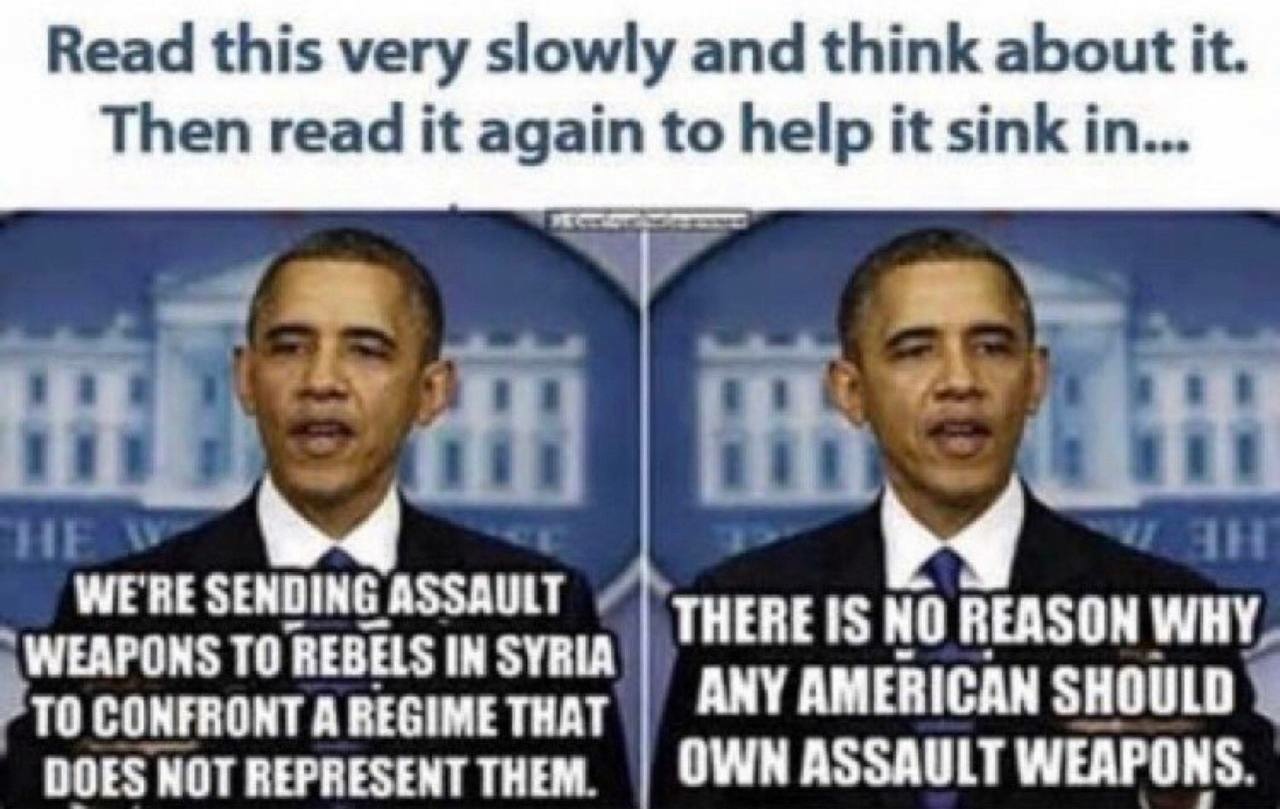
Another example of left-wing gun grabber hypocrisy.

More recently, one could substitute into the first panel the thousands of 'assault weapons' being sent to Ukraine streetfighters over the past few months.

No reason?

Friday, April 29, 2022

Love and Liberty

No more running down the wrong road
Dancing to a different drum
Can't you see what's going on
Deep inside your heart?

--Michael McDonald

Leonard Read's Students of Liberty is a thoughtful compilation of remarks made to students at Pitt in 1950. I found several points particularly interesting.

Read proposes that the history of the world is largely a history of violence. These pages have proposed similarly. Some violence is direct, such as war, while other violence is indirect, such as the violence that manifests under the guise of democracy. For example, when people vote to raise taxes to pay for a particular program, those voters are principals of violence. They contract with the strong arm of government to shake down others for resources to fund their pet projects.

The alternative to violence, Read suggests, is love. Love refers to the kindly virtues in human relations such as charity, integrity, and not doing unto others what you would not have them do unto you. This is, of course, Christ's central message. 

If we are to trends of violence toward love, then Read asserts that liberty is required. Love "generates and grows among free men; only with great difficulty among men ruled by the principles of violence. As violence begets violence so does one personal act of kindness beget another." (28) 

How does liberty grow? Read dismisses approaches such as marketing campaigns, subsidized instruction, and fear mongering programs. Instead, he advocates for self-motivated learning and improvement. Only through personal search for truth and leading by example will liberty grow.

Read admits that his 'one-individual-at-a-time' notion lacks the speed of other, more aggressive proposals, but he argues that the Students of Liberty approach is the only one that will produce durable and lasting change.

Here we are 70+ years later, and most of the approaches that Read downplayed have been tried with marginal success. Perhaps it is time to put Read's proposal to work.

I personally plan to.

Monday, February 21, 2022

War on Dissent

Trim life shadows flicker and fall
But you still can't turn away
Get up and run before you stall
Before the edges fray

--Ric Ocasek

Glenn Greenwald nicely frames the growing war on dissent. Dissent is disagreement with collective norms, particularly as they apply to politics. 

In any social environment, there will be institutional pressure to conform to norms, resulting in movement toward sameness in behavior (a.k.a. 'isomorphism'). Pressure to conform can be peaceful, taking the form of public opinion/persuasion or threat of exclusion from group activities.

However, pressure to conform can be coercive and involve force. For example, dissenters who gather in protest could be assaulted or arrested.

Greenwald suggests that government action against dissent, which is by definition forcible, has been increasing in western societies. Western societies are grounded in political frameworks that, at least on paper, tolerate dissent. In the US, for example, the Constitution guarantees that no law will prohibit or abridge freedom of speech.

Government-sponsored coercion against dissent is easy to spot in other countries. Thus, when Russia moves to freeze bank accounts of political dissenters, headlines in western countries howl in uproar.

However, when western countries do the same thing, as is currently happening, among other places, in Canada, the response is much more muted.

What Greenwald fails to mention is that this inconsistency is explainable by social identity theory. Simply stated, bad behavior by outsiders is punished or berated, while similar behavior by insiders is condoned or rationalized. 

As such, dissenting speech by insiders is legitimate protest to be respected, while dissenting speech by outsiders is disinformation or sedition to be silenced.

Greenwald's main point, however, is that war against dissent in western societies is increasing. He posits that  heads of western governments are stepping away from rule of law in favor of discretionary rule. By definition, discretionary rule is prone to inconsistency and hypocrisy, and requires violence to keep behavior in check.

Fortunately, citizens (read: voters) wake up politically when their freedoms are being trampled. Consequently, as western governments wage war on dissent, the dissenters appear to be organizing their own campaign aimed at ballot boxes.

Friday, December 24, 2021

Overton Window

"A toast...to high treason. That's what these men were committing when they signed the Declaration. Had we lost the war, they would have been hanged, beheaded, drawn and quartered, and--my personal favorite, had their entrails cut out and BURNED!"
--Benjamin Franklin Gates (National Treasure)

The Overton Window conceptualizes the range of politically acceptable policies at a given time. Developed by policy analyst Joseph Overton, the model can be seen as representing the window of opportunity of sorts for politicians. 

In the model, all possible government policies fall along a single vertical scale. Toward the upper end of the scale are policies that reduce government regulation and expand personal freedom. Toward the lower end of the scale are policies that increase government regulation and restrict personal freedom.

At any given time, only a subset of these possibilities is widely seen as legitimate. This subset constitutes the Overton Window. Politicians are likely to pursue policies inside the window. If they stray outside the window to champion other ideas, then politicians are likely to be viewed as too radical or extreme to gain or keep public office.

An interesting and perhaps counterintuitive feature of the theory is its premise that politicians are able to detect the boundaries of acceptability defined by the window but possess limited capacity for altering those boundaries. Instead, intellectuals, social movements, advocacy groups, and other shapers of popular opinion are more likely to alter the window. 

An exception might lie in charismatic political leaders who behave in manners that capture the hearts and minds of the people.

Because the battle between force and freedom is as old as society itself, the boundaries of the Overton Window are in a constant state of flux. As such, politicians who operate near the edges of the window risk public opinion turning against them if the window moves away from the policies that they promote.

Tuesday, November 9, 2021

Voter ID

"Define irony."
--Garland Greene (Con Air)

Liberty-minded people are naturally wary of government-mandated ID requirements. Mandatory identification cards, tags, numbers, implants, retinal scans, fingerprints, etc. invite government tracking which threatens individuals' constitutional right to privacy. When it cannot identify and monitor behavior, the state loses much of its power for meddling in the affairs of the citizenry. 

It would seem that the lower the requirement for state-sponsored ID in a society, the greater the individual liberty in that society.

However, this proposition poses a dilemma when it comes to voting. Free societies are usually grounded in republican forms of government. In republican forms of government, representatives are commonly elected by the citizenry through some form of popular vote. 

A few rules are typically imposed on the voters. They must be of a minimum age. They can cast only one ballot. They cannot vote in proxy for someone else. Finally, they must be recognized citizens of the geographic domain for which votes are to be cast. 

It follows, then, that there needs to be a process for verifying that voters have adhered to the rules. It is also difficult to see how such a process does not include a reliable form of voter identification. Information on the ID enables verification of a prospective voter's eligibility and that voters have been true to the 'one person, one vote' requirement.

Wouldn't mandatory voter ID increase risk of government mischief? Oh yeah. The classic precedent is the Social Security number. When the Social Security program was enacted in the late 1930s, the number was said to be simple mechanism for tracking accounts in the Social Security system. Since then, of course, the SSN has become a principal identifier for individuals within the US.

But perhaps the risk can be intelligently managed. After all, absent voter ID, election integrity seems impossible to verify. Corruption is encouraged. Individual voting franchises are degraded. Electors are illegitimate. (Sound familiar?)

Consequently, governments may be installed that threaten the very liberty that free people seek to protect by remaining anonymous and untrackable. 

Quite the irony.

Saturday, August 14, 2021

Pandemic Tyranny II

"Knights, the gift of freedom is yours by right!"
--Arthur Castus (King Arthur)

As evidenced by events over the past 18 months, rule of law has been supplanted by discretionary rule. Discretionary rule amounts to governing factions seeking to get away with doing whatever they can. In the public health arena, officials set rules by edict. In last fall's election, officials broke myriad election laws assuming that they wouldn't get caught. Even if they did, they figured that they would not be punished.

Judge Nap previews a new round of discretionary rule unfolding in the name of pandemic fighting. Once again, these discretionary rules aim to restrict personal freedoms protected by the Constitution. Most of the limitations that the Constitution places on federal government w,r,t. personal freedoms are written into the Bill of Rights. Since the passage of the Fourteenth Amendment, these same limitations apply to state and local jurisdictions as well.

The rights to thought (1st), speech (1st), press (1st), assembly (1st), worship (1st), self-defense (2nd), privacy (4th), travel (4th), property ownership (3rd, 4th, 5th), commercial activities (5th), association (5th), and fair treatment from government (4th, 5th, 6th, 7th, 8th) are plainly articulated or rationally inferred from the first eight amendments. The Ninth Amendment declares that all other individual rights not enumerated in the first eight amendments shall not be disparaged by government. The Tenth Amendment declares that powers not delegated to the federal government and not prohibited by law are reserved for the states, or to the people. 

These rights are considered to be natural--each individual is born with them. They are not granted by worldly rule. No president, king, governor, mayor, legislative body, judge, et al. has legitimate power to confer them.

The gist of natural law is that individuals are free to pursue their personal interests unencumbered by government intervention (a.k.a. 'liberty) so long as their pursuits due not forcibly invade the pursuits of others. This principle is sometimes referred to as the non-aggression principle.

Similar to previous rounds of pandemic-inspired interventions, new government mandates promise to interfere with rights protected by the Bill of Rights. Travel, assembly, exercise of religious beliefs, commercial activities, and how we dress (face masks) are among those threatened. The threats come from state and local officials who claim to have the power to unilaterally interfere with individual rights.

Their claims raise several constitutional issues.

1) Do state and local officials have the power to regulate behavior in the face of what they claim to be 'emergencies?' Article 4, Section 4 of the Constitution guarantees a republican form of government to each state (a.k.a. the Guarantee Clause). This means that government powers must be separated into legislative, executive, and judicial branches, and that one branch cannot assimilate responsibilities of the others. 

Because only representative legislatures can write laws that carry criminal penalties and incur the use of force, mayors, governors, and other officials cannot validly make unilateral declarations and call them law. There are no exceptions to this law in the event of self-proclaimed emergencies.

2) Can state legislatures delegate their lawmaking powers to governors during times of emergency? No. Again, drawing from the Guarantee Clause, republican forms of government require separation of powers, and one branch cannot abdicate its responsibilities in deference to another branch. Doing so would not longer constitute a republican form of government. If states abdicate their responsibility to provide a republican form of government then, by the Constitution, it is the federal government's responsibility to act in manners that fulfill the constitutional guarantee to the state's people.

3) Can state legislatures enact laws the governors desire to limit personal liberties enumerated in the Bill of Rights and to coerce compliance? No. Government at all levels in the United States is subordinate to the natural rights articulated in the Bill of Rights.

Given the straight 'no' answers to the above, the essential issue that the Judge doesn't address, unfortunately, is why these illegal mandates are not under full-fledged legal assault by people around the country seeking relief from tyranny. My growing fear is that if courts do not provide legal relief, then the pressures of institutional failure grow to the point where they will be relieved using other means.

Saturday, July 24, 2021

Tocqueville's Warnings

"You have to understand, most of these people are not ready to be unplugged. And many of them are so inured, so hopelessly dependent on the system, that they will fight to protect it."
--Morpheus (The Matrix)

GMU's Dan Klein discusses some important points from Alexis de Tocqueville's Democracy in America. In 1831 Tocqueville and a colleague were sent by the French government to study America's prison system. For the better part of a year, they toured the US and some parts of Canada. 

After returning home and reporting their findings, Tocqueville continued on, writing a two volume set with the first volume published in 1835 and the second in 1840. Although titled Democracy in America, Tocqueville's work was really a treatise on democracy in general, a phenomenon that in his view had been in motion for centuries.

Klein focuses primarily on Tocqueville's conclusions, or warnings, many which appear near the end of volume two in a chapter entitled, "What Sort of Despotism Democratic Nations Have to Fear." It turns out that Tocqueville had been worried about the ultimate outcomes of democracy for some time, and his whirlwind tour of the US did not quell his fears. According to Klein, Tocqueville feared two scenarios in particular.

One was despotism from a "tyranny of the majority." Tocqueville was not the first to envision such an outcome, as similar concerns appear in the writings of our founding ancestors. Tyranny of the majority is bad not only because it rules by shallow, group-inflicted dogma (rather than by rule of law), but because of its constant expansion of government and its dominance in social affairs. Even if citizens do not regard it as tyranny, Tocqueville argues that it is because it is not in each citizen's interest. It "monopolizes movement and existence" even though "it does not ride roughshod over humanity."

Tocqueville's point is that tyranny of the majority can subtle, gradual, and perhaps even enticing enough for citizen subjects to demand it.

This leads to a worse scenario. Citizens "renounce the use of their wills" and lose "little by little the faculty of thinking, feeling, and acting for themselves." They outsource their faculties to rulers believed to make decisions in their interest--often under the guise of equality of condition.

Such a belief is delusional. Tocqueville writes that a small group inevitably assumes control of the machinery of government for its own interests. Tyranny of the majority becomes tyranny by minority rule. The power proceed to destroy or modify institutions and customs. 

Ironically, people come to prefer "equality in servitude to inequality in freedom." Wow. Well said.

A citizen enjoys "goods as a tenant, without spirit of ownership." A "miserable person" can understand "robbing the public treasury or selling favors of the state for money...and can flatter himself with doing as much in his turn."

At the time of his writing, Tocqueville opined that "the majority...still lacks the most perfect instruments of tyranny...If ever freedom is lost in America, one will have to blame the omnipotence of the majority"

It is difficult not to spot manifestations of Tocqueville's warnings in current affairs.

Monday, March 1, 2021

No Day in Court

Oh, he tells me tears are something to hide
And something to fear
And I try so hard to keep it inside
So no one can hear

--'Til Tuesday

During my industry days, a series of fortuitous promotions landed me in the executive suite of a large corporation at a young age. I was surrounded by veteran managers--many more than double my age. As the Young Turk, I was anxious to make big change, and often grew frustrated when the execs around me wanted to slow it down and take more measured approaches. 

After a meeting where the top management team decided to table my recommendations for a later date, a sage vice president--probably the closest person I had to a 'mentor' at the company--sensed my discontent and stopped by my office for a chat. He told me to avoid feeling discouraged. He said that the senior management group valued my enthusiasm and needed my ideas. 

But he also suggested that I needed to "respect the process." By that he meant that the way the company moved forward was creating forums for people to present their ideas and concerns to the decision-making hierarchy. It was the responsibility of decision-makers to listen, and then to thoughtfully deliberate on recommendations presented in those forums before rendering decisions.

Then he paused and said to me, "Those decisions might not always go the way you want. But no matter which way they go, know that you had your day in court."

Subsequently, I came to realize that 'the process' served not only search purposes, but also as an outlet for expression and concerns. A listening post and relief valve of sorts.

Unfortunately, legal institutions that offer similar forums for relief have failed since last November's election. For example, judges across the land have stonewalled legal challenges to the election process and its results. Claims that tens of millions of people had their votes disenfranchised have not been heard.

The wounds inflicted by this institutional failure are certain to fester, for the claimants have been denied their day in court.

Saturday, June 13, 2020

Division and Democracy

We are passengers in time lost in motion
Locked together day and night by trick of light
I must take another journey
We must meet with other names
--The Fixx

Almost daily the news splashes claims that we've never been this divided as a country. Truly? Several turbulent periods in our nation's past (e.g., American Revolution, Civil War, Reconstruction, Great Depression, 1960s) suggest some pretty good historical comps.

On the other hand, I'm reminded of Herbert's conjectures in the late 1800s. As democracy and discretionary power grow, factions consolidate into two opposition parties. Each election cycle escalates the battle over the strong arm of government.

Because there is more to gain and more to lose for both sides, why should we expect anything other than increased political division?

Tuesday, January 21, 2020

Bad Gun Law

"I think that when statesmen forsake their own private conscience for the sake of their public duties, they lead their countries by a short route to chaos."
--Sir Thomas More (A Man for All Seasons)

A Virginia sheriff says that he will not enforce state gun control bills if they are passed as currently written because he believes the bills are unconstitutional.

But isn't it the job of law enforcement officers to...enforce the law? Not if it is bad law. Because it opposes the natural rights of man, bad law always requires aggression to enforce. Yes, those behind the creation and passage of bad law are at fault. But so are those who are 'following orders' to enforce it.

This sheriff is saying that he chooses not to be a lever of aggression--an agent for those who wish to enact bad gun law.

Monday, December 2, 2019

Impeachment Partisanship

Here comes the rain again
Falling on my head like a memory
Falling on my head like a new emotion
--Eurythmics

Alan Dershowitz discusses the Constitutional basis of impeachment and the debates of our founding ancestors about the issue. To be impeached, a president must commit a crime, and the commission of that crime must also constitute an abuse of office. Abuse of office by itself may be wrong, but it is not an impeachable offense.

The basis for impeachment was debated at the Constitutional Convention. When simply 'maladminstration' was proposed as grounds for impeachment, James Madison objected, arguing that the criterion was so vague and open-ended that the president would serve at the will of Congress and turn the federal government into a parliamentary democracy where the president could be removed with a vote of no confidence.

Instead, the framers adopted strict requirements for impeachment. Bribery, treason, or other high crimes and misdemeanors must be evident. A 2/3 super-majority vote in the Senate is required for removal.

In Federalist 65, Alexander Hamilton wrote of the dangers of a partisan approach to impeachment. Dershowitz suggests that the recent House impeachment circus demonstrates the partisan approach well. He suggests that impeachment partisanship further divides the nation and threatens to weaken the Constitution.

Perhaps, but the framers might also suggest that a partisan approach to impeachment is also likely to boomerang the party that goes on a unilateral witch hunt for all to see.

Sunday, October 27, 2019

Negative, Not Positive

"Why should I trade one tyrant three thousand miles away for 3,000 tyrants one mile away? An elected legislature can trample a man's rights as easily as a king can."
--Benjamin Martin (The Patriot)

The quote below comes from a large thought stream of that Prof Williams has dedicated to the subject of democracy and liberty. These pages have reflected on these thoughts from time to time.

His central proposition is that associating liberty with democracy, or claiming democratic processes as essential to free society, is sloppy thinking. As our founding ancestors well understood, democracy is more accurately associated with tyranny than with liberty.

A good case can be made that it has been statists who have tried to condition Americans to believe that democracy is rightly associated with freedom and liberty.

Don't fall for it. In the long run the relationship between democracy and liberty is negative, not positive.

Saturday, October 5, 2019

Saturday, September 28, 2019

Gang of Thieves

"No matter how bad it gets, we don't steal."
--Jim Braddock (Cinderella Man)

Who can accurately determine who has wealth that is 'extreme' and must be taken away by aggressive force.
If you vote for a politician with such a plan, then you believe that the answer is: you.

With your vote, you associate yourself with a gang of thieves willing to rob others at gunpoint for your benefit--whether that benefit be material or psychic.

All in this gang will ultimately be held accountable.

Saturday, September 14, 2019

Government Speech

The impression that you sell
Passes in and out like a scent
--The Fixx

Does government have freedom of speech--to voice opinions similar to individuals. As Judge Nap observes, no.

What? Don't people in government have the same free speech rights as the rest of us. Yes, and they are free to exercise them. However, they are not free to commandeer the machinery of government--local, state, or federal--to advance personal opinion.

When government speaks, it suppresses the voices of others who disagree with it. This is the very infringement that the First Amendment was written to protect. Using government as an instrument of speech makes it easier for some to speak louder than others. When this occurs, government is expressing favoritism or hatred in the marketplace for ideas.

Thus, government officials cannot rightfully weigh in on the NRA. Government buildings cannot rightfully fly confederate or LGBT flags. Government resources cannot rightfully capitalize nascent industries such as green energy.

Government is not elected to identify ideas that it loves or hates. It is elected to protect our freedom.

Saturday, August 31, 2019

Democracy and Liberty

All for freedom and for pleasure
Nothing ever lasts forever
Everybody wants to rule the world
--Tears for Fears

We can take Prof Williams' observation a step further. Not only are democracy and liberty not the same, but they work against each other.
Democracy, defined as decisions made by majority rule, implies that those who can marshal a majority vote can trample on the liberties of those in the minority.

The greater the reliance on political decisions using democratic process, the lower the liberty.

Our founding ancestors understood this negative relationship well.

Monday, August 12, 2019

Crisis and Liberty

Vasily Borodin: The crew know about the saboteur and they are afraid.
Captain Marko Ramius: That could be useful when the time comes.
--The Hunt for Red October

Why are people prone to surrender liberty in times of crisis? One theoretical explanation is grounded in threat-rigidity theory. Under conditions of threat, people become more 'rigid' in their thinking. They tend to look at less alternatives and centralize decision-making authority.

Stated differently, critical thinking goes down and willingness to cede power to government goes up.

This theory is complemented by research on judgment and decision-making. When we are threatened, our minds remain fixed in fast-thinking mode. We are reactive, emotional, and less rational. It is difficult to reason well.

In this mode, we are subject to emotional capture by opportunistic statists.

Although they rarely admit it, big government proponents look forward to the next terrorist attack, the next mass shooting, et al. The committed ones may try to facilitate the occurrence of such events. They understand theory about how the masses are likely to respond in times of threat. They know that serious statists never let a good crisis go to waste.