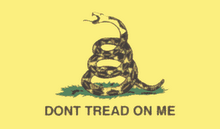
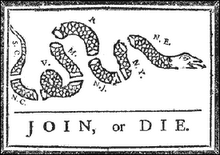
To secure these rights [of Life, Liberty, and the Pursuit of Happiness], Governments are instituted among Men, deriving their just powers from the consent of the governed...Whenever any Form of Government becomes destructive of these ends, it is the Right of the People to alter or to abolish it, and to institute new Government.
--Declaration of Independence
In the United States, secession as a valid strategy for coping with oppressive government goes at least as far back as Jefferson's words above. In the early 1800s, even outside observers such as Alexis de Tocqueville recognized the legitimacy of secession in the American system:
"The Union was formed by the voluntary agreement of the States; and in uniting together they have not forfeited their nationality, nor have they been reduced to the condition of one and the same people. If one of the states chooses to withdraw from the compact, it would be difficult to disprove its right of doing so, and the Federal Government would have no means of maintaining its claims directly either by force or right (1945: 381)."
Through the distortions of popular history, many think that the only movements toward secession in the United States were those by the Southern states prior to the Civil War. However, there were numerous threats of secession prior to 1860.
The Alien and Sedition Acts of the late 1790s drove resolutions drafted by Jefferson and Madison for Kentucky and Virginia that hinted at secession. In the early 1800s, several New England states believed that the economic policies enacted under the presidencies of Jefferson and Madison were disproportionately harmful to New England state interests (which mirrored arguments of Southern states under later administrations); the wisdom of secession was debated in Massachusetts, Connecticut, New York, and elsewhere over the span of at least 20 years.
As disagreements between Northern and Southern states got louder in the late 1850s, individual secession movements were spawned in several 'middle states' including New York, New Jersey, Pennsylvania, Delaware, and Maryland. Various themes drove these movements. Some states wanted to join the Southern Confederacy, some wanted to form a 'Central Confederacy,' and some simply preferred that the South should go in peace rather than destroying the Union by trying to hold it together by military force.
There was even some chatter in a few Northern states with abolitionist tendencies that Northern border states should secede in order to negate the federal Fugitive Slave Act, thereby making it easier for runaway slaves to escape.
By the time that Southern states undertook secession proceedings in 1860-1861, the right of states to secede was widely recognized and respected--even in the North. Historical studies of editorials from Northern newspapers (e.g., Perkins, 1964) clearly indicate that secession as a Constitutional right was broadly understood.
Lincoln sought to alter history by arguing that the federal Union preceded the states. He denounced the right of secession as 'an ingenious sophism.' Even in his Gettysburg address, at which time hundreds of thousands had already died from a conflict that he put in motion, Lincoln argued that representative government would 'perish from the earth' if the South won the war, and that the war was being fought in defense of government by consent.
The opposite was in fact true. If Southern states had been permitted to peacefully secede, two representative government would have existed--on in the North and one in the South. Moreover, it was clear that the Federal government under Lincoln sought to deny Southerners the right to government by consent, for Southern states, by their movement to secede, certainly did not consent to remaining in the Union.
The Civil War can be seen as Lincoln's war against the right of secession.
References
de Tocqueville, A. 1945. Democracy in America. New Rochelle, NY: Arlington House.
Perkins, H.C. 1964. Northern editorials on secession. Gloucester, MA: Peter Smith.
Friday, September 30, 2011

Thursday, September 29, 2011
A Better Idea
With a little perserverence you can get things done
Without the blind adherence that has conquered some
--Corey Hart
Leonard Read was a pioneer in questioning the sensibility of intellectual property protection. The basic argument is that 'ideas' cannot be claimed as property because the inputs employed have no clean title. That is, the ideas that I might 'create' are a composite of ideas/thoughts borrowed from others. It is impossible to separate the thoughts that are truly mine from thoughts that I may have borrowed from others.
Contrast this with property obtained by application of labor to raw materials and capital where ownership is clear. If I own the inputs, then the output is mine. If someone else owns the inputs, then the output is his/hers; as an employee, I essentially keep a portion of the output as my own based on whatever salary arrangement I have agreed to.
Read's point rings true. Ideas come from we know not where. They are not meant to be stored or monopolistically protected. They are meant to be shared--freely given as received.
Postscript: Leonard Read never copyrighted his work. He encouraged users of his work to copy it liberally. Very admirable.
Without the blind adherence that has conquered some
--Corey Hart
Leonard Read was a pioneer in questioning the sensibility of intellectual property protection. The basic argument is that 'ideas' cannot be claimed as property because the inputs employed have no clean title. That is, the ideas that I might 'create' are a composite of ideas/thoughts borrowed from others. It is impossible to separate the thoughts that are truly mine from thoughts that I may have borrowed from others.
Contrast this with property obtained by application of labor to raw materials and capital where ownership is clear. If I own the inputs, then the output is mine. If someone else owns the inputs, then the output is his/hers; as an employee, I essentially keep a portion of the output as my own based on whatever salary arrangement I have agreed to.
Read's point rings true. Ideas come from we know not where. They are not meant to be stored or monopolistically protected. They are meant to be shared--freely given as received.
Postscript: Leonard Read never copyrighted his work. He encouraged users of his work to copy it liberally. Very admirable.
Wednesday, September 28, 2011
Dr Copper
You had me down, twenty one to zip
Smile of Judas on your lip
Shake my fist, knock on wood
I've got it bad, and I've got it good
--Robert Palmer
Copper is often referred to as 'Dr Copper,' because it is said that the metal has a PhD in economic activity. The metal has so many uses that copper prices are thought to be a valid forecaster of economic strength.

What is Dr Copper telling us right now?
no positions
Smile of Judas on your lip
Shake my fist, knock on wood
I've got it bad, and I've got it good
--Robert Palmer
Copper is often referred to as 'Dr Copper,' because it is said that the metal has a PhD in economic activity. The metal has so many uses that copper prices are thought to be a valid forecaster of economic strength.

What is Dr Copper telling us right now?
no positions
Follow the Yellow Brick Road
"My, people come and go so quickly here!"
--Dorothy (The Wizard of Oz)
New knowledge for me here in the form of Rothbard's explanation of the dynamics surrounding the 1896 election. The election had become a referendum on the gold standard. During the early 1890s, the Democratic Party had largely been hijacked by a populist, infationist mindset led by presidential contender William Jennings Bryan.
Old School Democrats (the party of Jefferson), who were fiercely devoted to gold standard and sound currency, soured to this trend. The JP Morgan interest was part of the Old School Democrat gold standard crowd, although this group was interested in some government backing for a more 'elastic currency' to support the banks--particularly during times of crisis.
The Republican Party, dating back to its Whig and Lincolnian origins, was partial to inflation and central banking as well. By the late 1890s Rockefeller forces had become highly influential in shaping the Republican trajectory.
Seeing that the Democratic national convention of 1896 was likely to be won by the populists, Morgan reps approached Rockefeller reps to cut a deal. Morgan interests would support the Republican presidential candidate, William McKinley, provided that McKinley and the Republicans would pledge allegiance to a gold standard.
And so it went...
The gold standard pledge, of course, wasn't literal because plans were already in the works for a 'managed currency' and an institution to manage it. Such plans were antithical to the concept of a gold standard.
position in gold
--Dorothy (The Wizard of Oz)
New knowledge for me here in the form of Rothbard's explanation of the dynamics surrounding the 1896 election. The election had become a referendum on the gold standard. During the early 1890s, the Democratic Party had largely been hijacked by a populist, infationist mindset led by presidential contender William Jennings Bryan.
Old School Democrats (the party of Jefferson), who were fiercely devoted to gold standard and sound currency, soured to this trend. The JP Morgan interest was part of the Old School Democrat gold standard crowd, although this group was interested in some government backing for a more 'elastic currency' to support the banks--particularly during times of crisis.
The Republican Party, dating back to its Whig and Lincolnian origins, was partial to inflation and central banking as well. By the late 1890s Rockefeller forces had become highly influential in shaping the Republican trajectory.
Seeing that the Democratic national convention of 1896 was likely to be won by the populists, Morgan reps approached Rockefeller reps to cut a deal. Morgan interests would support the Republican presidential candidate, William McKinley, provided that McKinley and the Republicans would pledge allegiance to a gold standard.
And so it went...
The gold standard pledge, of course, wasn't literal because plans were already in the works for a 'managed currency' and an institution to manage it. Such plans were antithical to the concept of a gold standard.
position in gold
The Road thru Indy
"These people can make us disappear."
--Nina Chance (Murder at 1600)
Last week we noted Rothbard's knack for establishing the context of political decisions. Here is portion of his effort to piece together the network behind the organization of the Federal Reserve.
Center stage in this piece is the Indianapolis Monetary Convention of 1897, which subsequently become the Indianapolis Monetary Commission. The purpose of this commission was to begin a public relations effort to drum up support for 'banking reform'--a code name for central banking.
This group was laced w/ Morgan and Rockefeller representatives.
Note that although this special interest group succeeded in winning the ear of Congress by the end of the 1890s, it would still be a decade or more before the PR machine would win over enough support to enact the Federal Reserve. Why? Back then there was widespread distrust of central banking...two central banks had already been dismantled in the United States.
The propaganda machine still had work to do...
--Nina Chance (Murder at 1600)
Last week we noted Rothbard's knack for establishing the context of political decisions. Here is portion of his effort to piece together the network behind the organization of the Federal Reserve.
Center stage in this piece is the Indianapolis Monetary Convention of 1897, which subsequently become the Indianapolis Monetary Commission. The purpose of this commission was to begin a public relations effort to drum up support for 'banking reform'--a code name for central banking.
This group was laced w/ Morgan and Rockefeller representatives.
Note that although this special interest group succeeded in winning the ear of Congress by the end of the 1890s, it would still be a decade or more before the PR machine would win over enough support to enact the Federal Reserve. Why? Back then there was widespread distrust of central banking...two central banks had already been dismantled in the United States.
The propaganda machine still had work to do...
Tuesday, September 27, 2011
In Gold We Trust
I should have known better than to cheat a friend
And waste a chance that I'd been given
--Wham
As always, keen insight from Jim Grant. He argues that the price of gold = 1/T, where T is trust or confidence in the institution of managed (or fiat) currencies.
Is gold in a bubble. Wrong question says JG. The bubble driving gold price is government.com--absurd monetary and fiscal policy. Gold merely reflects merely reflects the absurdity.
Gold is a bet on the disorder produced by government.com
position in gold
And waste a chance that I'd been given
--Wham
As always, keen insight from Jim Grant. He argues that the price of gold = 1/T, where T is trust or confidence in the institution of managed (or fiat) currencies.
Is gold in a bubble. Wrong question says JG. The bubble driving gold price is government.com--absurd monetary and fiscal policy. Gold merely reflects merely reflects the absurdity.
Gold is a bet on the disorder produced by government.com
position in gold
Monday, September 26, 2011
Ponzi de Jour
If I'm losing control would you turn me away?
Or touch me deep inside?
And before this gets old
Will it still feel the same?
There's no way this could die
--Pat Benatar
The idea de jour in the EU crisis is to have governments borrow money from the ECB to buy assets (such as Greek bonds) from struggling banks. The vehicle for doing this is the EFSF (European Financial Stabilization Facility), which is a special purpose vehicle (SPV) established in 2010 and backed by EU country guarantees. The EFSF provides assistance to eurozone states in financial difficulty. The EFSF would essentially borrow using their country's assets as collateral.
The size of the borrowings necessary? Perhaps $1-2 trillion...
If this sounds like a version of TARP, then you'd be somewhat correct since the focus would be buying 'troubled assets.' In the case of TARP, however, government funds bought troubled assets from private sector banks. Under the latest EU plan, government money would be levered up with ECB money (more government money) to buy bonds from the same governments on the hook for the EFSF and ECB money to begin with.
How long before Mr Ponzi enters this discussion?
The only way such a program could be marginally effective is if Germany and France absorb an outsized share of the risk--well beyond what they have currently committed to contribute.
Which brings us back to the conclusion we've been reaching for months (here, here). Should Germany decide not to participate, then it all crumbles, cookie.
For today, anyway, markets were willing to look at the glass half full side of the story, with domestic markets up a couple of percent or so on the prospect of a $trillion EU bail out.
position in SPX
Or touch me deep inside?
And before this gets old
Will it still feel the same?
There's no way this could die
--Pat Benatar
The idea de jour in the EU crisis is to have governments borrow money from the ECB to buy assets (such as Greek bonds) from struggling banks. The vehicle for doing this is the EFSF (European Financial Stabilization Facility), which is a special purpose vehicle (SPV) established in 2010 and backed by EU country guarantees. The EFSF provides assistance to eurozone states in financial difficulty. The EFSF would essentially borrow using their country's assets as collateral.
The size of the borrowings necessary? Perhaps $1-2 trillion...
If this sounds like a version of TARP, then you'd be somewhat correct since the focus would be buying 'troubled assets.' In the case of TARP, however, government funds bought troubled assets from private sector banks. Under the latest EU plan, government money would be levered up with ECB money (more government money) to buy bonds from the same governments on the hook for the EFSF and ECB money to begin with.
How long before Mr Ponzi enters this discussion?
The only way such a program could be marginally effective is if Germany and France absorb an outsized share of the risk--well beyond what they have currently committed to contribute.
Which brings us back to the conclusion we've been reaching for months (here, here). Should Germany decide not to participate, then it all crumbles, cookie.
For today, anyway, markets were willing to look at the glass half full side of the story, with domestic markets up a couple of percent or so on the prospect of a $trillion EU bail out.
position in SPX
Sunday, September 25, 2011
Antecedents of the Civil War Part III
"I presume you all know who I am. I am humble Abraham Lincoln. I have been solicited by many friends to become a candidate for the legislature. My politics are short and sweet, like the old woman's dance. I am in favor of a national bank...in favor of the internal improvements system and a high protective tariff."
--Abraham Lincoln 1832
Previously we observed the influence of the American System, particularly its protectionist plank, in weakening the South's allegience toward the union of states. The American System was a product of Henry Clay and the Whig party in the 1810s.
From the time he entered politics, Abraham Lincoln was a disciple of Henry Clay and the Whig agenda. In his near 30 yr political career leading up to the 1860 presidential election, Lincoln was frequently on the record as supporting all three planks of the American System: a national bank, government sponsored 'internal improvements,' and protectionist tariffs. Lincoln subsequently nailed those planks into his own presidential campaign platform in 1860.
By this time, many Southerners believed that the federal government had been acting unconstitutionally for years, particularly w.r.t. fiscal and trade policies. In the South's view, these policies were imposing disportionate harm on the South.
With Lincoln gaining support among influential Northern voting blocs, the South saw an individual who threatened to consolidate federal power into the creation of a centralized state or empire. The effect of this consolidation was feared to be massive economic plunder at the South's expense.
Many Southern states thus commenced secessesion proceedings during the 1860 presidential campaign year. The Morrill Tariff bill of 1860, which proposed raising tariffs 100% or more on some items, added fuel to the secession fire.
By spring 1861, newspapers in the North and South had been noting that economic issues were the primary driver behind the secession movement. In March 1861, for example, the Boston Transcript wrote:
"It does not require extraordinary sagacity to perceive that trade is perhaps the controlling motive operating to prevent the return of the seceding States to the Union...The mask has been thrown off, and it is apparent that the people of the principal seceding states are now for commercial independence."
The Confederate Constitution largely mirrored the US Constitution with the exception that is removed language that did not support free trade. Thus, the Confederate Constitution outlawed protectionist tariffs altogether in support of a free market environment.
Newspapers began connecting the dots, warning that if free trade were permitted to exist in the Southern states, then merchants in New Orleans, Charleston, and Savannah would take most trade from Northern ports. Consequently, wrote the Boston Transcript, "the entire Northwest must find it to their advantage to purchase their imported goods at New Orleans rather than at New York."
Herein lies the primary driver of the Civil War. The federal government had been intervening in markets for years, with the cost of these interventions being disproportionately borne by the South. Lincoln threatened to take this intervention to new heights. Southern states thus opted to secede, and build an economic system around free markets. Influential Northerners soon realized that free markets in the South would hammer the protected markets of the North.
Fear of economic loss motivated those influential Northerners, people with the means to do so, to see to it that a man was elected president who would use lethal force if necessary to keep the South from realizing economic freedom--an economic freedom that, if left unchecked, would destroy the North's profit center.
The Civil War, like most if not all wars that the US has subsequently engaged in, was a war enacted by the federal government to protect the interests of those who preferred to acquire wealth by political rather than economic means.
--Abraham Lincoln 1832
Previously we observed the influence of the American System, particularly its protectionist plank, in weakening the South's allegience toward the union of states. The American System was a product of Henry Clay and the Whig party in the 1810s.
From the time he entered politics, Abraham Lincoln was a disciple of Henry Clay and the Whig agenda. In his near 30 yr political career leading up to the 1860 presidential election, Lincoln was frequently on the record as supporting all three planks of the American System: a national bank, government sponsored 'internal improvements,' and protectionist tariffs. Lincoln subsequently nailed those planks into his own presidential campaign platform in 1860.
By this time, many Southerners believed that the federal government had been acting unconstitutionally for years, particularly w.r.t. fiscal and trade policies. In the South's view, these policies were imposing disportionate harm on the South.
With Lincoln gaining support among influential Northern voting blocs, the South saw an individual who threatened to consolidate federal power into the creation of a centralized state or empire. The effect of this consolidation was feared to be massive economic plunder at the South's expense.
Many Southern states thus commenced secessesion proceedings during the 1860 presidential campaign year. The Morrill Tariff bill of 1860, which proposed raising tariffs 100% or more on some items, added fuel to the secession fire.
By spring 1861, newspapers in the North and South had been noting that economic issues were the primary driver behind the secession movement. In March 1861, for example, the Boston Transcript wrote:
"It does not require extraordinary sagacity to perceive that trade is perhaps the controlling motive operating to prevent the return of the seceding States to the Union...The mask has been thrown off, and it is apparent that the people of the principal seceding states are now for commercial independence."
The Confederate Constitution largely mirrored the US Constitution with the exception that is removed language that did not support free trade. Thus, the Confederate Constitution outlawed protectionist tariffs altogether in support of a free market environment.
Newspapers began connecting the dots, warning that if free trade were permitted to exist in the Southern states, then merchants in New Orleans, Charleston, and Savannah would take most trade from Northern ports. Consequently, wrote the Boston Transcript, "the entire Northwest must find it to their advantage to purchase their imported goods at New Orleans rather than at New York."
Herein lies the primary driver of the Civil War. The federal government had been intervening in markets for years, with the cost of these interventions being disproportionately borne by the South. Lincoln threatened to take this intervention to new heights. Southern states thus opted to secede, and build an economic system around free markets. Influential Northerners soon realized that free markets in the South would hammer the protected markets of the North.
Fear of economic loss motivated those influential Northerners, people with the means to do so, to see to it that a man was elected president who would use lethal force if necessary to keep the South from realizing economic freedom--an economic freedom that, if left unchecked, would destroy the North's profit center.
The Civil War, like most if not all wars that the US has subsequently engaged in, was a war enacted by the federal government to protect the interests of those who preferred to acquire wealth by political rather than economic means.
Yield Detention
Love's strange so real in the dark
Think of the tender things that we were working on
Slow change may pull us apart
When the light gets into your heart, baby
--Simple Minds
Below is monthly chart of the yield on a ten year Treasury note over the past 20 years. Earlier this month 10 yr yields dropped below 2% for the first time ever.

After the Fed announced Operation Twist this past wk, yields broke lower yet again. They now reside at about 1.8%.
The Fed is trying to buoy economic activity thru borrowing--particularly w.r.t. housing. But anyone with a pulse recognizes that interest rates, which have been at generational lows for months, do not constitute a binding constraint on economic activity here. Economies around the world are already choking on debt and have little appetite for more. The Fed is thus pushing on a string.
Two groups are especially hurt by Fed policy here. Retired people and other savers are having trouble making ends meet as it is becoming impossible to make ends meet by making 1-2% off modest principal. Savings are being gutted by Fed policy. Moreover, low returns on savings are nudging more people into risky assets such as dividend-paying stocks.
Keep in mind that, over time, savings are the driver of higher standard of living as resources set aside are invested in productivity-enhancing technologies.
Pension funds are also significantly impacted by long bond rates. Pensions funds are built on bond portfolios, and these portfolios are returning less and less. Lower bond yields increase pension fund assumptions about future liabilities, thereby creating funding gaps. To close these gaps, pension fund managers can take more risk increasing their allocation towards stocks, or, in the case of corporate pension funds, have the corporate parents write checks out of retained earnings to fund the shortfall. Those checks in turn reduce earnings...
By discouraging saving and encouraging risk taking, current Fed policy serves as a major drag on standard of living.
position in SPX
Think of the tender things that we were working on
Slow change may pull us apart
When the light gets into your heart, baby
--Simple Minds
Below is monthly chart of the yield on a ten year Treasury note over the past 20 years. Earlier this month 10 yr yields dropped below 2% for the first time ever.

After the Fed announced Operation Twist this past wk, yields broke lower yet again. They now reside at about 1.8%.
The Fed is trying to buoy economic activity thru borrowing--particularly w.r.t. housing. But anyone with a pulse recognizes that interest rates, which have been at generational lows for months, do not constitute a binding constraint on economic activity here. Economies around the world are already choking on debt and have little appetite for more. The Fed is thus pushing on a string.
Two groups are especially hurt by Fed policy here. Retired people and other savers are having trouble making ends meet as it is becoming impossible to make ends meet by making 1-2% off modest principal. Savings are being gutted by Fed policy. Moreover, low returns on savings are nudging more people into risky assets such as dividend-paying stocks.
Keep in mind that, over time, savings are the driver of higher standard of living as resources set aside are invested in productivity-enhancing technologies.
Pension funds are also significantly impacted by long bond rates. Pensions funds are built on bond portfolios, and these portfolios are returning less and less. Lower bond yields increase pension fund assumptions about future liabilities, thereby creating funding gaps. To close these gaps, pension fund managers can take more risk increasing their allocation towards stocks, or, in the case of corporate pension funds, have the corporate parents write checks out of retained earnings to fund the shortfall. Those checks in turn reduce earnings...
By discouraging saving and encouraging risk taking, current Fed policy serves as a major drag on standard of living.
position in SPX
Saturday, September 24, 2011
The Social Contract Fallacy
Welcome to your life
There's no turning back
Even while you sleep
We will find you
--Tears for Fears
Hoping to increase support for legitimizing plunder of property from wealthy citizens, the Left is rolling out the tired social contract argument. This time around, it appears to have been tendered by a woman from Massachessetts running for Senate.
In the tax-the-rich context, the social contract argument posits that wealthy people get rich by using infrastructure (i.e., workers educated in public schools, goods moved on public roads, etc) that has been paid for by 'society.' Because that wealth was acquired on the back of 'society', then rich people are getting a 'free ride' on society's back unless they surrender a significant portion of that wealth under penalty of force in the name of giving back.
This argument is laughable right out of the gate. The notion that the wealthy are getting a free ride by using public infrastructure is absurd, since the lopsided nature of the current tax code means that rich people have funded the lion's share of public infrastructure. Indeed, a more valid argument is that it is the near 50% of adults that pay no income taxes who are getting a free ride on the backs of the rich.
Another problem with the social contract argument is that society is not a contractual entity. Society is a construct that exists only in people minds. It may serve a legitimate purpose in some situations to support generalization across many individuals. But society is merely an aggregate of individuals, all with different wants and needs. Exchange occurs between individuals. An argument that places a monolithic society on one side of the table and an individual on the other in a contractual context is a fiction contrived to influence weak minds.
Perhaps the most glaring problem with the social contract argument is that there can be no implied contract between any individual and some aggregate entity. A contract is an agreement of exchange made voluntarily between two parties. Proponents of the social contract argue that simply being born into a community activates a contract that legitimizes expropriation of property to some other entity. But this argument merely imposes conditions of despotism and serfdom rather than voluntary contracting. That an individual lives in a community and pays taxes does not imply consent of contract to do so.
Can it be said that slaves who do not attempt escape consent to a contract of servitude?
Moreover, in the tax-the-rich context, it is apparent that supporters of the social contract agreement believe that the terms of the contract, e.g., the rate at which wealthy must surrender their property, can be arbitrarily renegotiated by the 'society' side of the table. Contracts do not permit arbitrary, one-sided revision.
The social contract argument is a rationalization for depotism and serfdom.
There's no turning back
Even while you sleep
We will find you
--Tears for Fears
Hoping to increase support for legitimizing plunder of property from wealthy citizens, the Left is rolling out the tired social contract argument. This time around, it appears to have been tendered by a woman from Massachessetts running for Senate.
In the tax-the-rich context, the social contract argument posits that wealthy people get rich by using infrastructure (i.e., workers educated in public schools, goods moved on public roads, etc) that has been paid for by 'society.' Because that wealth was acquired on the back of 'society', then rich people are getting a 'free ride' on society's back unless they surrender a significant portion of that wealth under penalty of force in the name of giving back.
This argument is laughable right out of the gate. The notion that the wealthy are getting a free ride by using public infrastructure is absurd, since the lopsided nature of the current tax code means that rich people have funded the lion's share of public infrastructure. Indeed, a more valid argument is that it is the near 50% of adults that pay no income taxes who are getting a free ride on the backs of the rich.
Another problem with the social contract argument is that society is not a contractual entity. Society is a construct that exists only in people minds. It may serve a legitimate purpose in some situations to support generalization across many individuals. But society is merely an aggregate of individuals, all with different wants and needs. Exchange occurs between individuals. An argument that places a monolithic society on one side of the table and an individual on the other in a contractual context is a fiction contrived to influence weak minds.
Perhaps the most glaring problem with the social contract argument is that there can be no implied contract between any individual and some aggregate entity. A contract is an agreement of exchange made voluntarily between two parties. Proponents of the social contract argue that simply being born into a community activates a contract that legitimizes expropriation of property to some other entity. But this argument merely imposes conditions of despotism and serfdom rather than voluntary contracting. That an individual lives in a community and pays taxes does not imply consent of contract to do so.
Can it be said that slaves who do not attempt escape consent to a contract of servitude?
Moreover, in the tax-the-rich context, it is apparent that supporters of the social contract agreement believe that the terms of the contract, e.g., the rate at which wealthy must surrender their property, can be arbitrarily renegotiated by the 'society' side of the table. Contracts do not permit arbitrary, one-sided revision.
The social contract argument is a rationalization for depotism and serfdom.
Subscribe to:
Posts (Atom)
![[Most Recent Quotes from www.kitco.com]](https://lh3.googleusercontent.com/blogger_img_proxy/AEn0k_vHQlHeVJKgGyWKR6WMcBpJ1A8KFz7lQUn_tFgG_tRydAdgs4Rtybrlp3cgraKUvigsOFgiuSIZLeA7MCqVz6Z0atabfSvLjpZFzocSUpIRNg2y7R34SkdkKpazTh7eAcMdgA=s0-d)